Genome-edited Cells
Bone
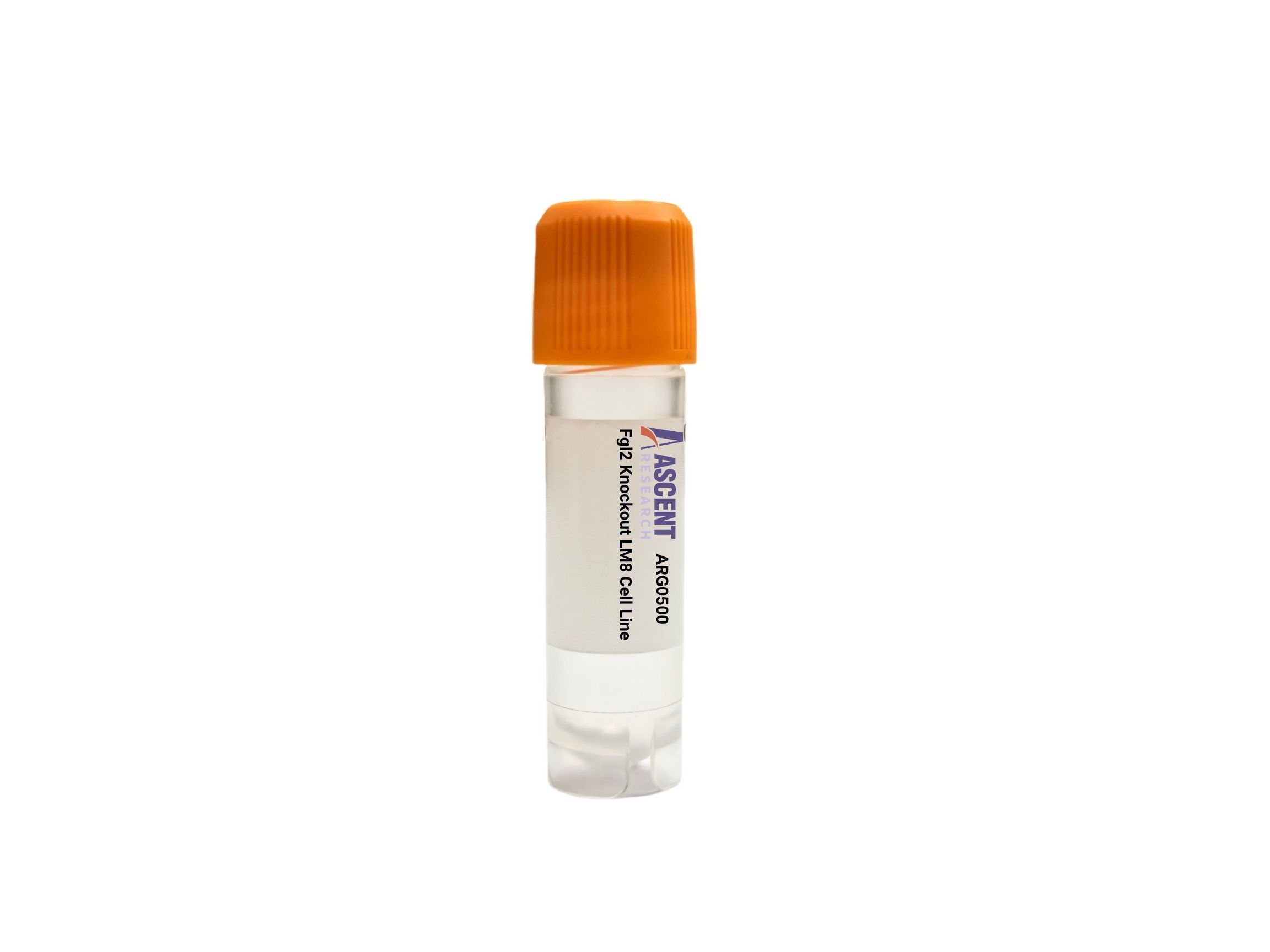
The Fgl2 Knockout LM8 Cell Line is a CRISPR/Cas9-edited knockout cell line from the highly metastatic LM8 murine osteosarcoma line. It provides targeted disruption of Fgl2, which encodes an immune modulator and procoagulant that suppresses T cells via Fc??RIIB and drives fibrin deposition through thrombin generation. Disruption aids in studying immune evasion and metastasis, with applications in coagulation assays, T cell suppression studies, and in vivo metastasis models.
 HPRT1 Knockout Hela Polyclonal Cells
Cat. No. ARG25931
CSK Knockout Jurkat Polyclonal Cells
Cat. No. ARG13593
CSNK1E Knockout HEK293 Polyclonal Cells
Cat. No. ARG12648
BSG Knockout HCT116 Polyclonal Cells
Cat. No. ARG23174
C15orf39 Knockout MES-OV Polyclonal Cells
Cat. No. ARG24374
HPRT1 Knockout Hela Polyclonal Cells
Cat. No. ARG25931
CSK Knockout Jurkat Polyclonal Cells
Cat. No. ARG13593
CSNK1E Knockout HEK293 Polyclonal Cells
Cat. No. ARG12648
BSG Knockout HCT116 Polyclonal Cells
Cat. No. ARG23174
C15orf39 Knockout MES-OV Polyclonal Cells
Cat. No. ARG24374
 Mouse Schwann Cells
Cat. No. ARP0612
Mouse Schwann Cells
Cat. No. ARP0612
The Fgl2 Knockout LM8 Cell Line is a CRISPR/Cas9-edited knockout cell line designed for loss-of-function studies of the Fgl2 gene in a murine osteosarcoma background. This product provides a targeted gene disruption in the LM8 cell line, enabling researchers to investigate the functional roles of Fgl2 in tumor biology, immune modulation, and coagulation pathways. The knockout cell line serves as a robust model for dissecting Fgl2-dependent mechanisms without the confounding effects of residual protein expression.
The LM8 cell line is a highly metastatic variant derived from the Dunn murine osteosarcoma, widely utilized as a model for osteosarcoma metastasis. LM8 cells exhibit an aggressive metastatic phenotype when injected into syngeneic mice, primarily colonizing the lungs, making this line an ideal platform for studying the molecular determinants of tumor dissemination. The cell line??s defined genetic background and reproducible in vivo behavior facilitate rigorous investigation of genes that contribute to metastatic progression.
Fgl2 encodes a multifunctional immune modulator with both prothrombinase activity and immunoregulatory properties. Fgl2 is transcriptionally activated by interferon-gamma (IFN-??), tumor necrosis factor-alpha (TNF-??), and interleukin-2 (IL-2) through STAT1 and NF-??B signaling. The protein interacts with Fc??RIIB on antigen-presenting cells, leading to T cell suppression, and promotes prothrombin cleavage to thrombin, fostering fibrin deposition and tumor fibrosis. Additional interacting factors include CD44 and toll-like receptors (TLRs), which may further modulate its activity in the tumor microenvironment.
In the context of LM8 osteosarcoma, Fgl2 promotes immune evasion and establishes a procoagulant environment that enhances metastatic potential. Disruption of Fgl2 in this cell line allows for the dissection of these dual functions, providing a tool to assess how loss of Fgl2 impacts T cell responses, fibrin formation, and metastatic capacity. This knockout model is particularly valuable for studying the crosstalk between coagulation and immune suppression within the bone cancer niche.
Researchers can employ the Fgl2 Knockout LM8 Cell Line in a variety of assays, including western blotting and RT-qPCR for validation of gene disruption, flow cytometry for immune cell profiling, coagulation assays to measure thrombin generation, and migration/invasion assays to assess metastatic behavior. In vivo applications include metastasis models to evaluate tumor spread and immunohistochemistry for fibrin deposition and immune cell infiltration. This cell line supports investigations into the role of Fgl2 as a therapeutic target in osteosarcoma, autoimmune disorders, and inflammatory diseases. For further information, please contact Ascent Research.