Genome-edited Cells
Large intestine (colon)
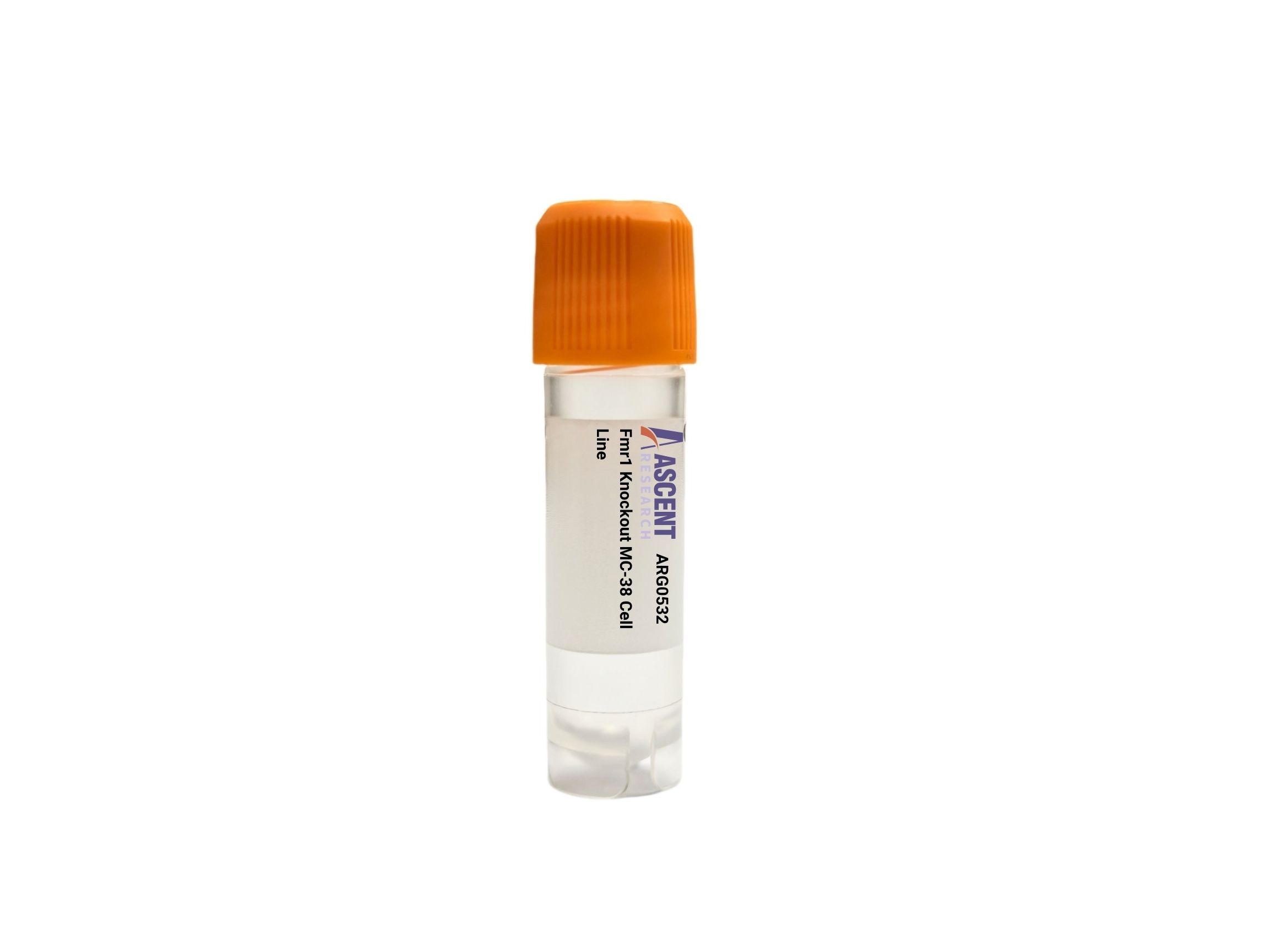
The Fmr1 Knockout MC-38 Cell Line is a CRISPR/Cas9-edited mouse colon adenocarcinoma epithelial line lacking functional fragile X mental retardation protein (FMRP), generated on the C57BL/6 syngeneic MC-38 colorectal cancer model. This knockout cell line provides a powerful platform to study the roles of FMRP in translation regulation, Wnt/??-catenin signaling, and tumorigenesis. Key molecular connections include FMRP interaction with Dicer, Ago2, and CYFIP1/2, and its regulation by mTOR/S6K and ERK pathways, with downstream effects on ??-catenin, Bcl-xL, and cyclin D1. Ideal for colorectal cancer research, Wnt pathway interrogation, and drug screening, the line supports assays such as Western blot, ??-catenin reporter, migration, and RNA immunoprecipitation.
 FBXO45 Knockout NCI-H1975 Polyclonal Cells
Cat. No. ARG16497
NEIL2 Knockout A549 Polyclonal Cells
Cat. No. ARG10369
CCNE1 Knockout A549 Polyclonal Cells
Cat. No. ARG43239
MKLN1 Knockout MES-OV Polyclonal Cells
Cat. No. ARG6434
NRG2 Knockout HEK293T Polyclonal Cells
Cat. No. ARG3830
EVI5 Knockout Raji Polyclonal Cells
Cat. No. ARG1980
FBXO45 Knockout NCI-H1975 Polyclonal Cells
Cat. No. ARG16497
NEIL2 Knockout A549 Polyclonal Cells
Cat. No. ARG10369
CCNE1 Knockout A549 Polyclonal Cells
Cat. No. ARG43239
MKLN1 Knockout MES-OV Polyclonal Cells
Cat. No. ARG6434
NRG2 Knockout HEK293T Polyclonal Cells
Cat. No. ARG3830
EVI5 Knockout Raji Polyclonal Cells
Cat. No. ARG1980
The Fmr1 Knockout MC-38 Cell Line is a genetically engineered mouse colon adenocarcinoma epithelial cell product in which the Fmr1 gene has been disrupted by CRISPR/Cas9-mediated gene editing, resulting in ablation of the functional fragile X mental retardation protein (FMRP). This cell line provides a powerful in vitro model for investigating the roles of FMRP in colorectal cancer biology and translational regulation, particularly in the context of mRNA metabolism and signal-dependent protein synthesis. Generated using the C57BL/6-derived MC-38 colorectal carcinoma cell line, this knockout model enables researchers to dissect the contribution of FMRP to tumorigenic processes within a syngeneic and immunocompetent background.
The MC-38 cell line was originally derived from a chemically induced colon adenocarcinoma in C57BL/6 mice and has since become a cornerstone of syngeneic colorectal cancer models, widely used to study tumor?Cimmune interactions and assess immunotherapies. As adherent epithelial cells, MC-38 cells retain key characteristics of colorectal carcinoma, including oncogenic Wnt/??-catenin pathway activation and sensitivity to immune checkpoint blockade. The C57BL/6 genetic background ensures compatibility with immune-competent hosts, making this knockout cell line particularly valuable for studies where tumor microenvironment and host immunity are critical.
FMRP, encoded by Fmr1, is an RNA-binding protein that governs the spatiotemporal translation, stability, and transport of a subset of mRNAs, many of which are linked to synaptic plasticity and cell proliferation. In the MC-38 colon cancer context, FMRP is regulated by inputs from the mTOR/S6K and ERK signaling cascades, as well as by transcription factors such as Sp1, CREB, and USF1/USF2 that control Fmr1 expression. FMRP physically associates with core translation and RNA interference machinery components including Dicer, Ago2, TDRD3, and CYFIP1/CYFIP2, and its activity is critical for the post-transcriptional control of key oncogenic factors such as ??-catenin (CTNNB1), Bcl-xL (BCL2L1), cyclin D1 (CCND1), and p53 (TP53). Disruption of Fmr1 therefore relieves FMRP-mediated translational repression while simultaneously impairing mRNA stabilization, resulting in a net alteration of target protein abundance that can dampen, rather than enhance, ??-catenin-driven transcriptional programs in certain contexts, consistent with the proposed attenuation of Wnt/??-catenin signaling upon Fmr1 knockout in MC-38 cells.
In MC-38 cells, ablation of FMRP provides a unique opportunity to dissect the role of RNA-regulatory networks in colorectal tumorigenesis. Given that FMRP expression has been correlated with cancer cell proliferation and metastatic potential, this knockout cell line serves as a relevant system to examine how loss of FMRP affects cell-autonomous growth, migration, and survival signals under defined culture conditions or in syngeneic tumor models. Because MC-38 cells retain an intact immune sensor profile and are responsive to anti-PD-1/PD-L1 therapy, the Fmr1 knockout line can be employed to explore whether FMRP loss alters immunogenicity, antigen presentation, or the secretion of immunomodulatory factors, thereby bridging basic RNA biology with translational immuno-oncology research.
Researchers can utilize the Fmr1 Knockout MC-38 Cell Line for a broad spectrum of investigations, including colorectal cancer tumorigenesis studies, dissection of FMRP-mediated translational control in tumor growth, interrogation of the Wnt pathway, and drug screening for therapies targeting FMRP loss-of-function phenotypes. Standard characterization can be performed via Western blotting for FMRP and RT-qPCR for Fmr1 transcript levels, while functional readouts include ??-catenin/TCF reporter assays, cell proliferation (MTT), wound healing migration, RNA immunoprecipitation (RIP), polysome profiling, and transcriptome-wide RNA-seq. For additional information, technical support, or quotation requests, please contact Ascent Research.