Genome-edited Cells
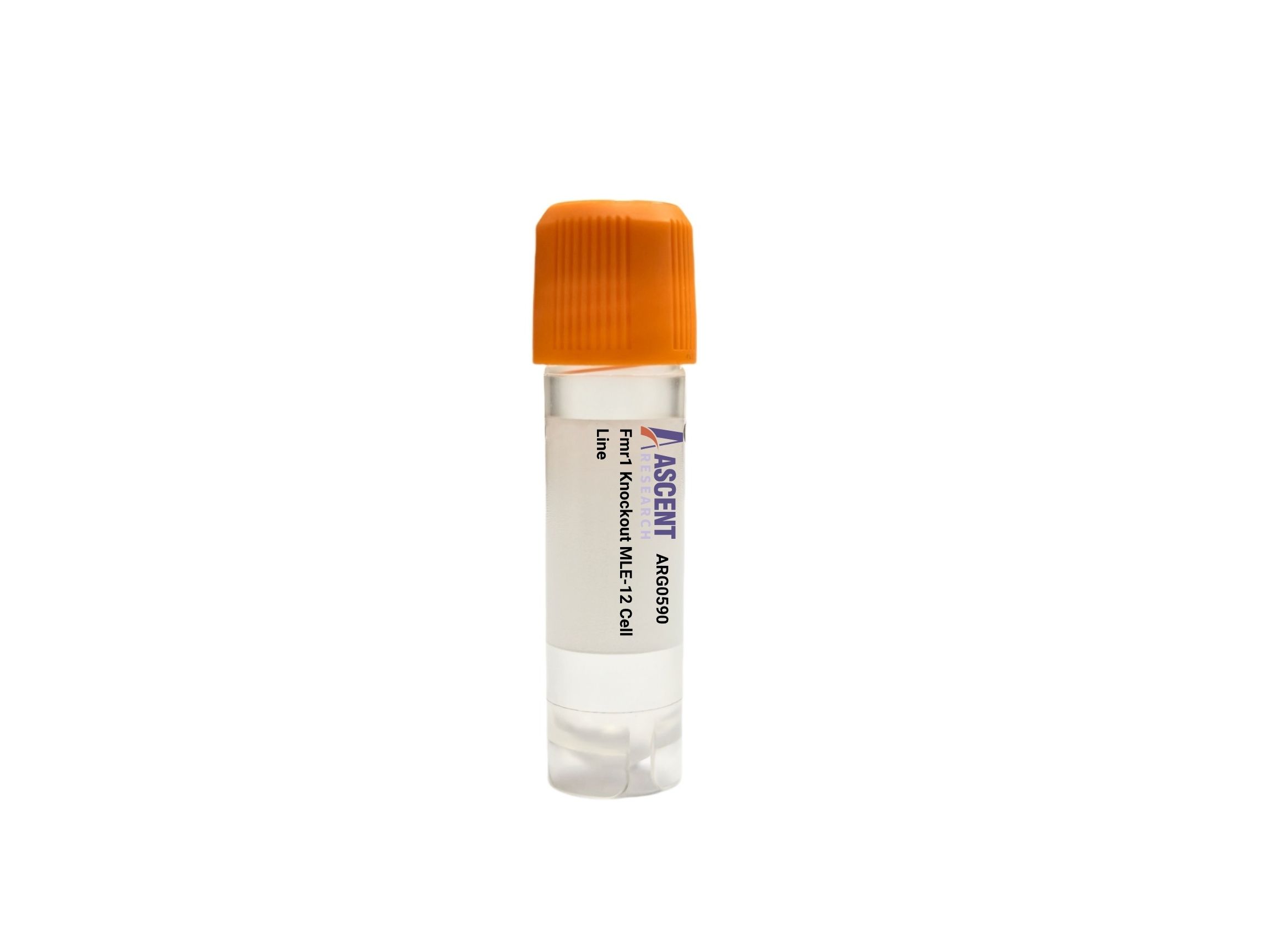
The Fmr1 Knockout MLE-12 Cell Line is a CRISPR/Cas9-edited knockout cell line derived from MLE-12 mouse lung epithelial cells. It models loss of Fragile X Mental Retardation Protein (FMRP), an RNA-binding protein that represses translation through complexes with CYFIP1 and eIF4E, regulating targets such as Arc and MAP1B. Knockout disrupts mGluR and mTOR pathway signaling, enabling study of FMRP function in non-neuronal contexts including lung epithelial biology and cellular stress responses. Applications include Fragile X syndrome research, translational control analysis, and drug screening. Assays encompass Western blot, RT-qPCR, RIP, RNA-seq, reporter assays, cell viability, scratch migration, and stress granule analysis. Contact Ascent Research for technical details.
 ALYREF Knockout HAP1 Polyclonal Cells
Cat. No. ARG34947
CASK Knockout HCT116 Polyclonal Cells
Cat. No. ARG42366
DOK1 Knockout HEK293T Polyclonal Cells
Cat. No. ARG39624
DNTTIP1 Knockout SK-HEP-1 Polyclonal Cells
Cat. No. ARG39528
OPA1 Knockout HEK293T Polyclonal Cells
Cat. No. ARG3345
MKNK2 Knockout Raji Polyclonal Cells
Cat. No. ARG1867
ALYREF Knockout HAP1 Polyclonal Cells
Cat. No. ARG34947
CASK Knockout HCT116 Polyclonal Cells
Cat. No. ARG42366
DOK1 Knockout HEK293T Polyclonal Cells
Cat. No. ARG39624
DNTTIP1 Knockout SK-HEP-1 Polyclonal Cells
Cat. No. ARG39528
OPA1 Knockout HEK293T Polyclonal Cells
Cat. No. ARG3345
MKNK2 Knockout Raji Polyclonal Cells
Cat. No. ARG1867
The Fmr1 Knockout MLE-12 Cell Line is a CRISPR/Cas9-edited knockout cell line derived from the MLE-12 mouse lung epithelial cell line. This product provides a stable loss-of-function model for the Fragile X Mental Retardation Protein (FMRP), encoded by the Fmr1 gene. Generated via CRISPR/Cas9-mediated gene disruption, it enables investigation of FMRP function in non-neuronal cell contexts and advances research into Fragile X syndrome and related disorders.
MLE-12 cells originate from lung tumors of transgenic mice expressing the SV40 large T antigen under control of the human surfactant protein C (SP-C) promoter. These alveolar type II epithelial-like cells express surfactant proteins and form lamellar bodies, offering a robust in vitro system for pulmonary epithelial biology. Their defined genetic background and stable phenotype facilitate reproducible studies of translational control and cellular stress responses.
FMRP is an RNA-binding protein that represses translation by associating with target mRNAs and ribosomal complexes. It forms a repressive cytoplasmic complex with CYFIP1 and the cap-binding factor eIF4E to inhibit translation initiation. Downstream targets include Arc, MAP1B, PSD-95, CaMKII??, and APP; upstream regulators include CREB, USF1/2, PKC, S6 kinase, and casein kinase 2. The mGluR5?CHomer?CPI3K?CAKT?CmTOR?CS6K pathway controls FMRP-mediated repression: mGluR activation triggers CYFIP1 release from eIF4E, allowing translation of previously silenced mRNAs. Loss of FMRP leads to excessive synthesis of synaptic proteins and dysregulated mGluR signaling.
In the MLE-12 lung epithelial background, the Fmr1 knockout cell line allows exploration of FMRP??s roles beyond the nervous system. FMRP has been implicated in cell proliferation, migration, and stress granule assembly in various cell types. MLE-12 cells are particularly suitable for studying translational control under oxidative stress or unfolded protein response conditions and for assessing how loss of FMRP affects epithelial barrier function and repair. This model broadens the understanding of tissue-specific functions of an RNA-binding protein typically associated with neuronal development.
This knockout cell line is designed for applications including mechanistic dissection of Fragile X syndrome, analysis of translational regulation in non-neuronal cells, and high-throughput drug screening targeting the mGluR or mTOR pathways. Researchers can employ a suite of assays??Western blotting, RT-qPCR, immunofluorescence, RNA immunoprecipitation, polysome profiling, RNA-seq, reporter gene assays, cell viability, scratch wound migration, and stress granule analysis??to validate FMRP loss and characterize functional outcomes. For technical inquiries, please contact Ascent Research.