Genome-edited Cells
Blood (peripheral blood)
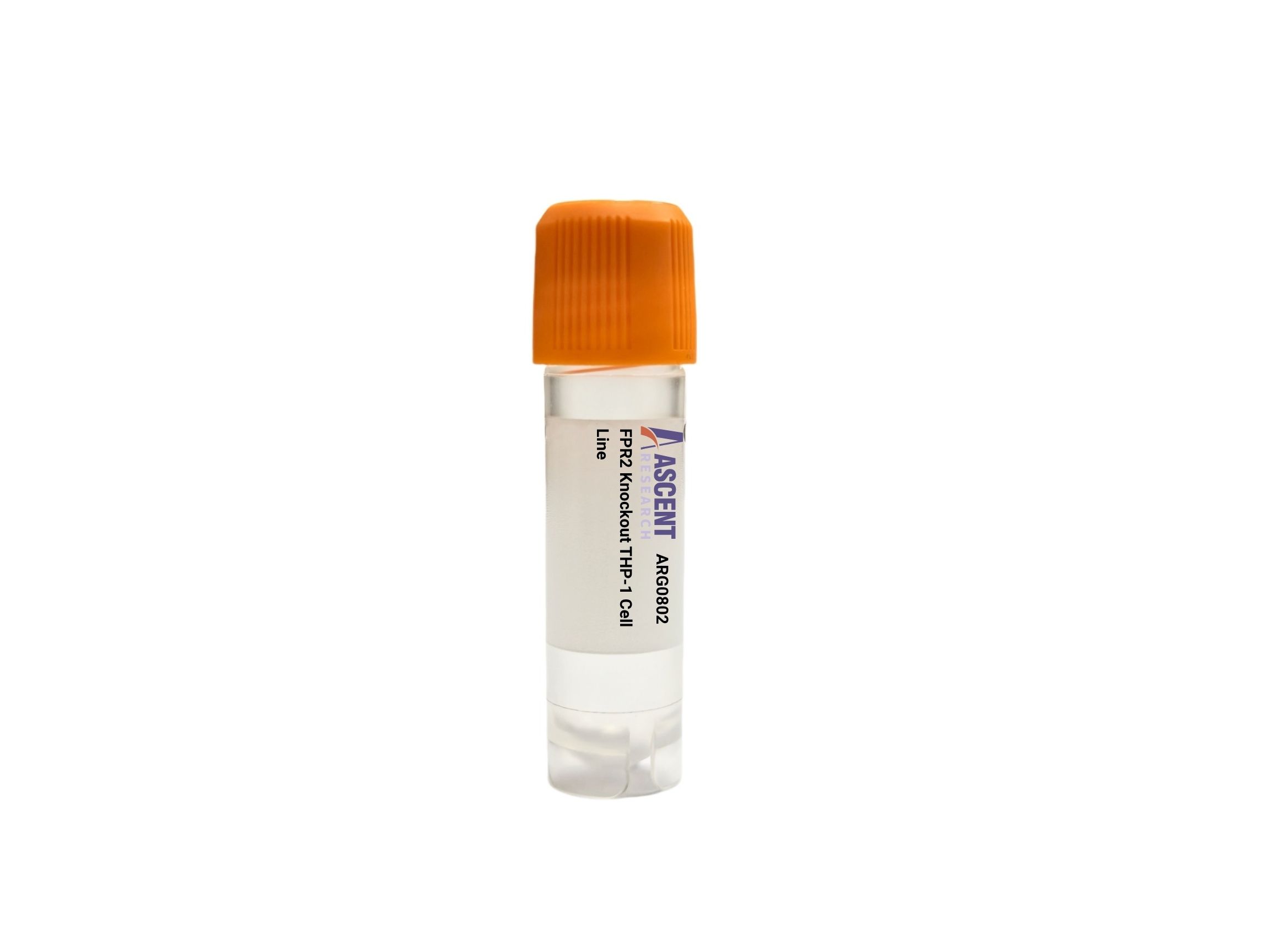
CRISPR/Cas9-edited THP-1 cell line with targeted disruption of FPR2, encoding the formyl peptide receptor 2 that mediates chemotactic and inflammatory responses to ligands such as fMLF and lipoxin A4. The knockout abolishes receptor-driven calcium flux, ERK/Akt phosphorylation, and directed migration, providing a clean loss-of-function model. Key applications include dissecting FPR2 signaling in monocyte/macrophage biology, screening for receptor modulators, and exploring mechanisms in sepsis, inflammation, and pathogen?Chost interactions. Compatible with assays like calcium flux, chemotaxis, and transcriptome profiling.
 HPS6 Knockout SK-HEP-1 Polyclonal Cells
Cat. No. ARG32614
HAVCR2 Knockout Hela Polyclonal Cells
Cat. No. ARG37146
CALCOCO2 Knockout HEK293T Polyclonal Cells
Cat. No. ARG41806
MANBA Knockout AGS Polyclonal Cells
Cat. No. ARG2939
HPS6 Knockout SK-HEP-1 Polyclonal Cells
Cat. No. ARG32614
HAVCR2 Knockout Hela Polyclonal Cells
Cat. No. ARG37146
CALCOCO2 Knockout HEK293T Polyclonal Cells
Cat. No. ARG41806
MANBA Knockout AGS Polyclonal Cells
Cat. No. ARG2939
 Rat α-SMA-Positive Renal Perivascular Myofibroblasts
Cat. No. ARP0262
Rat α-SMA-Positive Renal Perivascular Myofibroblasts
Cat. No. ARP0262
 Rat Peritoneal Mesothelial Cell Medium
Cat. No. ARM0243
Rat Peritoneal Mesothelial Cell Medium
Cat. No. ARM0243
The FPR2 Knockout THP-1 Cell Line is a CRISPR/Cas9-edited human cell model with targeted disruption of the FPR2 gene in the THP-1 monocytic leukemia cell line. This knockout cell line eliminates functional expression of formyl peptide receptor 2 (FPR2), providing a defined loss-of-function system for investigating receptor-mediated signaling, leukocyte migration, and inflammatory responses. The engineered cells retain the differentiation capacity of the parental line, enabling studies in both monocytic and macrophage-like states.
THP-1 cells, originally isolated from the peripheral blood of an acute monocytic leukemia patient, serve as a widely used model for human monocyte and macrophage biology. These suspension cells can be differentiated into adherent, macrophage-like cells upon treatment with phorbol esters or other stimuli, recapitulating key primary macrophage functions such as phagocytosis, cytokine secretion, and antigen presentation. The FPR2 knockout derivative maintains this differentiation potential, allowing comparative analysis of receptor function in undifferentiated and differentiated phenotypes.
FPR2 encodes a G protein-coupled receptor that recognizes diverse ligands, including bacterial formyl peptides (e.g., fMLF), lipoxin A4, resolvin D1, serum amyloid A, annexin A1, and cathelicidin LL-37. Upon ligand binding, FPR2 couples to G??i/o proteins, activating phospholipase C?? (PLC??) and mobilizing intracellular calcium. Concurrently, ??-arrestin recruitment triggers MAP kinase cascades, phosphorylating ERK1/2 and p38 MAPK, while PI3K?CAkt and Rac1 pathways drive chemotaxis. FPR2 also engages NF-??B signaling to modulate inflammatory and resolution gene expression. It interacts with FPR1 and N-formyl peptide receptor 3, which share overlapping ligand specificities.
Disruption of FPR2 in THP-1 cells abrogates agonist-induced calcium flux, impairs phosphorylation of ERK1/2 and Akt, and results in defective chemotaxis toward formyl peptides and lipoxin A4. This knockout provides a clean background to delineate FPR2-specific contributions to leukocyte recruitment, inflammatory amplification, and resolution, without interference from endogenous receptor activity. The model is particularly useful for dissecting signaling events during monocyte-to-macrophage differentiation and in response to infectious or sterile inflammatory cues.
The FPR2 Knockout THP-1 Cell Line supports a range of functional assays: Western blotting and RT-qPCR for FPR2 ablation confirmation, flow cytometry for surface receptor loss, Fluo-4 calcium flux measurements, and Boyden chamber chemotaxis assays. Phospho-ERK/Akt ELISA or RNA-seq transcriptome profiling can uncover global signaling and transcriptional consequences of FPR2 deficiency. Applications include screening FPR2 modulators, investigating sepsis and inflammatory disorders, and studying pathogen?Chost interactions. For further technical details or to discuss your specific needs, contact Ascent Research.