Polyclonal Cell Population
Homo sapiens (Human)
Bone
Suspension
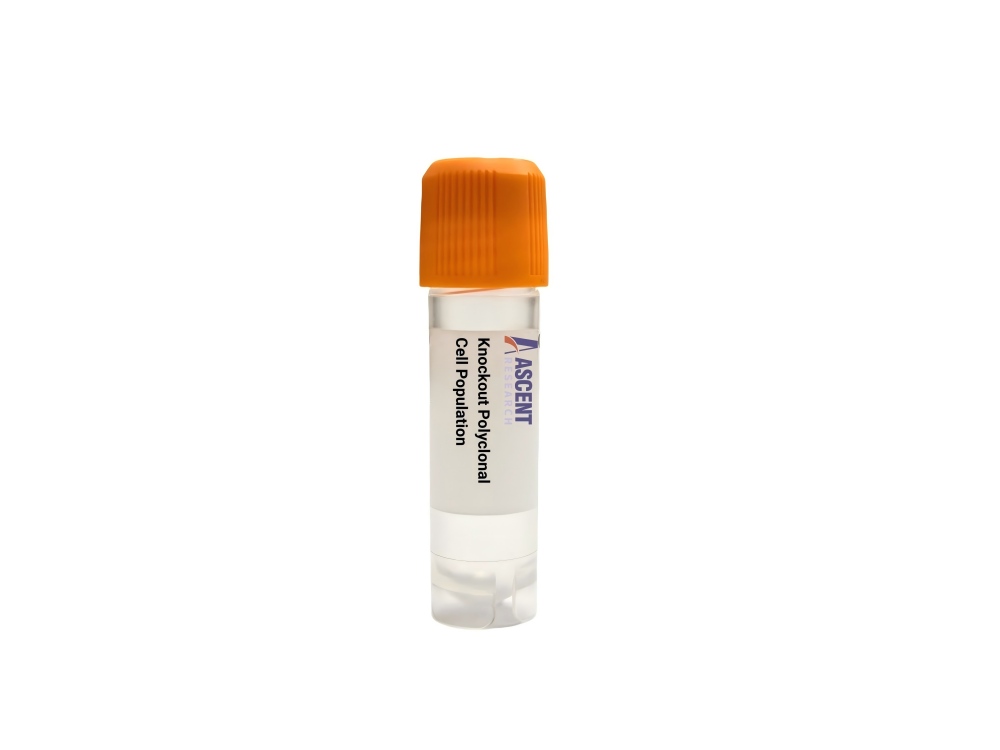
The FSBP Knockout Raji Polyclonal Cells are a CRISPR/Cas9-edited polyclonal knockout cell population derived from Raji B lymphocytes, designed for loss-of-function studies of the FSBP (FOXP4) transcription factor. This model targets a transcriptional repressor involved in Wnt/beta-catenin and TGF-beta/Smad pathways, interacting with CTBP1, HDAC1, and SMAD3, and regulating downstream targets such as FGG and CDH1. Applicable to B-cell malignancy research, gene function analysis, and drug target validation, this polyclonal knockout enables assays including western blotting, RT-qPCR, and cell proliferation studies. The Raji background provides a robust EBV-positive Burkitt lymphoma model for investigating FSBP-mediated mechanisms in lymphomagenesis and signaling.
 LRRC8C Knockout NCI-H1299 Polyclonal Cells
Cat. No. ARG17620
NMRAL1 Knockout A549 Polyclonal Cells
Cat. No. ARG10375
JAG2 Knockout AGS Polyclonal Cells
Cat. No. ARG27083
IL18 Knockout 769-P Polyclonal Cells
Cat. No. ARG35144
CAV1 Knockout NCI-H1299 Polyclonal Cells
Cat. No. ARG42621
CARHSP1 Knockout AGS Polyclonal Cells
Cat. No. ARG26836
LRRC8C Knockout NCI-H1299 Polyclonal Cells
Cat. No. ARG17620
NMRAL1 Knockout A549 Polyclonal Cells
Cat. No. ARG10375
JAG2 Knockout AGS Polyclonal Cells
Cat. No. ARG27083
IL18 Knockout 769-P Polyclonal Cells
Cat. No. ARG35144
CAV1 Knockout NCI-H1299 Polyclonal Cells
Cat. No. ARG42621
CARHSP1 Knockout AGS Polyclonal Cells
Cat. No. ARG26836
The FSBP Knockout Raji Polyclonal Cells represent a CRISPR/Cas9-edited polyclonal knockout cell population derived from the Raji B lymphocyte line, designed to introduce loss-of-function of the FSBP (FOXP4) gene. This polyclonal model enables functional studies of FSBP-mediated transcriptional repression without clonal selection bias, providing a heterogeneous knockout background for evaluating gene disruption effects on B-cell biology.
The Raji cell line, established from a Burkitt lymphoma patient, is an Epstein-Barr virus (EBV)-positive B lymphocyte model widely used in hematological malignancy research. These cells exhibit characteristics of mature B cells and retain key signaling pathways relevant to lymphomagenesis, including constitutive activation of survival and proliferation signals. The Raji background is particularly suited for investigating B-cell receptor signaling, EBV-mediated oncogenesis, and apoptotic regulation, making it a valuable platform for dissecting gene function in B-cell malignancies.
FSBP, encoded by the FOXP4 gene, is a forkhead box transcription factor that functions as a transcriptional repressor, regulating genes involved in epithelial-mesenchymal transition (EMT), cell cycle progression, and fibrinogen expression. Mechanistically, FSBP interacts with corepressors such as CTBP1, HDAC1, and SMAD3, and represses downstream targets including FGG, CDH1 (E-cadherin), and VIM (vimentin), while modulating CCND1 (cyclin D1) and MMP2. Its activity is regulated by upstream signals like TGF-beta1, Wnt3a, ERK, and PI3K/AKT pathways, integrating into broader Wnt/beta-catenin and TGF-beta/Smad signaling networks through beta-catenin, TCF/LEF transcription factors, and SMAD2/3 complexes. This positions FSBP at the intersection of developmental signaling and cancer-related pathways, where it influences cell fate decisions.
In the Raji B lymphocyte context, FSBP knockout provides a model to interrogate how this transcription factor contributes to B-cell survival, proliferation, and transformation. Given that Raji cells display activated Wnt/beta-catenin and TGF-beta signaling, FSBP disruption may alter the balance of proliferative and apoptotic signals, potentially impacting pathways mediated by AKT, ERK, and beta-catenin. This model is particularly relevant for studying the molecular mechanisms underlying Burkitt lymphoma pathogenesis, as FSBP may modulate gene expression programs that sustain the malignant phenotype, including those influenced by EBV latency factors.
Researchers can employ this knockout polyclonal population in a broad range of assays, such as western blotting and RT-qPCR to assess changes in downstream targets like FGG and CDH1, flow cytometry for phenotyping B-cell surface markers, cell proliferation and apoptosis assays for functional endpoints, and co-immunoprecipitation to map FSBP interactomes. The model supports studies in gene function analysis, B-cell malignancy research, drug target validation, and signaling pathway dissection (e.g., Wnt/beta-catenin and TGF-beta/Smad). For additional technical information, including availability, licensing, and custom orders, please contact Ascent Research.