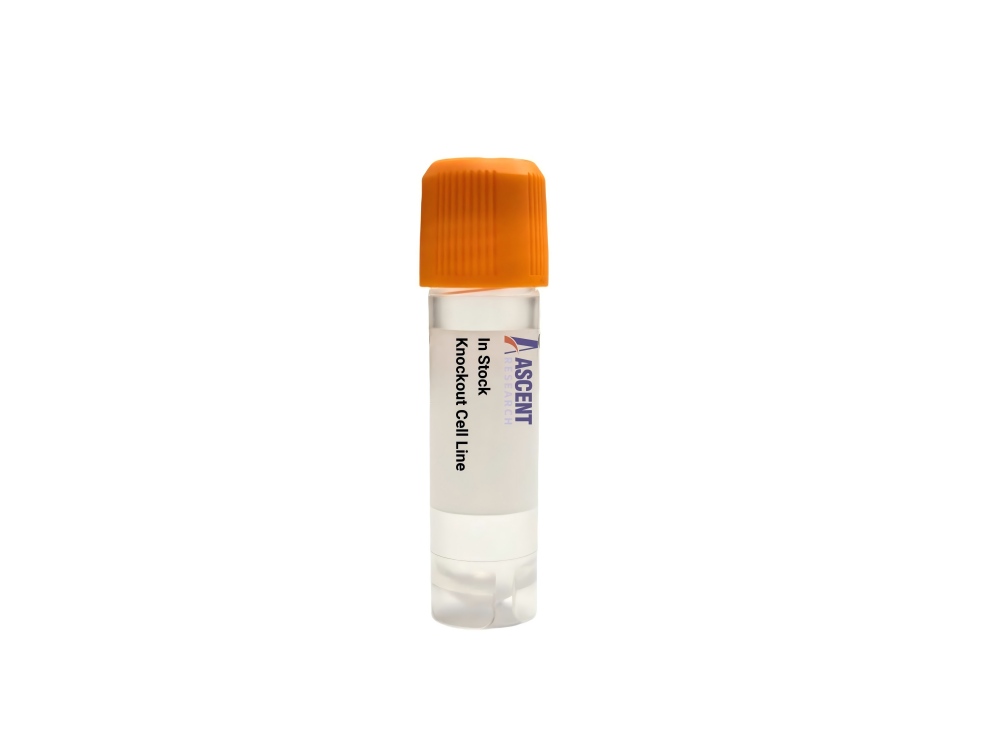
In Stock Cell Lines
Homo sapiens (Human)
Kidney
Adherent
The FURIN Knockout HEK293T Cell Line is a CRISPR/Cas9-edited human cell line with targeted disruption of the FURIN gene, encoding a proprotein convertase essential for activating growth factors, hormones, and viral glycoproteins. In HEK293T cells, FURIN knockout prevents cleavage of substrates such as pro-TGF-beta, pro-BMPs, and viral spike proteins, blocking downstream signaling pathways. This cell line is a powerful tool for investigating furin-dependent processes in viral entry (e.g., SARS-CoV-2, HIV), TGF-beta and Notch signaling, cancer metastasis, and drug screening. Researchers can employ western blotting, viral entry assays, and TGF-beta reporter assays to elucidate furin??s role in disease and therapeutic resistance.
 KDELR3 Knockout K562 Polyclonal Cells
Cat. No. ARG20752
AFAP1 Knockout HT29 Polyclonal Cells
Cat. No. ARG32875
GPR75 Knockout 143B Polyclonal Cells
Cat. No. ARG35670
CASP9 Knockout A2780 Polyclonal Cells
Cat. No. ARG42544
ARL15 Knockout A549 Polyclonal Cells
Cat. No. ARG38662
KDELR3 Knockout K562 Polyclonal Cells
Cat. No. ARG20752
AFAP1 Knockout HT29 Polyclonal Cells
Cat. No. ARG32875
GPR75 Knockout 143B Polyclonal Cells
Cat. No. ARG35670
CASP9 Knockout A2780 Polyclonal Cells
Cat. No. ARG42544
ARL15 Knockout A549 Polyclonal Cells
Cat. No. ARG38662
 VK2/E6E7 Luciferase Stable Cell Line
Cat. No. ARG0870
VK2/E6E7 Luciferase Stable Cell Line
Cat. No. ARG0870
The FURIN Knockout HEK293T Cell Line is a CRISPR/Cas9-edited human cell line with targeted disruption of the FURIN gene. This stable loss-of-function model enables studies of furin-dependent proprotein processing and downstream signaling in a well-characterized cellular background. The cell line provides a consistent genetic platform for interrogating furin??s role without the variability of transient gene modulation.
The HEK293T host is a human embryonic kidney epithelial cell line transformed with SV40 large T-antigen, conferring high transfection efficiency and robust protein expression. Widely used for viral vector production and recombinant protein manufacture, HEK293T endogenously expresses furin, making it an appropriate system for evaluating the consequences of FURIN disruption on cellular and viral processes.
Furin is a calcium-dependent serine endoprotease that cleaves proproteins at paired basic amino acid sites within the secretory pathway. It activates critical substrates including pro-TGF-beta, pro-BMPs, pro-MMPs, pro-insulin-like growth factor 1 receptor, and viral envelope glycoproteins. Upstream factors such as TGF-beta, hypoxia, inflammatory cytokines, and intracellular calcium regulate furin expression and activity. Furin interacts with the trafficking adaptor PACS-1 and is inhibited by serpins. In TGF-beta signaling, furin-processed ligands engage TGF-beta receptors, phosphorylating SMAD2/3, which complex with SMAD4 to modulate transcription. Furin also matures Notch precursors, enabling gamma-secretase cleavage and downstream signal activation. Moreover, furin??s proteolytic activity on the SARS-CoV-2 spike protein at the S1/S2 boundary facilitates viral entry via ACE2 and TMPRSS2.
FURIN knockout in HEK293T cells abolishes endogenous furin activity, preventing maturation of pro-TGF-beta and other growth factors, thereby silencing associated signaling cascades. The absence of furin also blocks processing of viral glycoproteins, distorting envelope function and viral infectivity. This cell line serves as a rigorous tool for confirming furin-dependent events and provides a blank background for complementation studies with wild-type or mutant furin constructs. Its utility in viral pseudotyping, signal transduction analysis, and protein secretion quality control is well-recognized.
Typical applications encompass western blotting for proprotein cleavage analysis, RT-qPCR for transcriptional profiling, flow cytometry to monitor surface receptor expression, viral entry assays with pseudoviruses, TGF-beta reporter assays, and ELISA for quantifying mature growth factors. The model supports research in cancer metastasis through TGF-beta and MMP pathways, viral pathogenesis (e.g., SARS-CoV-2, HIV, Ebola), neurodegenerative conditions linked to Notch signaling, and cardiovascular biology involving BMPs. It is also amenable to high-throughput screening of furin inhibitors. For additional details or technical support, contact Ascent Research.