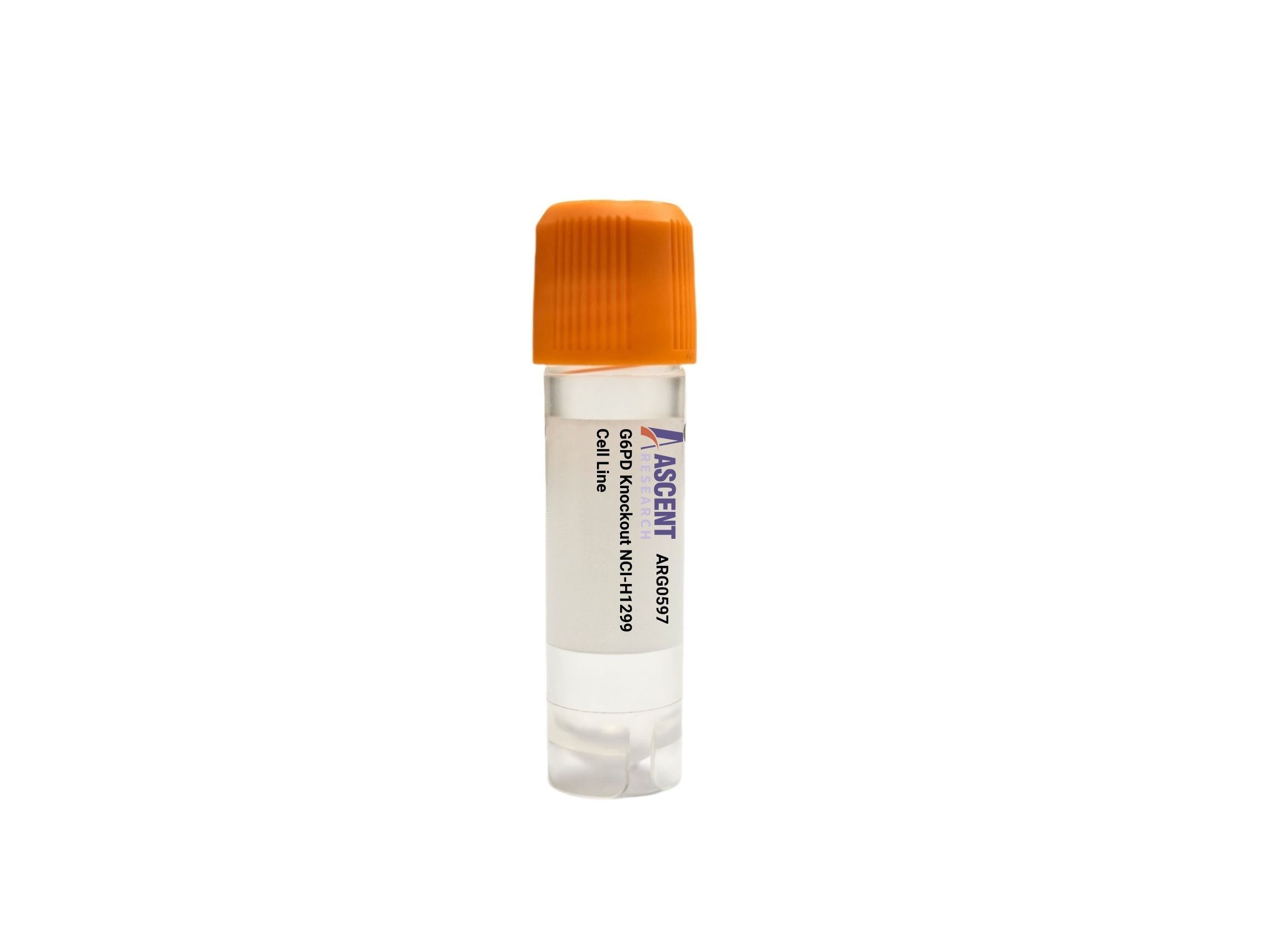
Genome-edited Cells
Lung
The G6PD Knockout NCI-H1299 Cell Line is a CRISPR/Cas9-edited human lung adenocarcinoma cell line deficient in glucose-6-phosphate dehydrogenase, the rate-limiting enzyme of the pentose phosphate pathway (PPP). G6PD disruption eliminates NADPH and ribose-5-phosphate production, impairing glutathione-dependent antioxidant defense and nucleotide biosynthesis. Derived from metastatic NCI-H1299 cells harboring a TP53 mutation, this model enables studies of redox homeostasis, metabolic reprogramming, and drug resistance in non-small cell lung carcinoma. Applications include NADPH/NADP+ assays, ROS detection, glutathione quantification, drug sensitivity profiling, and G6PD inhibitor screening.
 CPSF7 Knockout Hela Polyclonal Cells
Cat. No. ARG8299
KAZALD1 Knockout Hela Polyclonal Cells
Cat. No. ARG26337
CCDC90B Knockout SK-HEP-1 Polyclonal Cells
Cat. No. ARG43112
CRBN Knockout HCT116 Polyclonal Cells
Cat. No. ARG7176
ETS1 Knockout MES-OV Polyclonal Cells
Cat. No. ARG6369
DERA Knockout 786-O Polyclonal Cells
Cat. No. ARG5735
CPSF7 Knockout Hela Polyclonal Cells
Cat. No. ARG8299
KAZALD1 Knockout Hela Polyclonal Cells
Cat. No. ARG26337
CCDC90B Knockout SK-HEP-1 Polyclonal Cells
Cat. No. ARG43112
CRBN Knockout HCT116 Polyclonal Cells
Cat. No. ARG7176
ETS1 Knockout MES-OV Polyclonal Cells
Cat. No. ARG6369
DERA Knockout 786-O Polyclonal Cells
Cat. No. ARG5735
The G6PD Knockout NCI-H1299 Cell Line is a CRISPR/Cas9-edited human knockout cell line designed to disrupt glucose-6-phosphate dehydrogenase (G6PD) expression in the NCI-H1299 lung carcinoma background. G6PD catalyzes the rate-limiting step of the pentose phosphate pathway (PPP), producing NADPH and ribose-5-phosphate for reductive biosynthesis, antioxidant defense, and nucleotide synthesis. This stable knockout provides a defined loss-of-function model for dissecting the roles of the PPP in redox homeostasis and metabolic adaptation in non-small cell lung carcinoma (NSCLC) research.
The parental NCI-H1299 cell line is a widely used human NSCLC model derived from a metastatic lymph node of a lung adenocarcinoma patient. It carries a homozygous TP53 mutation, resulting in p53 deficiency, a hallmark of advanced disease. The line exhibits epithelial morphology and retains core growth factor pathways (e.g., EGFR, KRAS) that influence tumor metabolism. In this G6PD knockout, the p53-null background provides a system to examine PPP dependency independent of p53-mediated G6PD repression.
G6PD oxidizes glucose-6-phosphate to 6-phosphogluconolactone, reducing NADP+ to NADPH. NADPH is essential for glutathione reductase-mediated regeneration of reduced glutathione (GSH), a major cellular antioxidant, and for NADPH oxidases that generate reactive oxygen species (ROS). Ribose-5-phosphate feeds into nucleotide biosynthesis. G6PD expression is subject to transcriptional regulation by Nrf2 (antioxidant response), SREBP1c (lipogenesis), EGFR/KRAS-mediated growth signaling, and repression by p53 under oxidative stress. Interacting proteins include p53, SIRT2 deacetylase, and 6-phosphogluconate dehydrogenase (6PGD). Disruption of G6PD consequently depletes NADPH and ribose-5-phosphate pools, collapsing GSH regeneration and nucleotide synthesis, and sensitizing cells to oxidative and genotoxic stress.
In NCI-H1299 cells, G6PD knockout is particularly relevant because NSCLC tumors often overexpress G6PD, correlating with poor prognosis and chemoresistance. The p53-null background removes a negative regulator of G6PD, potentially increasing reliance on the PPP for REDOX balance. This model enables investigation of metabolic vulnerabilities in p53-mutant lung adenocarcinoma, including dependence on NADPH for detoxification and nucleotide supply for proliferation. It also allows assessment of G6PD as a therapeutic target, either alone or in combination with agents that elevate ROS.
Researchers can employ the G6PD Knockout NCI-H1299 Cell Line in numerous assays: western blotting and RT-qPCR confirm target disruption, while NADPH/NADP+ ratio, glutathione (GSH/GSSG), and ROS measurements directly assess redox status. Cell viability, apoptosis, and colony formation assays quantify phenotypic responses to oxidative stress. Drug sensitivity screens with chemotherapeutics (e.g., cisplatin, doxorubicin) reveal the role of G6PD in resistance. Additionally, metabolic flux analysis and high-throughput inhibitor screening are supported. For detailed protocols and technical support, please contact Ascent Research.