Genome-edited Cells
Stomach
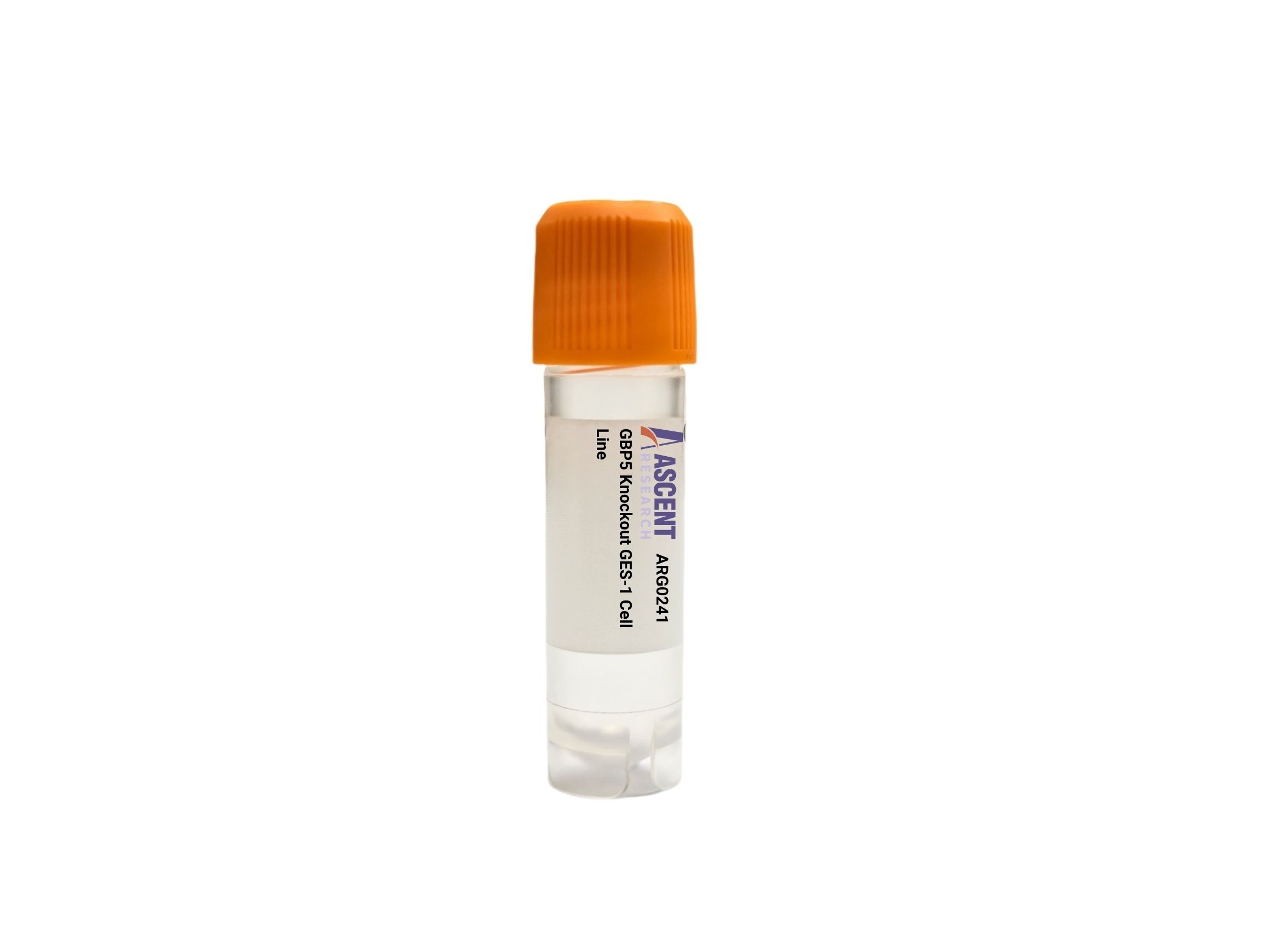
The GBP5 Knockout GES-1 Cell Line is a CRISPR/Cas9-edited human gastric epithelial cell line lacking the interferon-inducible GTPase GBP5. Derived from immortalized normal gastric mucosa, GES-1 provides a physiologically relevant model of the gastric barrier. GBP5 functions downstream of interferon-?? and STAT1 to facilitate NLRP3 inflammasome assembly and promote autophagy, positioning it as a key innate immune effector. Knockout of GBP5 impairs caspase-1-mediated maturation of IL-1?? and IL-18 and compromises clearance of intracellular bacteria, making this cell line a powerful system for studying H. pylori infection, gastric inflammation, and early carcinogenesis. It is suitable for IL-1?? ELISA, caspase-1 activity assays, western blotting, gentamicin protection assays, and autophagy flux analysis, supporting mechanistic studies and drug screening in innate immunity.
 ANKHD1 Knockout HAP1 Polyclonal Cells
Cat. No. ARG27254
ANO6 Knockout HGC-27 Polyclonal Cells
Cat. No. ARG29537
GPNMB Knockout KYSE150 Polyclonal Cells
Cat. No. ARG36225
DTWD1 Knockout huh-7 Polyclonal Cells
Cat. No. ARG39932
EHD1 Knockout K562 Polyclonal Cells
Cat. No. ARG40779
DHFR Knockout HCT116 Polyclonal Cells
Cat. No. ARG6909
ANKHD1 Knockout HAP1 Polyclonal Cells
Cat. No. ARG27254
ANO6 Knockout HGC-27 Polyclonal Cells
Cat. No. ARG29537
GPNMB Knockout KYSE150 Polyclonal Cells
Cat. No. ARG36225
DTWD1 Knockout huh-7 Polyclonal Cells
Cat. No. ARG39932
EHD1 Knockout K562 Polyclonal Cells
Cat. No. ARG40779
DHFR Knockout HCT116 Polyclonal Cells
Cat. No. ARG6909
The GBP5 Knockout GES-1 Cell Line provides a defined human gastric epithelial model in which CRISPR/Cas9 technology has been used to disrupt the endogenous GBP5 locus, eliminating functional expression of GBP5. As an interferon-inducible GTPase, GBP5 mediates critical steps in innate immune signaling, and its genetic deletion allows researchers to interrogate the precise contributions of GBP5 to inflammasome assembly, cytokine processing, and autophagic responses. This gene-edited cell line retains the epithelial characteristics of the parental GES-1 line, ensuring relevance for studies of gastric mucosal immunity.
Derived from normal human fetal gastric mucosa, GES-1 is a non?transformed, immortalized epithelial cell line that faithfully replicates the structural and functional properties of the gastric surface epithelium. It forms polarized monolayers, maintains barrier integrity, and mounts innate immune responses to Helicobacter pylori. This model is extensively used to study gastric mucosal biology, host?pathogen interactions, and the signaling networks underlying gastric inflammation and carcinogenesis. The GBP5 knockout variant therefore provides a genetically clean background for dissecting interferon?driven defense mechanisms in gastric epithelial cells.
GBP5 functions downstream of interferon??? (IFN-??) and interferon??? (IFN-??) stimulation, where its transcription is driven by STAT1 and IRF1, and can also be modulated by NF-??B. The encoded GTPase directly interacts with NLRP3, the adaptor ASC, and pro?caspase?1 to promote inflammasome assembly, leading to autoproteolytic activation of caspase?1. Active caspase?1 then cleaves the pro?inflammatory cytokines pro?IL?1?? and pro?IL?18 into their mature, secreted forms. Beyond its role in the NLRP3 inflammasome, GBP5 facilitates antibacterial autophagy and cooperates with the related GTPases GBP1 and GBP2 to target intracellular bacteria for lysosomal degradation. Disruption of GBP5 thus uncouples upstream interferon signals from downstream inflammasome and autophagy pathways.
Expression of GBP5 in gastric epithelial cells is critical for mounting an effective innate response against H. pylori. GBP5 facilitates NLRP3 inflammasome assembly and caspase?1?mediated maturation of IL?1?? and IL?18, while promoting autophagy?based elimination of intracellular bacteria. Disruption of GBP5 in GES-1 cells attenuates these processes, resulting in impaired cytokine secretion and reduced bacterial clearance. This phenotype models immune evasion by H. pylori and highlights the role of epithelial GBP5 in gastric homeostasis. The knockout line is a powerful tool for investigating early steps in H. pylori?associated gastric cancer and inflammatory bowel disease.
The GBP5 Knockout GES-1 Cell Line supports western blotting, RT?qPCR, IL?1?? ELISA, caspase?1 activity assays, and immunofluorescence for molecular and functional analysis of inflammasome signaling. The H. pylori gentamicin protection assay quantifies intracellular bacterial survival, and autophagy flux assays combined with flow cytometry assess autophagic clearance. These tools enable mechanistic dissection of GBP5?dependent pathways, screening of compounds targeting the interferon?NLRP3 axis, and validation of therapeutic candidates for gastric inflammation and cancer. For further information, please contact Ascent Research.