Genome-edited Cells
Liver
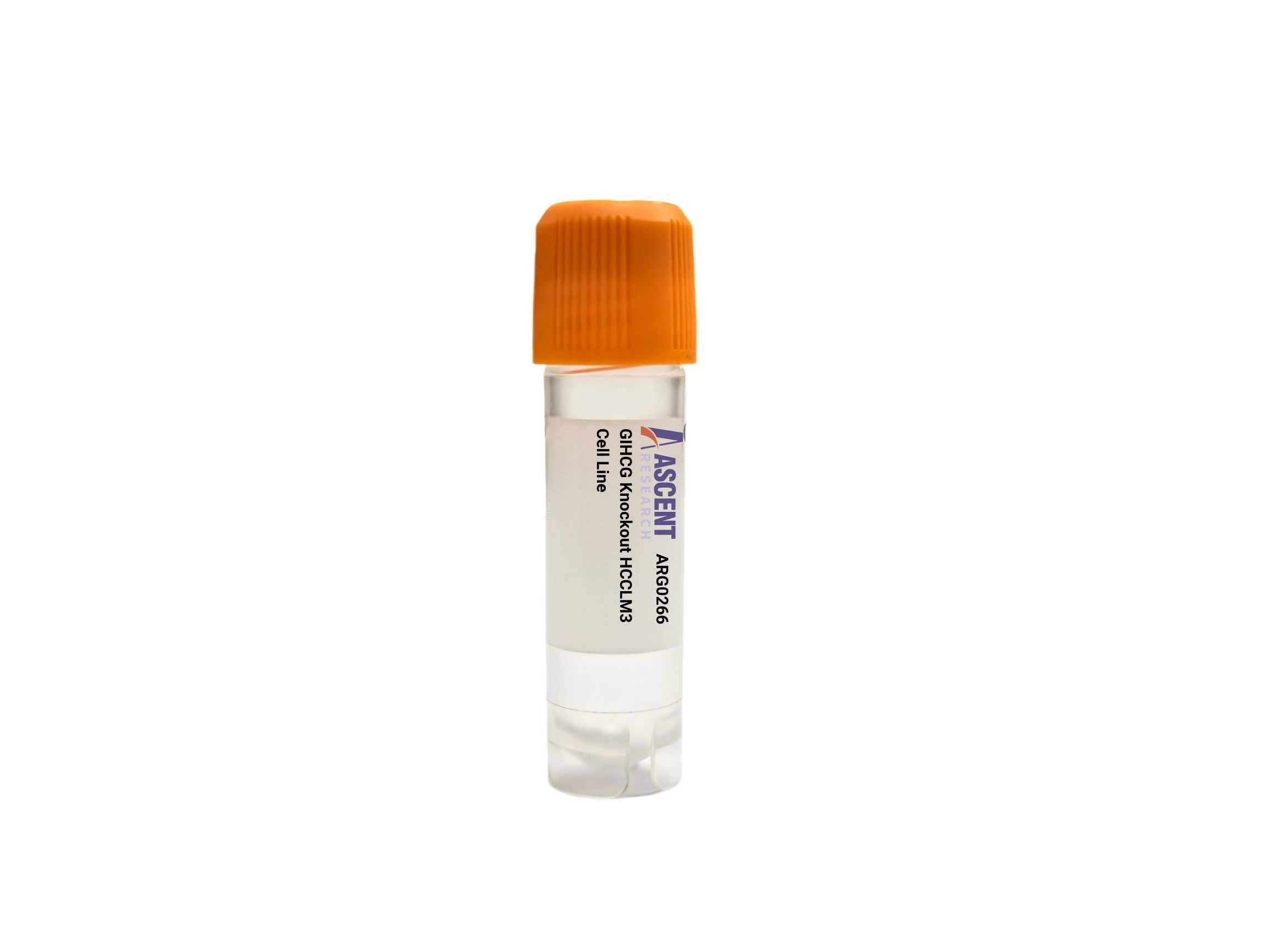
The GIHCG Knockout HCCLM3 Cell Line provides a CRISPR/Cas9-mediated loss-of-function model of GIHCG, a long non-coding RNA implicated in hepatocellular carcinoma progression. Derived from the highly metastatic HCCLM3 cell line, this knockout line disrupts GIHCG??s role in promoting migration and invasion via epigenetic silencing of Gelsolin (GSN) by EZH2 and ceRNA sponging of miR-200b-3p to upregulate ZEB1, thereby inducing epithelial-mesenchymal transition. This cell model enables detailed mechanistic studies of HCC metastasis, including chromatin immunoprecipitation, dual luciferase reporter assays, and migration and invasion assays. It is ideal for researchers investigating epigenetic regulation, ceRNA networks, and for screening anti-metastatic compounds targeting the GIHCG pathway.
 COX7A2L Knockout A2780 Polyclonal Cells
Cat. No. ARG19070
PABPC1L Knockout NCI-H1299 Polyclonal Cells
Cat. No. ARG18113
P2RX4 Knockout NCI-H1703 Polyclonal Cells
Cat. No. ARG12603
EIF4EBP3 Knockout HAP1 Polyclonal Cells
Cat. No. ARG41053
EFNB3 Knockout Hela Polyclonal Cells
Cat. No. ARG40710
LRFN4 Knockout MES-OV Polyclonal Cells
Cat. No. ARG5960
COX7A2L Knockout A2780 Polyclonal Cells
Cat. No. ARG19070
PABPC1L Knockout NCI-H1299 Polyclonal Cells
Cat. No. ARG18113
P2RX4 Knockout NCI-H1703 Polyclonal Cells
Cat. No. ARG12603
EIF4EBP3 Knockout HAP1 Polyclonal Cells
Cat. No. ARG41053
EFNB3 Knockout Hela Polyclonal Cells
Cat. No. ARG40710
LRFN4 Knockout MES-OV Polyclonal Cells
Cat. No. ARG5960
The GIHCG Knockout HCCLM3 Cell Line is a CRISPR/Cas9-edited knockout line with targeted disruption of GIHCG in the HCCLM3 hepatocellular carcinoma cell line. This loss-of-function model enables precise investigation of GIHCG, a long non-coding RNA that drives liver cancer proliferation and metastasis. The cell line provides a stable, reproducible platform for functional studies, pathway dissection, and therapeutic target validation.
HCCLM3 is a highly metastatic human HCC line established from an LCI-D20 xenograft, known for its robust lung metastatic potential. These cells recapitulate aggressive tumor behavior, including high migratory and invasive capacities, making them an ideal host for studying metastatic drivers. The knockout in this background offers a clinically relevant system to interrogate molecular mechanisms of HCC progression and to assess the role of GIHCG in these processes.
GIHCG promotes HCC metastasis through dual mechanisms: it recruits EZH2 to epigenetically silence the tumor suppressor Gelsolin (GSN) via H3K27me3 modification, and acts as a ceRNA to sponge miR-200b-3p, thereby upregulating the EMT transcription factor ZEB1. These interactions link GIHCG to critical networks controlling cell motility and invasion. Additional factors such as SUZ12, a PRC2 component, cooperate with EZH2 in epigenetic repression. Thus, GIHCG integrates epigenetic silencing and post-transcriptional regulation to drive a mesenchymal phenotype.
Knockout of GIHCG in HCCLM3 cells disrupts these oncogenic pathways, leading to derepression of GSN and reduced ZEB1 expression, which is expected to impair migration and invasion. This model allows dissection of GIHCG-dependent phenotypes and identification of compensatory mechanisms. It is particularly valuable for studying the interplay between epigenetic regulation and ceRNA networks in HCC metastasis, and for evaluating the dependency of aggressive traits on GIHCG.
Applications include RT-qPCR and western blotting for EMT markers, Transwell migration/invasion assays, ChIP for EZH2/H3K27me3 at the GSN promoter, and dual luciferase reporter assays for ceRNA activity. The knockout line also supports anti-metastatic drug screening and functional rescue experiments. For pricing and technical details, contact Ascent Research.