Genome-edited Cells
Liver
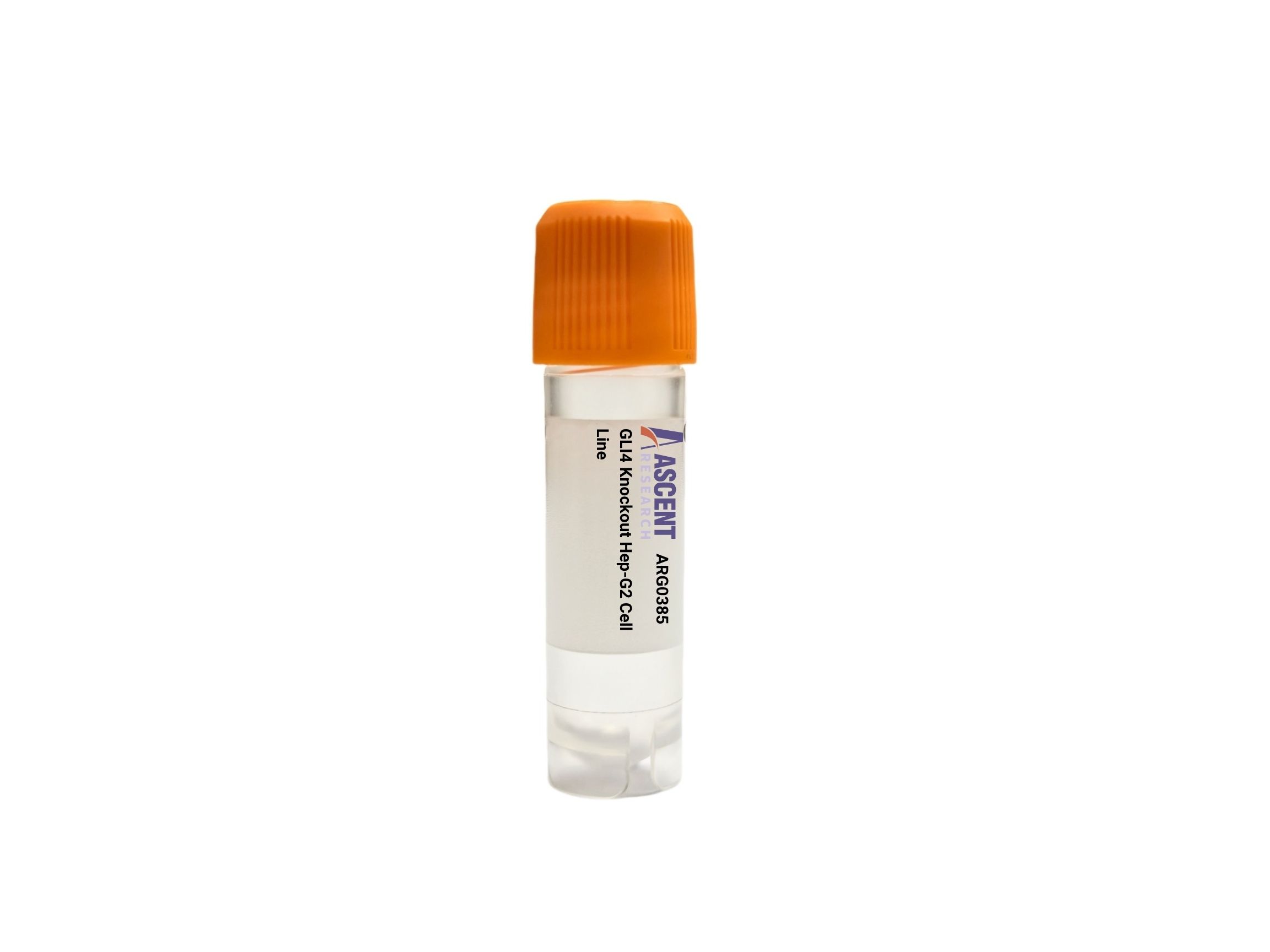
The GLI4 Knockout Hep-G2 Cell Line is a CRISPR/Cas9-edited human hepatocellular carcinoma cell model with targeted disruption of the GLI4 transcription factor gene. GLI4 is implicated in Hedgehog signaling as a transcriptional repressor, interacting with SUFU and KIF7 and regulating targets such as CCND1 and BCL2 to control cell proliferation and survival. Derived from the Hep-G2 liver cancer line, this knockout enables investigation of GLI4??s role in hepatocellular carcinoma, including Hedgehog pathway modulation, malignant phenotypes, and drug responses. Applications include functional genomics, pathway analysis, and drug screening using assays like RNA-seq, proliferation tests, and luciferase reporters.
 PAK2 Knockout HEK293 Polyclonal Cells
Cat. No. ARG12662
GLS Knockout A549 Polyclonal Cells
Cat. No. ARG10776
AFF1 Knockout jurkat Polyclonal Cells
Cat. No. ARG33759
IL1B Knockout 786-O Polyclonal Cells
Cat. No. ARG35208
PGRMC2 Knockout HEK293T Polyclonal Cells
Cat. No. ARG3755
FAM114A1 Knockout AGS Polyclonal Cells
Cat. No. ARG2137
PAK2 Knockout HEK293 Polyclonal Cells
Cat. No. ARG12662
GLS Knockout A549 Polyclonal Cells
Cat. No. ARG10776
AFF1 Knockout jurkat Polyclonal Cells
Cat. No. ARG33759
IL1B Knockout 786-O Polyclonal Cells
Cat. No. ARG35208
PGRMC2 Knockout HEK293T Polyclonal Cells
Cat. No. ARG3755
FAM114A1 Knockout AGS Polyclonal Cells
Cat. No. ARG2137
The GLI4 Knockout Hep-G2 Cell Line is a CRISPR/Cas9-edited human knockout cell line derived from the Hep-G2 hepatocellular carcinoma model, designed to disrupt GLI4 gene function. This product offers a constitutive loss-of-function model, eliminating GLI4-dependent transcriptional regulation without residual transgene expression. The stable gene disruption facilitates reproducible investigations into GLI4??s role in Hedgehog signaling and cancer biology, making it suitable for applications such as functional genomics, signaling pathway dissection, and drug target validation.
Hep-G2 is an immortalized adherent epithelial cell line established from a well-differentiated hepatocellular carcinoma of a 15-year-old male. It serves as a widely adopted model for human hepatocyte biology, retaining key hepatic functions including protein secretion, metabolic enzyme activity, and responsiveness to hormonal stimuli. Hep-G2 cells are extensively employed in drug metabolism and hepatotoxicity studies, and their relevance to hepatocellular carcinoma makes them an ideal host for investigating liver cancer mechanisms. The cell line??s robust growth characteristics and compatibility with standard molecular assays ensure reliable gene-editing outcomes.
GLI4 encodes a zinc finger transcription factor implicated in Hedgehog pathway modulation, where it is thought to function primarily as a transcriptional repressor. Within the canonical Hedgehog cascade, ligands such as SHH, IHH, and DHH bind to the receptor PTCH1, which relieves SMO inhibition and triggers downstream events involving PKA, CK1, and GSK3??. These regulators converge on GLI transcription factors, including GLI1, GLI2, and GLI3, which serve as pathway effectors. GLI4 interacts with the negative regulator SUFU and the kinesin KIF7, and it is proposed to repress the expression of target genes critical for cell cycle progression and apoptosis, including CCND1, MYC, BCL2. GLI4 disruption perturbs transcriptional outputs that govern cellular proliferation and survival.
In the context of hepatocellular carcinoma, the GLI4 Knockout Hep-G2 Cell Line provides a unique tool for dissecting the contributions of this transcription factor to liver cancer biology. Hep-G2 cells harbor a well-characterized hepatocarcinoma background, and ablation of GLI4 allows researchers to examine its role in sustaining malignant phenotypes through Hedgehog-dependent and -independent mechanisms. This model facilitates the study of altered GLI-mediated transcription, potential compensatory responses among GLI family members, and the impact on processes such as metabolic adaptation and resistance to apoptosis, which are critical in hepatic oncogenesis.
This knockout cell line suits a range of experimental approaches. RNA-seq profiling reveals GLI4-dependent gene networks, while qRT-PCR and Western blotting validate downstream targets such as CCND1 and BCL2. Functional assays include MTT/CellTiter-Glo proliferation and Annexin V/PI apoptosis detection. GLI-responsive luciferase reporters assess Hedgehog pathway activity, and immunofluorescence localizes pathway components. Applications include drug screening targeting Hedgehog signaling in liver cancers and functional genomics screens for synthetic lethal interactions. For further details, contact Ascent Research.