
In Stock Cell Lines
The Gng4 Knockout MC38 Cell Line is a CRISPR/Cas9-edited mouse colon adenocarcinoma cell line lacking functional G protein subunit gamma 4 (Gng4). Derived from the syngeneic MC38 colorectal cancer model, this knockout line enables investigation of GPCR?mediated signaling, particularly chemokine receptor pathways such as CXCR4 that respond to SDF?1 and regulate cancer cell proliferation and migration. Functional loss of Gng4 disrupts G?¦??dependent effector modulation, impacting cAMP, calcium, and MAPK signaling. The cell line is suitable for target validation, functional assays such as migration and proliferation, and studies of tumor?immune interactions in an immunocompetent background, and can be used with techniques including Western blotting and calcium flux analysis.
 GNPAT Knockout K562 Polyclonal Cells
Cat. No. ARG20467
PGM1 Knockout NCI-H1975 Polyclonal Cells
Cat. No. ARG17260
CCDC50 Knockout HGC-27 Polyclonal Cells
Cat. No. ARG43023
DIO3 Knockout HAP1 Polyclonal Cells
Cat. No. ARG38766
GNPAT Knockout K562 Polyclonal Cells
Cat. No. ARG20467
PGM1 Knockout NCI-H1975 Polyclonal Cells
Cat. No. ARG17260
CCDC50 Knockout HGC-27 Polyclonal Cells
Cat. No. ARG43023
DIO3 Knockout HAP1 Polyclonal Cells
Cat. No. ARG38766
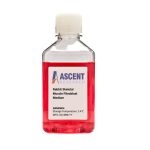 Rabbit Skeletal Muscle Fibroblast Medium
Cat. No. ARM0804
Rabbit Skeletal Muscle Fibroblast Medium
Cat. No. ARM0804
 BICR 16
Cat. No. ARC0073
BICR 16
Cat. No. ARC0073
The Gng4 Knockout MC38 Cell Line is a CRISPR/Cas9-edited knockout cell line derived from the MC38 mouse colon adenocarcinoma cell line. It offers a stable loss?of?function model for the G protein subunit gamma 4 (Gng4), enabling systematic investigation of its role in a well?characterized colorectal cancer context. Target?gene disruption is mediated by CRISPR/Cas9 technology, providing a permanent knockout that eliminates the need for transient suppression methods and ensures consistency across experiments.
MC38 cells, originally generated from a methylcholanthrene?induced tumor in C57BL/6 mice, are a cornerstone model for colorectal cancer research. These adherent cells form aggressive tumors in syngeneic immunocompetent hosts, preserving the tumor?Cimmune interactions essential for translational studies. The fully sequenced C57BL/6 background facilitates genetic and immunological analyses, and MC38 cells retain key oncogenic mutations relevant to human colorectal cancer.
Gng4 encodes the gamma?4 subunit of heterotrimeric G proteins and functions as an integral member of the G?¦? dimer complex. Activated by G protein?coupled receptors (GPCRs) such as CXCR4 upon ligand (e.g., SDF?1/CXCL12) binding, G?¦? dimers containing Gng4 directly regulate downstream effectors including adenylyl cyclase, phospholipase C (PLC), and various ion channels. This controls production of second messengers like cAMP and calcium, and feeds into MAPK pathway activation. Knockout of Gng4 therefore abrogates a specific arm of GPCR?G?¦? signaling, disrupting the transduction cascades that couple extracellular chemokine gradients to intracellular responses. The gamma?4 subunit interacts with G?? and G?? subunits and is critical for the proper assembly and function of certain heterotrimeric G protein populations.
In the MC38 colorectal cancer model, loss of Gng4 impairs CXCR4?mediated pathways that drive tumor cell proliferation, migration, and survival. The knockout line allows researchers to uncouple the contribution of Gng4 from other gamma subunits, clarifying its role in chemotaxis, anchorage?independent growth, and resistance to apoptosis. Moreover, because MC38 cells are syngeneic, this model is well?suited for examining how tumor?intrinsic Gng4 signaling influences the immune tumor microenvironment.
This Gng4 Knockout MC38 Cell Line is designed for applications such as drug target validation, GPCR signaling dissection, and functional genomics in colorectal cancer. Compatible assays include Western blotting and RT?qPCR for knockout confirmation, calcium flux and cAMP measurements for signaling readouts, and proliferation and migration assays to assess phenotypic consequences. The cell line also supports pharmacological rescue studies and in vivo tumor models. For further details on validation, custom requests, and ordering, please contact Ascent Research.

