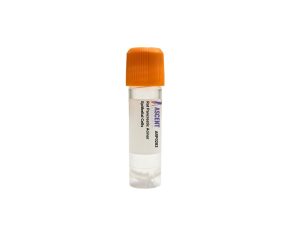
In Stock Cell Lines
Homo sapiens (Human)
Blood (peripheral blood)
Suspension
The GPSM1 Knockout THP-1 Cell Line is a CRISPR/Cas9-edited human THP-1 monocytic leukemia line with disruption of GPSM1 (AGS3), a GDI for G??i/o subunits. It allows study of GPSM1-dependent autophagy (via G??i3-mTORC1-ULK1) and asymmetric division signaling. Ideal for GPCR signaling, cAMP dynamics, macrophage polarization, and leukemia differentiation studies, it supports autophagy flux, calcium flux, and immunophenotyping assays. Provides a defined system for drug target validation and functional immune/cancer biology research.
 NMNAT2 Knockout HT29 Polyclonal Cells
Cat. No. ARG14251
Erbin Knockout Lovo Polyclonal Cells
Cat. No. ARG11735
ATG16L1 Knockout jurkat Polyclonal Cells
Cat. No. ARG33949
NENF Knockout 786-O Polyclonal Cells
Cat. No. ARG5393
NMNAT2 Knockout HT29 Polyclonal Cells
Cat. No. ARG14251
Erbin Knockout Lovo Polyclonal Cells
Cat. No. ARG11735
ATG16L1 Knockout jurkat Polyclonal Cells
Cat. No. ARG33949
NENF Knockout 786-O Polyclonal Cells
Cat. No. ARG5393
 NPHP3 Knockout HK-2 Cell Line
Cat. No. ARG0414
NPHP3 Knockout HK-2 Cell Line
Cat. No. ARG0414
 C11orf86 Knockout A-549 Cell Line
Cat. No. ARG0070
C11orf86 Knockout A-549 Cell Line
Cat. No. ARG0070
The GPSM1 Knockout THP-1 Cell Line is a CRISPR/Cas9-edited knockout cell line derived from the human THP-1 monocytic leukemia cell line, featuring targeted disruption of the GPSM1 gene. This loss-of-function model provides a robust system for interrogating GPSM1-dependent cellular mechanisms.
THP-1 cells were established from the peripheral blood of a one-year-old male with acute monocytic leukemia and are extensively employed to study monocyte/macrophage differentiation, immune signaling, and inflammatory responses. Their capacity to adopt macrophage-like states upon stimulation makes them a versatile host for dissecting both leukemic and normal monocyte functions.
GPSM1 (AGS3) acts as a guanine nucleotide dissociation inhibitor for G??i/o subunits (GNAI1/2/3, GNAO1), binding GDP-bound forms to regulate their participation in GPCR cascades and non-canonical pathways. It is regulated by AKT and GPCR-induced G??i/o activation. GPSM1 modulates autophagy by sequestering G??i3, leading to mTORC1 inhibition and ULK1 activation, with downstream involvement of Beclin-1 and LC3. In mitotic spindle orientation, it interacts with NuMA and dynein, and its signaling integrates with Wnt and Hippo pathways via interactions with Frizzled and Dishevelled.
In the THP-1 background, GPSM1 disruption enables focused analysis of G protein signaling dynamics, autophagy regulation, and their contributions to leukemic phenotype and macrophage polarization. This knockout facilitates examination of cAMP flux, calcium mobilization, and transcriptional responses downstream of GPCRs and cytokine receptors, offering insights into leukemia cell survival and differentiation.
Research applications include Western blotting of G??i and LC3, RT-qPCR knockout confirmation, flow cytometry for monocyte/macrophage markers, autophagy flux assays, cAMP accumulation experiments, and cell adhesion/migration studies. The line supports GPCR drug target validation, immune modulation research, and RNA-seq-based transcriptomic profiling. For further details, reach out to Ascent Research.