Genome-edited Cells
Pleural effusion
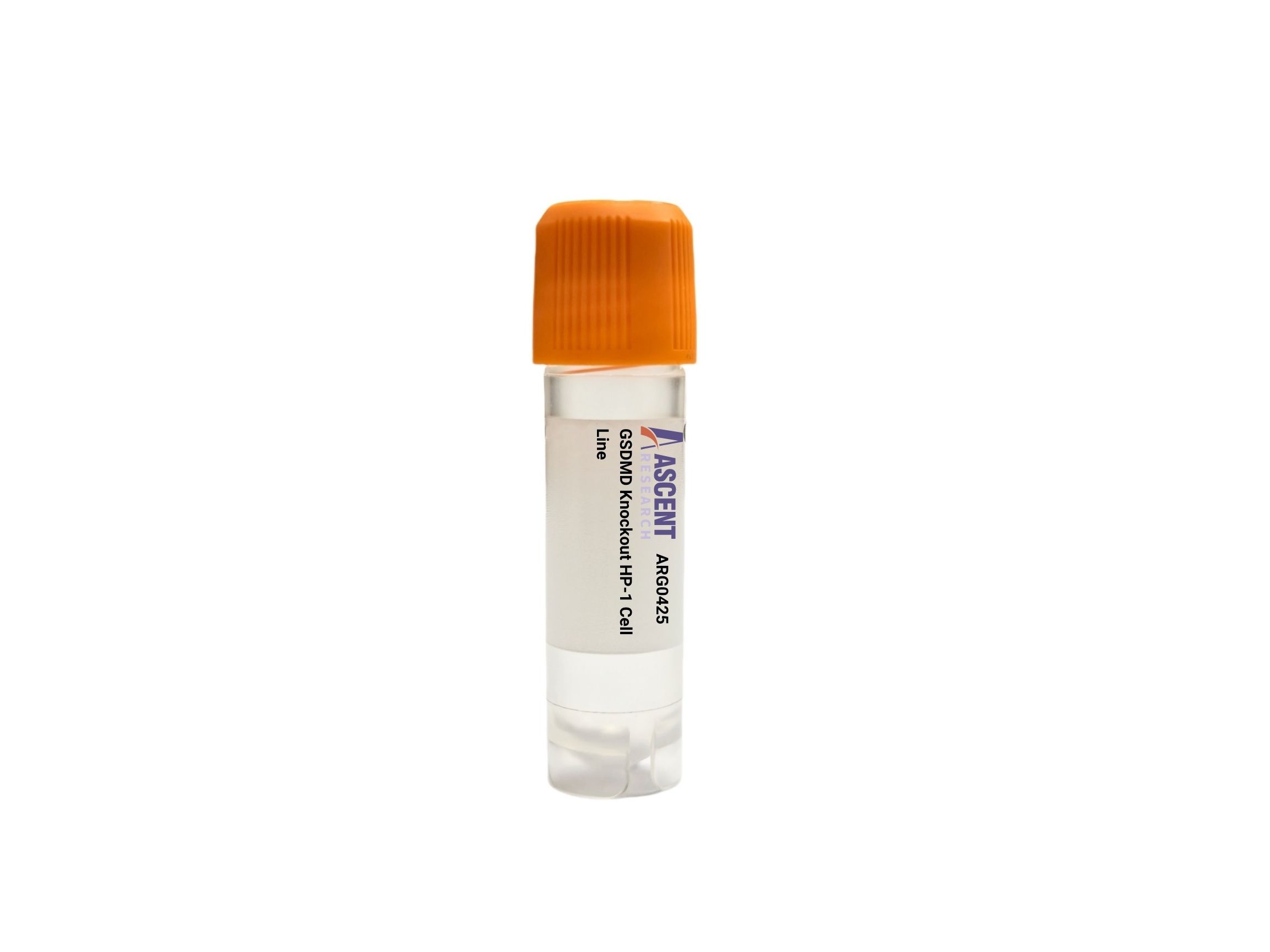
The GSDMD Knockout HP-1 Cell Line is a CRISPR/Cas9-edited human monocytic leukemia cell line with targeted disruption of GSDMD, the pore-forming executor of pyroptosis. This model lacks the ability to undergo pyroptotic cell death and release pro-inflammatory cytokines, offering a clean background for studying inflammasome signaling and IL-1?? secretion. Derived from HP-1 cells, which possess innate immune functions, this knockout line is ideal for investigations into NLRP3, NLRC4, and AIM2 inflammasome pathways and their downstream effects mediated by caspases and GSDMD. Applications include mechanistic studies of inflammatory cell death, drug screening for anti-inflammatory agents, and host-pathogen interaction analyses.
The GSDMD Knockout HP-1 Cell Line is a CRISPR/Cas9-edited human cell line derived from the HP-1 monocytic leukemia line, featuring targeted disruption of the GSDMD gene. This knockout model eliminates GSDMD protein expression, the key executor of pyroptotic cell death, enabling precise dissection of inflammasome signaling cascades. The stable cell line provides a consistent genetic background for studying the functional consequences of GSDMD deficiency in a human myeloid cell context, without confounding variables from transient silencing approaches.
The HP-1 parental cell line originates from a human acute monocytic leukemia and retains hallmark monocyte/macrophage features, including phagocytic activity, cytokine secretion, and competence for inflammasome-mediated pyroptosis. These cells respond robustly to canonical and non-canonical inflammasome activators, making them an ideal host for investigating GSDMD-dependent pathways in innate immunity. The monocytic lineage ensures relevance to studies of myeloid-driven inflammatory diseases.
On a molecular level, GSDMD is cleaved by inflammatory caspases such as caspase-1, caspase-4, and caspase-5 following activation of inflammasomes like NLRP3, NLRC4, or AIM2. This cleavage releases the N-terminal pore-forming domain, which oligomerizes in the plasma membrane to create pores that facilitate the release of IL-1??, IL-18, and HMGB1, culminating in membrane rupture and lytic cell death. The process is regulated by upstream signals including LPS, ATP, and nigericin, and involves co-factors such as NINJ1, cardiolipin, and the ASC speck. Disruption of GSDMD abolishes this cascade, providing a tool to separate pore formation from inflammasome assembly and cytokine processing.
In the HP-1 background, knockout of GSDMD fundamentally alters the cellular outcome of inflammasome activation, shifting from pyroptosis toward apoptosis or cell survival. This enables deconvolution of the distinct roles of GSDMD in cytokine release and cell death from upstream inflammasome signaling and caspase activity. Consequently, this cell line is highly valuable for modeling inflammatory pathologies such as sepsis, inflammatory bowel disease, gout, cryopyrin-associated periodic syndromes, and the hyperinflammatory responses in COVID-19.
Common research applications include dissecting pyroptosis mechanisms, high-throughput screening of anti-inflammatory compounds modulating inflammasome pathways, and exploring host-pathogen interactions where microbial triggers engage the NLRP3 or AIM2 inflammasomes. Representative assays compatible with this model include western blotting for GSDMD cleavage, LDH release assays to quantify pyroptosis, IL-1?? ELISA for cytokine measurement, immunofluorescence imaging of ASC specks and GSDMD localization, flow cytometric assessment of cell viability with propidium iodide, and caspase-1 activity measurements. For additional information or technical inquiries, please contact Ascent Research.