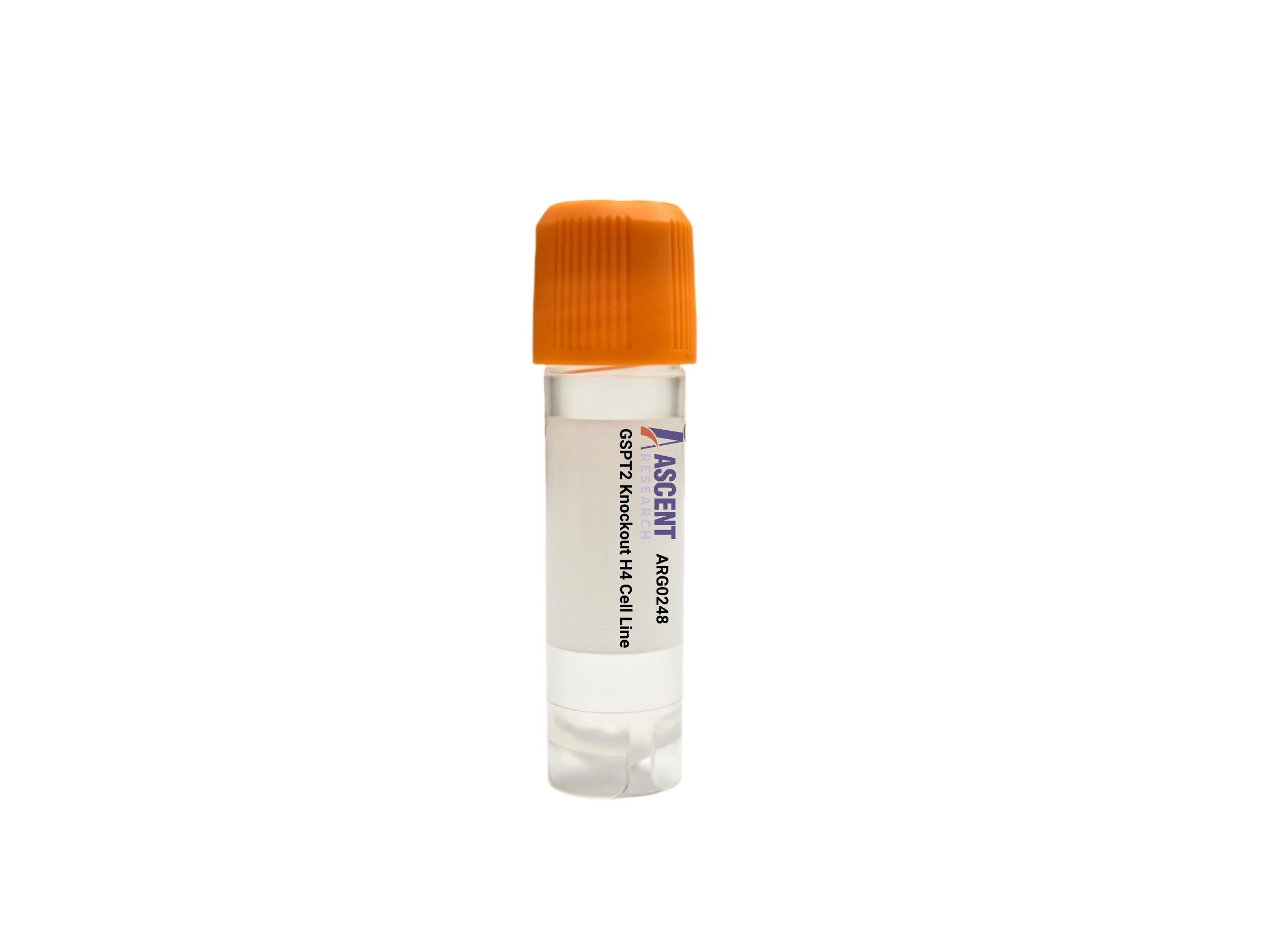
Genome-edited Cells
Brain
The GSPT2 Knockout H4 Cell Line is a CRISPR/Cas9-edited human neuroglioma cell model for functional studies of GSPT2 (eRF3b), a GTPase mediating translation termination and nonsense-mediated mRNA decay (NMD). Derived from a male glioblastoma patient, H4 cells retain glial and neuronal features relevant to brain cancer research. GSPT2 interacts with eRF1 and UPF1 to regulate stop codon recognition and mRNA surveillance, with activity modulated by mTOR signaling and cellular stress. This knockout line enables dissection of GSPT2 roles in global protein synthesis and NMD substrate stabilization in glioblastoma. Key applications include RT-qPCR for NMD targets, polysome profiling, and translation reporter assays to assess termination fidelity. Researchers can explore how GSPT2 deficiency impacts tumor cell proliferation and stress responses, advancing insights into RNA quality control in neurological disorders.
 DBNL Knockout A549 Polyclonal Cells
Cat. No. ARG10573
ARHGEF28 Knockout huh-7 Polyclonal Cells
Cat. No. ARG27975
AP1S1 Knockout NCI-H1299 Polyclonal Cells
Cat. No. ARG30356
AGL Knockout A549 Polyclonal Cells
Cat. No. ARG31372
ABCD4 Knockout HT29 Polyclonal Cells
Cat. No. ARG32801
NOMO1 Knockout AGS Polyclonal Cells
Cat. No. ARG2993
DBNL Knockout A549 Polyclonal Cells
Cat. No. ARG10573
ARHGEF28 Knockout huh-7 Polyclonal Cells
Cat. No. ARG27975
AP1S1 Knockout NCI-H1299 Polyclonal Cells
Cat. No. ARG30356
AGL Knockout A549 Polyclonal Cells
Cat. No. ARG31372
ABCD4 Knockout HT29 Polyclonal Cells
Cat. No. ARG32801
NOMO1 Knockout AGS Polyclonal Cells
Cat. No. ARG2993
The GSPT2 Knockout H4 Cell Line is a CRISPR/Cas9-edited human cell model designed for the targeted disruption of the GSPT2 gene in the H4 neuroglioma background. GSPT2, also referred to as eRF3b, encodes a class-II translation termination factor that functions as a GTPase essential for stop codon recognition and polypeptide chain release. This knockout cell line provides a reliable loss-of-function system to dissect the roles of GSPT2 in translation fidelity and nonsense-mediated mRNA decay (NMD). It is well-suited for advanced biomedical research, enabling precise investigation of post-transcriptional gene regulation in a disease-relevant cellular context.
The H4 cell line was originally derived from a male patient with glioblastoma multiforme and exhibits characteristic features of both glial and neuronal lineages. It retains key oncogenic signaling pathways and proliferative properties typical of high-grade gliomas, making it a widely accepted model for glioblastoma biology. The neuroglioma origin provides a native-like environment for studying translational control mechanisms that are often dysregulated in brain tumors. This background is particularly valuable for evaluating how alterations in the translation machinery contribute to gliomagenesis and for screening potential therapeutic interventions targeting protein synthesis.
GSPT2 operates at the intersection of translation termination and mRNA quality control. In complex with eRF1 (ETF1), GSPT2 recognizes stop codons and triggers GTP-dependent release of the nascent polypeptide from the ribosome. Beyond termination, GSPT2 plays a critical role in NMD by interacting with UPF1, a central factor that directs aberrant mRNAs for degradation, and with PABPC1, linking termination efficiency to poly(A) tail dynamics. The activity of GSPT2 is subject to regulation by upstream signals, including mTOR signaling, amino acid deprivation, and various cellular stress pathways. Consequently, GSPT2 influences global protein synthesis rates and determines the half-lives of NMD substrates, many of which encode regulatory proteins.
In glioblastoma, perturbed NMD and altered translation termination can promote the accumulation of truncated or oncogenic proteins, fueling tumor progression. The GSPT2 knockout in H4 cells provides a precise tool to examine how loss of this factor affects the stability of NMD targets that may function as tumor suppressors or oncogenes. This model enables researchers to assess the impact on cell proliferation, stress responses, and the expression of neuronal or glial markers, offering insights into RNA surveillance defects that may be exploited therapeutically. It also facilitates the study of the interplay between mTOR-regulated translational control and NMD in the context of brain cancer.
This GSPT2 Knockout H4 Cell Line is a robust platform for a variety of experimental approaches. Western blotting can confirm GSPT2 protein depletion, while RT-qPCR assays targeting known NMD substrates reveal changes in transcript abundance. Polysome profiling permits analysis of ribosome occupancy and translation dynamics, and translation reporter assays directly measure stop codon readthrough efficiency. Cell proliferation and viability assays further elucidate the functional consequences of GSPT2 loss on glioblastoma cell growth. This cell line is an essential resource for advancing the understanding of translational control in cancer. For additional information or custom requests, please contact Ascent Research.