Genome-edited Cells
Liver
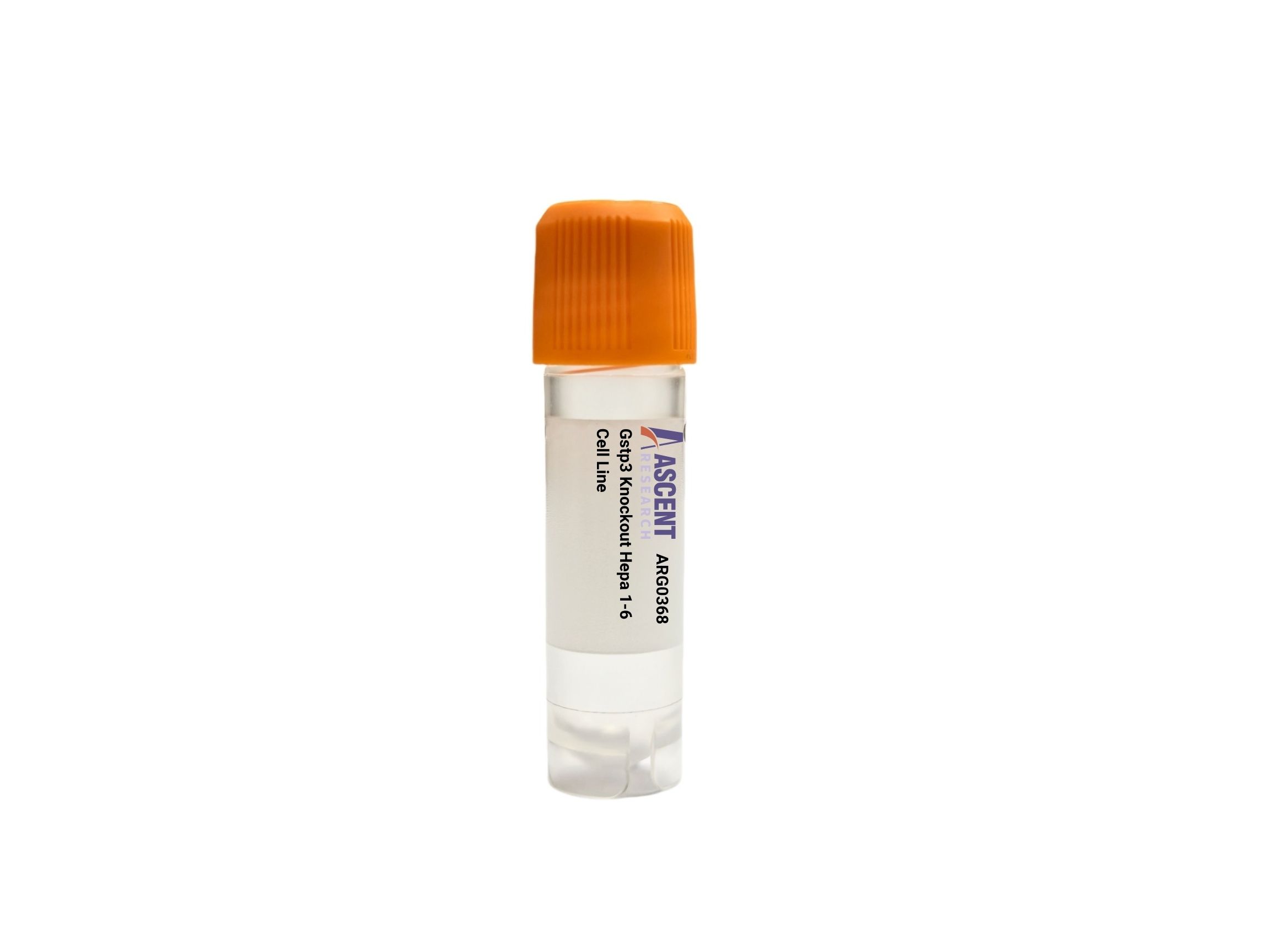
The Gstp3 Knockout Hepa 1-6 Cell Line is a CRISPR/Cas9-edited knockout cell line derived from the murine Hepa 1-6 hepatocellular carcinoma model. This loss-of-function tool targets the Gstp3 gene, encoding a glutathione S-transferase that conjugates electrophiles and inhibits JNK kinase signaling via direct interaction with JNK, TRAF2, and ASK1. Gstp3 expression is under the control of the Nrf2-ARE antioxidant pathway and AhR, integrating detoxification with stress survival networks. By ablating GSTP3 function, this model is ideal for investigating hepatic drug metabolism, oxidative stress responses, and chemoresistance mechanisms in liver cancer. Researchers can employ it for GST activity assays, JNK phosphorylation analysis, and drug sensitivity testing, making it a versatile platform for toxicology and oncology studies.
 EML4 Knockout jurkat Polyclonal Cells
Cat. No. ARG13221
NAMPT Knockout A549 Polyclonal Cells
Cat. No. ARG10889
KDM5C Knockout CAL27 Polyclonal Cells
Cat. No. ARG35889
C18orf32 Knockout HAP1 Polyclonal Cells
Cat. No. ARG27434
PAN3 Knockout HEK293T Polyclonal Cells
Cat. No. ARG3902
EML4 Knockout jurkat Polyclonal Cells
Cat. No. ARG13221
NAMPT Knockout A549 Polyclonal Cells
Cat. No. ARG10889
KDM5C Knockout CAL27 Polyclonal Cells
Cat. No. ARG35889
C18orf32 Knockout HAP1 Polyclonal Cells
Cat. No. ARG27434
PAN3 Knockout HEK293T Polyclonal Cells
Cat. No. ARG3902
 DMS 153
Cat. No. ARC0169
DMS 153
Cat. No. ARC0169
The Gstp3 Knockout Hepa 1-6 Cell Line is a CRISPR/Cas9-mediated gene disruption model derived from the murine Hepa 1-6 hepatocellular carcinoma line. It provides a targeted loss-of-function system for studying glutathione S-transferase pi 3 (GSTP3) without altering the host cell??s hepatic carcinoma background. This cell line serves as a clean loss-of-function tool for investigating glutathione metabolism and stress signaling.
Hepa 1-6 cells were established from a spontaneous hepatoma in C57L/J mice and are widely utilized as a syngeneic model for hepatocyte biology and liver cancer. They maintain key liver-specific functions, including expression of phase I and II metabolic enzymes, making them suitable for drug metabolism and toxicity studies. Their C57BL/6-compatible background allows allograft experiments to evaluate tumor-host interactions. The parental line’s well-documented genotype and phenotype provide a reliable platform for genetic modification. The Gstp3 knockout version preserves these attributes while eliminating GSTP3 activity.
GSTP3 catalyzes glutathione conjugation of electrophilic substrates, facilitating their detoxification. In addition, it directly binds and inhibits JNK, TRAF2, and ASK1, thereby suppressing the JNK signaling cascade and apoptosis. Upstream, Gstp3 is transcriptionally regulated by Nrf2 and AhR in response to oxidative and electrophilic stresses. This enzymatic and non-enzymatic dual function makes GSTP3 a critical regulator of hepatocellular homeostasis. This positions GSTP3 at a nexus between glutathione-dependent metabolism and stress kinase networks, influencing cell survival and drug resistance. Loss of GSTP3 disrupts this balance, sensitizing cells to JNK-mediated apoptosis and oxidative damage.
In the hepatocellular carcinoma context, Gstp3 knockout nullifies a critical node in chemoresistance and antioxidant defense. Hepa 1-6 cells lacking GSTP3 exhibit enhanced susceptibility to oxidative stress and electrophilic agents, as well as altered JNK phosphorylation dynamics. This model is particularly valuable for interrogating the Nrf2-ARE pathway??s role in liver cancer, as GSTP3 is a downstream effector. The knockout line also enables study of TNF-alpha-induced apoptosis via the TRAF2?CASK1?CJNK axis. Consequently, the Gstp3 knockout line provides a valuable resource for dissecting GSTP3-dependent mechanisms in hepatic carcinogenesis and therapy resistance.
The cell line supports applications such as GST activity measurements, western blotting for JNK and phospho-JNK, RT-qPCR for pathway gene expression, and drug sensitivity assays using hepatic toxins or chemotherapeutics. It can be employed in oxidative stress challenges and high-throughput toxicology screens to identify GSTP3-substrate interactions. Additionally, this line can be used to examine GSTP3??s role in modulating MAPK pathway crosstalk and apoptotic thresholds. For further information on this knockout model and customized services, please contact Ascent Research.