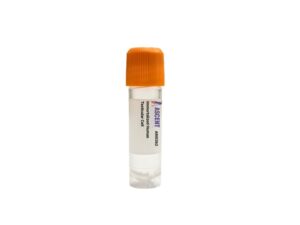
In Stock Cell Lines
Homo sapiens (Human)
Blood (peripheral blood)
Suspension
The HDAC1 Knockout Jurkat Cell Line is a CRISPR/Cas9-edited knockout model derived from Jurkat human T lymphocyte leukemia cells. It enables loss-of-function studies of histone deacetylase 1, a transcriptional repressor that operates within SIN3A, NuRD, and CoREST corepressor complexes and regulates key targets such as p21 and c-Myc. By disrupting HDAC1-mediated chromatin remodeling, this model aids in investigating T cell signaling, apoptosis, and leukemia biology. It is suitable for applications including drug screening, epigenetic profiling, and functional genomics assays such as western blotting, RT-qPCR, and flow cytometry.
 EMP3 Knockout SK-HEP-1 Polyclonal Cells
Cat. No. ARG15629
AZI2 Knockout A2780 Polyclonal Cells
Cat. No. ARG28856
IMPACT Knockout jurkat Polyclonal Cells
Cat. No. ARG34332
C4BPA Knockout A2780 Polyclonal Cells
Cat. No. ARG41468
ATG16L1 Knockout HAP1 Polyclonal Cells
Cat. No. ARG27346
GALNT1 Knockout MES-OV Polyclonal Cells
Cat. No. ARG6288
EMP3 Knockout SK-HEP-1 Polyclonal Cells
Cat. No. ARG15629
AZI2 Knockout A2780 Polyclonal Cells
Cat. No. ARG28856
IMPACT Knockout jurkat Polyclonal Cells
Cat. No. ARG34332
C4BPA Knockout A2780 Polyclonal Cells
Cat. No. ARG41468
ATG16L1 Knockout HAP1 Polyclonal Cells
Cat. No. ARG27346
GALNT1 Knockout MES-OV Polyclonal Cells
Cat. No. ARG6288
The HDAC1 Knockout Jurkat Cell Line is a CRISPR/Cas9-edited knockout cell line providing a loss-of-function model for studying histone deacetylase 1 (HDAC1). Derived via CRISPR/Cas9-mediated gene disruption, this product enables investigation of HDAC1’s role in transcriptional regulation and chromatin remodeling. It is a valuable resource for functional genomics and epigenetics research.
The host Jurkat cell line is an immortalized human T lymphocyte line established from acute T cell leukemia. Widely employed as a model for T cell signaling and apoptosis, Jurkat cells exhibit well-characterized pathways relevant to leukemia biology and immunology. Their robust proliferation and genetic tractability make them ideal for knockout studies.
HDAC1 is a class I histone deacetylase that removes acetyl groups from histones, promoting chromatin compaction and transcriptional repression. It operates within corepressor complexes such as SIN3A, NuRD, and CoREST, interacting with scaffold proteins RbAp46/RbAp48 and MTA1/2. Upstream regulators including CK2 kinase and p53 modulate HDAC1 activity. HDAC1 transcriptionally represses targets like p21 (CDKN1A), c-Myc, E2F target genes, and pro-apoptotic factors, thereby controlling cell cycle progression and apoptosis. In Notch signaling, HDAC1 forms repressive complexes with NICD, CSL, and MAML1, counteracting co-activators like p300/CBP. This integration of signals from Wnt, TGF-beta, and p53 pathways underscores HDAC1’s role in coordinating gene expression.
In Jurkat T leukemia cells, HDAC1-mediated suppression of tumor suppressors and apoptotic genes contributes to oncogenic transformation. Knockout of HDAC1 disrupts these repressive mechanisms, leading to altered expression of p21, c-Myc, and pro-apoptotic targets. This cell line thus provides a relevant model for dissecting epigenetic drivers of T cell leukemia and lymphoma. It enables investigation of how HDAC1 loss impacts cell cycle checkpoints and apoptotic signaling in a malignant background.
This knockout cell line is suited for diverse assays including western blotting for HDAC1 and acetyl-histone levels, RT-qPCR for target gene expression, ChIP-qPCR for histone modification mapping, and flow cytometry for apoptosis and proliferation analyses. Applications span drug sensitivity screening, functional genomics, and mechanistic studies of T cell signaling. For further information, contact Ascent Research.