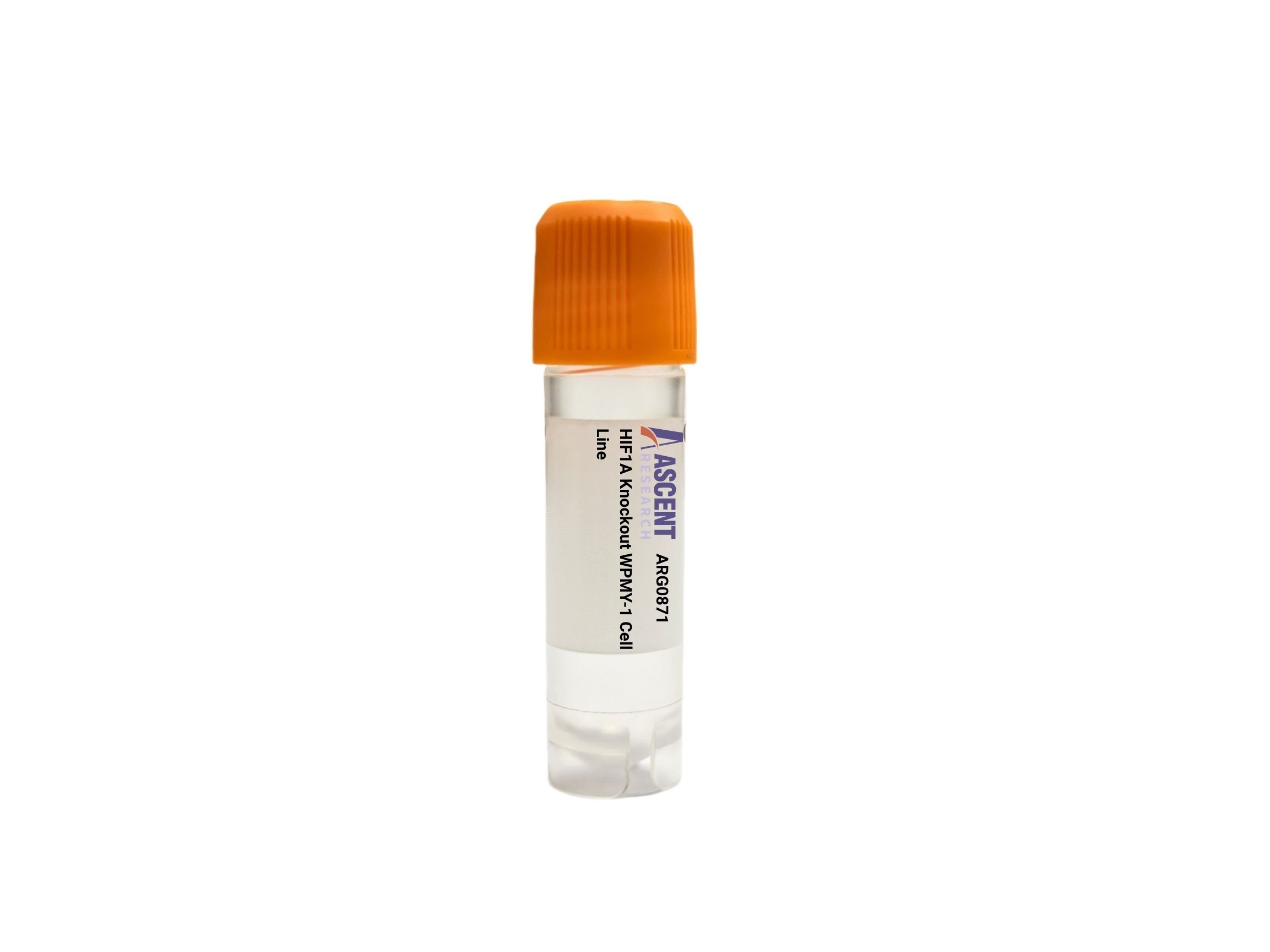
Genome-edited Cells
Prostate
The HIF1A Knockout WPMY-1 Cell Line is a CRISPR/Cas9-edited knockout model targeting HIF1A in human prostate stromal myofibroblasts (WPMY-1). HIF1A, the oxygen-regulated HIF-1 subunit, activates genes driving angiogenesis (VEGF) and glycolysis (GLUT1, LDHA). In the prostate microenvironment, HIF1A modulates stromal remodeling and paracrine crosstalk. Applications include assays for hypoxia response (western blotting, HRE reporter), RT-qPCR, ChIP-qPCR, and functional studies of migration, metabolism, and drug resistance. This tool supports research into tumor-stromal interactions and HIF-targeted therapies.
 FGFR3 Knockout SW1353 Cell Line
Cat. No. ARG43856
FGFR3 Knockout SW1353 Cell Line
Cat. No. ARG43856
 HPSE Knockout 786-O Polyclonal Cells
Cat. No. ARG25291
HSPA4L Knockout HGC-27 Polyclonal Cells
Cat. No. ARG29976
CAPN3 Knockout HAP1 Polyclonal Cells
Cat. No. ARG42205
BBX Knockout HAP1 Polyclonal Cells
Cat. No. ARG27380
HPSE Knockout 786-O Polyclonal Cells
Cat. No. ARG25291
HSPA4L Knockout HGC-27 Polyclonal Cells
Cat. No. ARG29976
CAPN3 Knockout HAP1 Polyclonal Cells
Cat. No. ARG42205
BBX Knockout HAP1 Polyclonal Cells
Cat. No. ARG27380
 BRCA2 Knockout HCT 15 Cell Line
Cat. No. ARG0284
BRCA2 Knockout HCT 15 Cell Line
Cat. No. ARG0284
The HIF1A Knockout WPMY-1 Cell Line is a CRISPR/Cas9-edited knockout cell line derived from the human prostate stromal myofibroblast cell line WPMY-1. This loss-of-function model disrupts expression of the HIF1A gene, which encodes hypoxia-inducible factor 1-alpha, a central transcriptional regulator. The cell line enables specific investigation of HIF1A-dependent processes in a stromal context.
The host cell line, WPMY-1, is an immortalized human prostate stromal myofibroblast line derived from the peripheral zone of normal prostate. These cells model the prostatic stroma, providing structural support and paracrine signals. WPMY-1 is a well-established system for studying tumor microenvironment interactions, particularly the contribution of stromal cells to cancer progression and hypoxia-related biology.
HIF1A encodes the oxygen-sensitive alpha subunit of HIF-1, which heterodimerizes with ARNT. Under normoxia, HIF1A is hydroxylated by PHD enzymes, leading to VHL-mediated ubiquitination and proteasomal degradation. Hypoxia inhibits PHDs, stabilizing HIF1A, which then translocates to the nucleus, dimerizes with ARNT, and binds HREs to activate transcription of target genes. Upstream regulation includes growth factors (EGF, IGF), cytokines (TNF-??), and PI3K/AKT/mTOR signaling. Downstream targets include VEGF, EPO, GLUT1, LDHA, PDK1, and BNIP3, promoting angiogenesis, glycolysis, and survival. Coactivators such as p300/CBP and HSP90 facilitate HIF1A transcriptional activity, while HDACs and other coregulators modulate function.
In the prostate stromal context, HIF1A plays a critical role in the tumor microenvironment by orchestrating adaptive responses to low oxygen. Stromal HIF1A can drive paracrine secretion of VEGF and other factors, influencing tumor angiogenesis, metabolic coupling, and drug resistance. The HIF1A Knockout WPMY-1 cell line serves as a specific tool to isolate stromal contributions to hypoxia-driven pathologies, enabling studies free from epithelial HIF1A confounding effects.
Researchers can apply this knockout model in diverse assays including western blotting, RT-qPCR, HRE luciferase reporter assays, ChIP-qPCR, and immunofluorescence to validate HIF1A loss and downstream effects. Functional studies such as migration, invasion, and metabolic assays (glucose uptake, lactate) under hypoxia, as well as co-culture experiments with prostate cancer cells, are enabled. The cell line is also suited for drug screening targeting the HIF pathway. For further details, contact Ascent Research.