Genome-edited Cells
Stomach
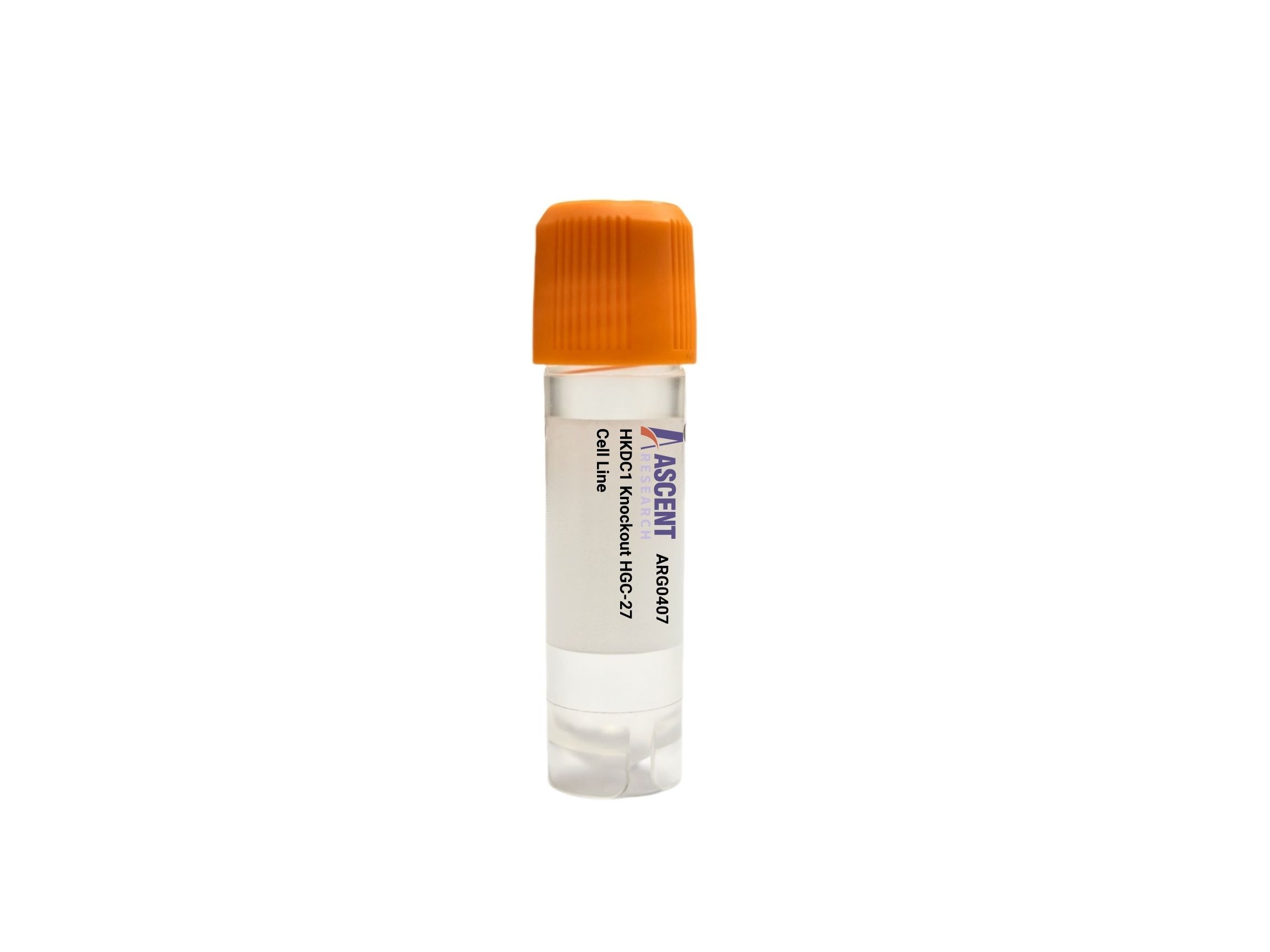
The HKDC1 Knockout HGC-27 Cell Line is a CRISPR/Cas9-edited gastric cancer line enabling loss-of-function studies of hexokinase domain-containing protein 1 (HKDC1). HKDC1 phosphorylates glucose to glucose-6-phosphate, a reaction regulated by HIF1A and c-MYC, and cooperates with VDAC1 and HK2 to sustain glycolytic flux and mitochondrial metabolism. Its downstream products include pyruvate and lactate, critical for biosynthesis and proliferation. This model, derived from metastatic gastric adenocarcinoma, is used to investigate metabolic reprogramming, chemosensitivity, and synthetic lethality. It supports assays for glycolytic flux, proliferation, and tumor cell survival, and is a valuable tool for elucidating HKDC1-dependent oncogenic mechanisms.
 NEDD4 Knockout A2780 Polyclonal Cells
Cat. No. ARG19178
PFKFB2 Knockout NCI-H1975 Polyclonal Cells
Cat. No. ARG16967
ACSS2 Knockout NCI-H1975 Polyclonal Cells
Cat. No. ARG31011
ACYP1 Knockout SK-HEP-1 Polyclonal Cells
Cat. No. ARG32049
CADM1 Knockout Hela Polyclonal Cells
Cat. No. ARG41787
MAGEA1 Knockout HEK293T Polyclonal Cells
Cat. No. ARG3353
NEDD4 Knockout A2780 Polyclonal Cells
Cat. No. ARG19178
PFKFB2 Knockout NCI-H1975 Polyclonal Cells
Cat. No. ARG16967
ACSS2 Knockout NCI-H1975 Polyclonal Cells
Cat. No. ARG31011
ACYP1 Knockout SK-HEP-1 Polyclonal Cells
Cat. No. ARG32049
CADM1 Knockout Hela Polyclonal Cells
Cat. No. ARG41787
MAGEA1 Knockout HEK293T Polyclonal Cells
Cat. No. ARG3353
The HKDC1 Knockout HGC-27 Cell Line is a CRISPR/Cas9-edited human gastric cancer line with targeted disruption of the HKDC1 gene. This constitutive loss-of-function model enables precise investigation of hexokinase domain-containing protein 1 in a metastatic gastric adenocarcinoma background. The cell line retains the genomic integrity of parental HGC-27 cells except for the edited HKDC1 locus, making it suitable for dissecting HKDC1-dependent metabolic and oncogenic pathways.
Derived from a lymph node metastasis of gastric adenocarcinoma, HGC-27 cells represent a highly aggressive and metastatic model widely used in gastric cancer research. Their rapid proliferation and invasive nature, combined with typical aberrations in signaling and metabolism, make them an ideal host for studying genes that drive tumor progression and therapeutic resistance. The knockout line thus provides a clinically relevant platform to explore the role of HKDC1 in advanced gastric cancer.
HKDC1 encodes a hexokinase that phosphorylates glucose to glucose-6-phosphate, initiating glycolysis and linking glucose metabolism to mitochondrial function. Its expression is regulated by HIF1A, c-MYC, and insulin/PI3K/AKT/mTOR signaling, responding to hypoxic and nutrient signals. HKDC1 interacts with mitochondrial outer membrane proteins such as VDAC1 and cooperates with HK2 to coordinate glycolytic flux and oxidative phosphorylation. Downstream, HKDC1-generated glucose-6-phosphate feeds into pyruvate and lactate production via PFKL and PKM2, sustaining ATP generation and biosynthetic precursors necessary for proliferation.
In HGC-27 cells, HKDC1 deletion disrupts glycolytic and mitochondrial metabolism, markedly reducing ATP and biosynthetic intermediate pools. This metabolic collapse impairs cell proliferation, survival, and clonogenic growth, mirroring the heavy reliance of gastric cancer cells on glucose catabolism. Consequently, the knockout model illuminates the metabolic vulnerabilities of metastatic gastric adenocarcinoma and offers a system to identify compensatory mechanisms or synthetic lethal interactions that can be exploited therapeutically.
Typical applications include quantifying glycolytic function via glucose uptake, lactate production, and Seahorse metabolic flux assays; assessing tumorigenic properties through colony formation, migration, and apoptosis assays; and evaluating chemosensitivity to standard-of-care agents. This knockout line also supports functional genomics screens to uncover critical nodes in metabolic networks. For further details or custom experimental design, please contact Ascent Research.