Genome-edited Cells
Urinary bladder
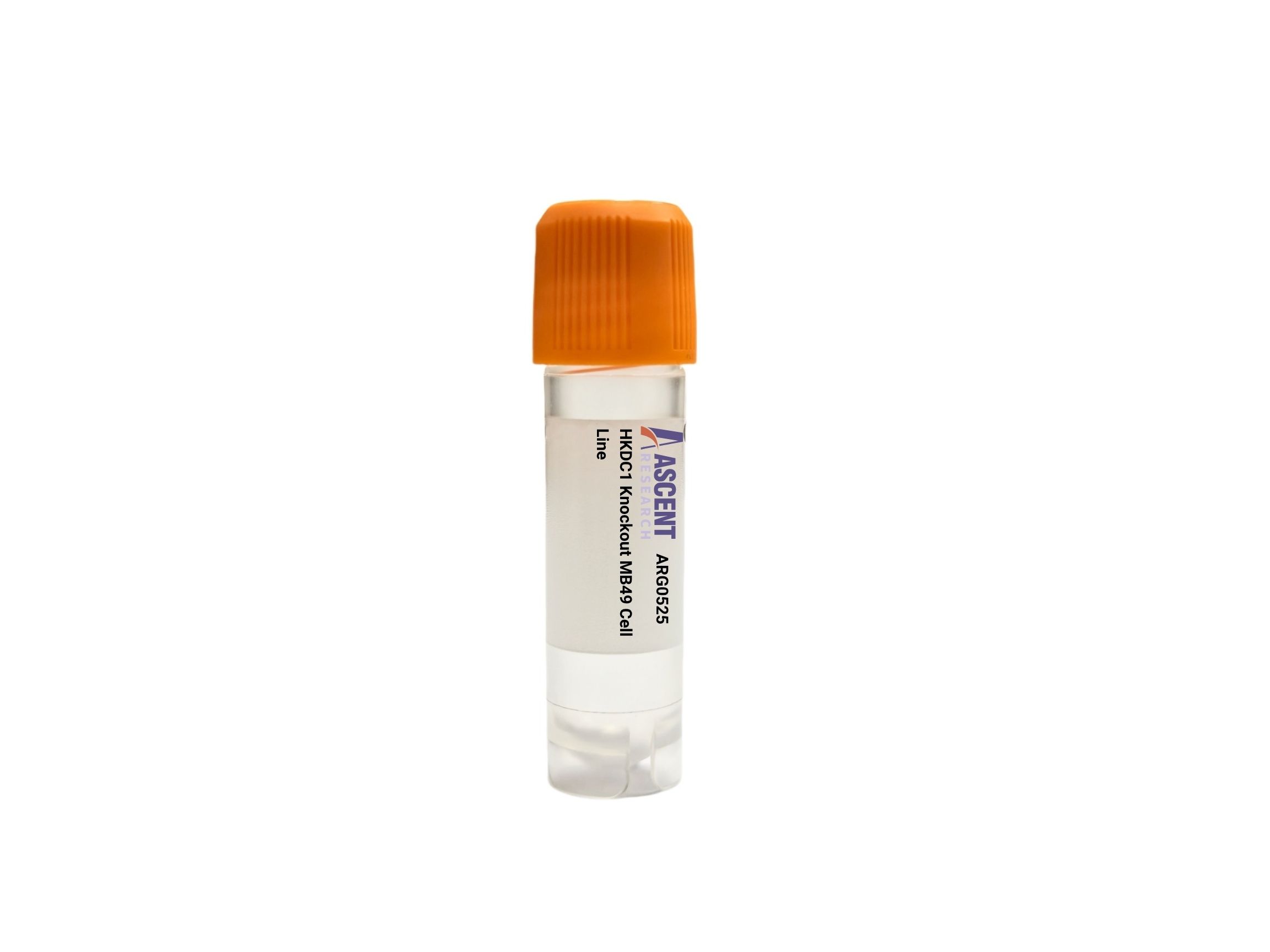
The HKDC1 Knockout MB49 Cell Line is a CRISPR/Cas9-edited knockout cell line derived from the MB49 murine bladder carcinoma epithelial line. It provides a targeted loss-of-function model for HKDC1, a hexokinase domain-containing protein involved in glucose phosphorylation and energy metabolism. HKDC1 functions downstream of insulin signaling and HIF1??, interacts with mitochondrial porins, and generates glucose-6-phosphate to drive glycolysis. This knockout model supports research into bladder cancer metabolism, tumor growth, and immune evasion, with applications including metabolic flux assays, glucose uptake measurements, and immune marker profiling.
 GMPR2 Knockout SK-HEP-1 Polyclonal Cells
Cat. No. ARG16095
DDX19B Knockout A549 Polyclonal Cells
Cat. No. ARG10340
NDUFB11 Knockout Hela Polyclonal Cells
Cat. No. ARG8339
KAT2A Knockout HEK293 Polyclonal Cells
Cat. No. ARG23241
KCTD3 Knockout SK-HEP-1 Polyclonal Cells
Cat. No. ARG32737
OSM Knockout MCF7 Polyclonal Cells
Cat. No. ARG11460
GMPR2 Knockout SK-HEP-1 Polyclonal Cells
Cat. No. ARG16095
DDX19B Knockout A549 Polyclonal Cells
Cat. No. ARG10340
NDUFB11 Knockout Hela Polyclonal Cells
Cat. No. ARG8339
KAT2A Knockout HEK293 Polyclonal Cells
Cat. No. ARG23241
KCTD3 Knockout SK-HEP-1 Polyclonal Cells
Cat. No. ARG32737
OSM Knockout MCF7 Polyclonal Cells
Cat. No. ARG11460
The HKDC1 Knockout MB49 Cell Line is a CRISPR/Cas9-edited knockout cell line originating from the murine MB49 bladder carcinoma epithelial cell line. It provides a stable loss-of-function model for HKDC1, a hexokinase domain-containing gene involved in glucose phosphorylation. CRISPR/Cas9-mediated gene disruption abrogates HKDC1 expression, enabling dissection of its metabolic roles in cancer. This cell line suits in vitro and in vivo studies of tumor metabolism, glucose utilization, and immune interactions in the bladder tumor microenvironment.
The parental MB49 line was derived from a C57BL/6 mouse bladder carcinoma and serves as a syngeneic, immunocompetent model for tumor immunology and immunotherapy. These epithelial cells retain bladder cancer traits, forming tumors in immunocompetent hosts and influencing immune cell infiltration. The C57BL/6 background allows integration with transgenic models for mechanistic studies.
HKDC1 catalyzes glucose phosphorylation to glucose-6-phosphate, a key glycolytic step. It is regulated by insulin signaling, HIF1??, and glucose availability, and interacts with mitochondrial porins and hexokinase-binding proteins, linking glycolysis to mitochondrial function. HKDC1 knockout disrupts this node, reducing glycolytic flux and altering energy metabolism. This leads to decreased glucose-6-phosphate and glycolytic intermediates, impairing proliferation-associated biosynthesis.
In MB49 cells, HKDC1 disruption targets metabolic reprogramming typical of bladder cancer, where altered glucose metabolism supports the Warburg effect. Knockout abrogates HKDC1-mediated metabolic functions, altering glycolysis and energy homeostasis. This model enables study of glycolysis-dependent proliferation, survival, and immune modulatory secretion, and helps explore metabolic influences on tumor?Cimmune crosstalk, informing immunotherapy combinations.
Applications include western blotting and RT-qPCR for HKDC1 validation, glucose uptake and lactate production assays for metabolic shifts, and proliferation assays under varied nutrients. Flow cytometry assesses immune markers like MHC-I and PD-L1, while metabolic flux analysis quantifies glycolytic and oxidative rates. In vivo tumor studies evaluate HKDC1-dependent growth and immunotherapy responses. For further details or custom applications, contact Ascent Research.