Genome-edited Cells
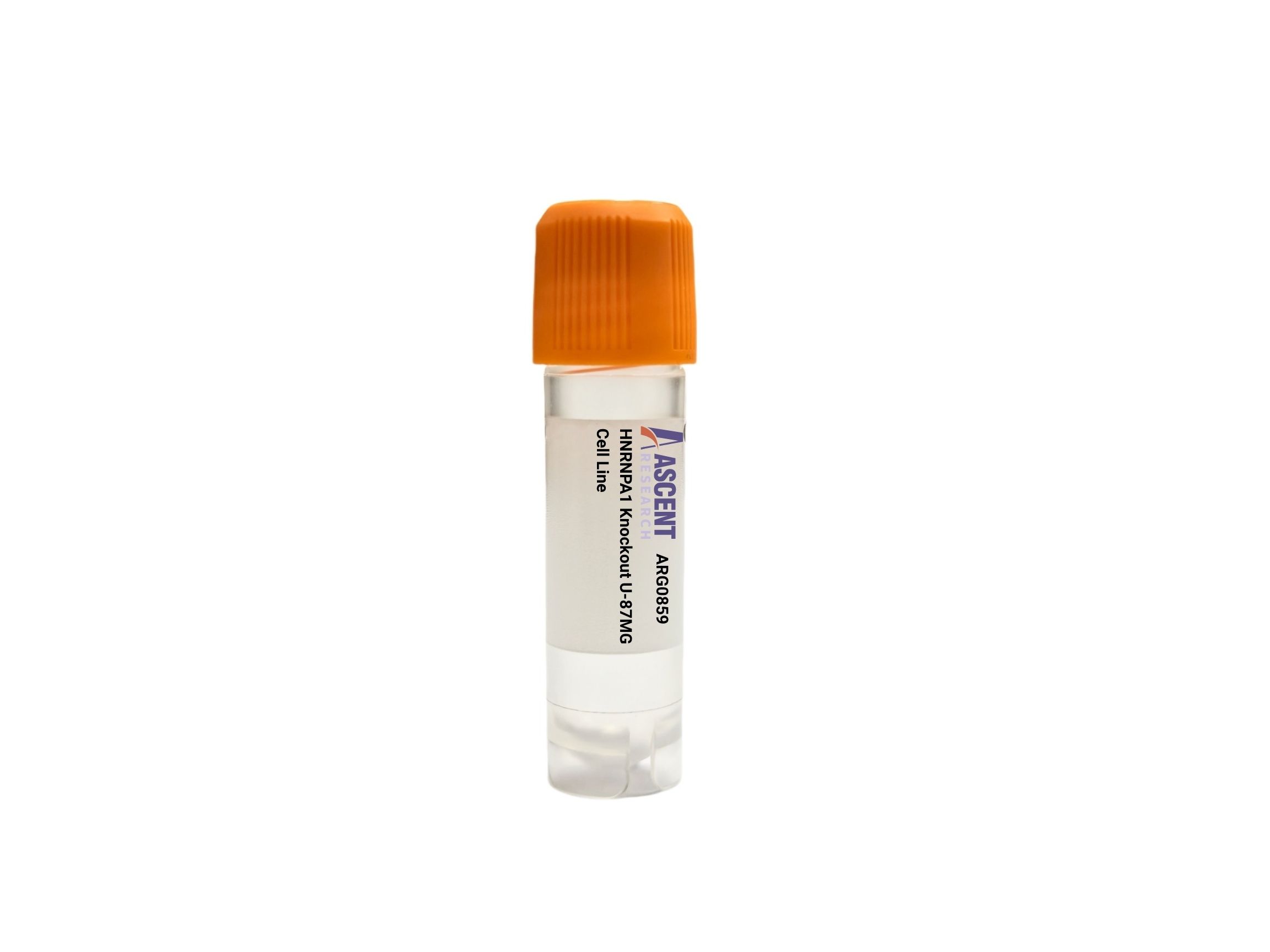
The HNRNPA1 Knockout U-87MG Cell Line is a CRISPR/Cas9-edited knockout cell line that disrupts HNRNPA1 expression in the U-87MG human glioblastoma background. This model enables investigation of HNRNPA1, an RNA-binding protein involved in alternative splicing, mRNA export, and translation, within a PTEN-mutant, TP53-wild-type glioblastoma context. HNRNPA1 is regulated by AKT signaling and SRPK1 phosphorylation and modulates splicing of oncogenes including PKM, MYC, and BCL2L1. The knockout line is suitable for studying tumor progression, therapy resistance, and splicing-targeted therapeutic approaches using assays such as western blotting, RNA-seq, and migration analyses.
 CDKN1A Knockout A2780 Polyclonal Cells
Cat. No. ARG19037
DDHD2 Knockout A549 Polyclonal Cells
Cat. No. ARG11020
PACSIN2 Knockout jurkat Polyclonal Cells
Cat. No. ARG13639
GPD1L Knockout Raji Polyclonal Cells
Cat. No. ARG23612
IDH2 Knockout AGS Polyclonal Cells
Cat. No. ARG27001
DAB2IP Knockout AGS Polyclonal Cells
Cat. No. ARG2672
CDKN1A Knockout A2780 Polyclonal Cells
Cat. No. ARG19037
DDHD2 Knockout A549 Polyclonal Cells
Cat. No. ARG11020
PACSIN2 Knockout jurkat Polyclonal Cells
Cat. No. ARG13639
GPD1L Knockout Raji Polyclonal Cells
Cat. No. ARG23612
IDH2 Knockout AGS Polyclonal Cells
Cat. No. ARG27001
DAB2IP Knockout AGS Polyclonal Cells
Cat. No. ARG2672
The HNRNPA1 Knockout U-87MG Cell Line is a CRISPR/Cas9-edited knockout cell line featuring targeted disruption of the HNRNPA1 gene in a human glioblastoma background. This loss-of-function model provides a consistent and stable platform for investigating the functional roles of HNRNPA1 in RNA processing and tumor biology. The product is supplied as an adherent cell line that maintains the key characteristics of the parental U-87MG line while eliminating HNRNPA1 expression, enabling precise dissection of its molecular contributions.
The U-87MG host cell line is a well-characterized adherent glioblastoma model derived from a human malignant glioma. It harbors wild-type TP53 and a PTEN mutation, molecular features that are common in glioblastoma and influence signaling pathway activity and therapeutic response. This cell line is extensively employed in brain cancer research for studying proliferation, invasion, drug resistance, and the tumor microenvironment, making it a relevant context for assessing HNRNPA1 function.
HNRNPA1 is a multifunctional RNA-binding protein that regulates alternative splicing, mRNA nucleocytoplasmic transport, telomere maintenance, and translation. Its activity is modulated by upstream signals including AKT signaling, SRPK1 kinase-mediated phosphorylation, cellular stress, and hypoxia. HNRNPA1 interacts with Transportin, other hnRNP proteins, spliceosomal components, and TDP-43 to form functional complexes. Downstream, HNRNPA1 promotes alternative splicing of key oncogenic targets such as PKM, MYC, BCL2L1, XIAP, and cyclin D1, thereby influencing proliferative and anti-apoptotic programs. These interactions position HNRNPA1 within the spliceosome, nuclear pore complex, telomerase, and mTORC1 signaling networks.
In U-87MG glioblastoma cells, genetic ablation of HNRNPA1 disrupts the precise splicing of oncogenic transcripts, leading to impaired expression of factors critical for tumor cell proliferation and migration. This knockout model reveals the dependency of glioblastoma cells on HNRNPA1 for maintaining the malignant phenotype, including altered translation and stress responses. Given the PTEN-mutant, TP53-wild-type background, this line is particularly useful for dissecting how RNA-binding protein dysfunction intersects with glioblastoma driver pathways and contributes to disease progression and therapy resistance.
Researchers can employ this knockout cell line in a range of experimental applications, including western blotting to confirm HNRNPA1 ablation and assess target protein changes, RT-qPCR and RNA-seq for profiling splice variant alterations, transwell migration and invasion assays to evaluate metastatic potential, and drug sensitivity screening to explore splicing-targeted therapies. Co-immunoprecipitation assays can further validate protein interaction networks. By providing a defined loss-of-function system, the HNRNPA1 Knockout U-87MG Cell Line supports in-depth mechanistic studies of RNA processing in glioblastoma and the development of novel therapeutic strategies. For additional product details or technical support, please contact Ascent Research.