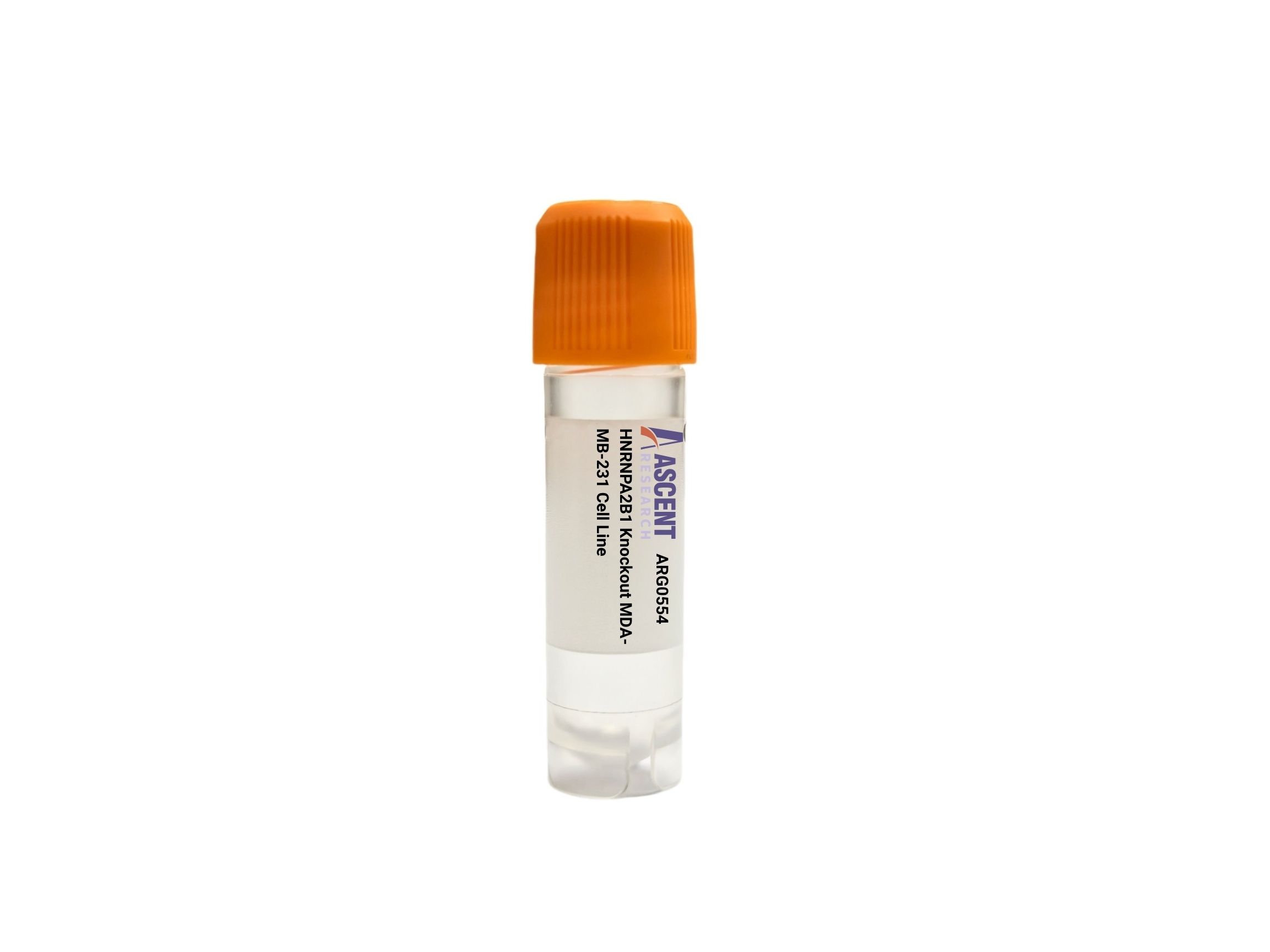
Genome-edited Cells
Breast (mammary gland)
The HNRNPA2B1 Knockout MDA-MB-231 Cell Line is a CRISPR/Cas9-edited knockout cell line derived from triple-negative breast cancer cells, featuring loss of HNRNPA2B1 function. HNRNPA2B1 is an RNA-binding protein that regulates alternative splicing, telomere maintenance, and gene expression downstream of MYC and AKT, targeting molecules such as PKM2, Bcl-xL, and TERT. This model is ideal for studying RNA processing in breast cancer, investigating splicing-driven metabolic reprogramming, and performing migration, invasion, and telomerase activity assays. It also enables in vivo xenograft studies and drug target validation, providing a robust platform for mechanistic and translational research.
 CALU Knockout HT29 Polyclonal Cells
Cat. No. ARG33219
ARHGAP17 Knockout HEK293T Polyclonal Cells
Cat. No. ARG25725
ABLIM1 Knockout NCI-H1975 Polyclonal Cells
Cat. No. ARG30979
C5orf22 Knockout huh-7 Polyclonal Cells
Cat. No. ARG28154
CTPS1 Knockout HEK293T Polyclonal Cells
Cat. No. ARG3605
PHF21A Knockout AGS Polyclonal Cells
Cat. No. ARG2690
CALU Knockout HT29 Polyclonal Cells
Cat. No. ARG33219
ARHGAP17 Knockout HEK293T Polyclonal Cells
Cat. No. ARG25725
ABLIM1 Knockout NCI-H1975 Polyclonal Cells
Cat. No. ARG30979
C5orf22 Knockout huh-7 Polyclonal Cells
Cat. No. ARG28154
CTPS1 Knockout HEK293T Polyclonal Cells
Cat. No. ARG3605
PHF21A Knockout AGS Polyclonal Cells
Cat. No. ARG2690
The HNRNPA2B1 Knockout MDA-MB-231 Cell Line is a CRISPR/Cas9-edited knockout cell line derived from MDA-MB-231 human breast adenocarcinoma cells. This model features targeted disruption of the HNRNPA2B1 gene encoding a multifunctional RNA-binding protein involved in pre-mRNA processing, alternative splicing, and telomere maintenance. It provides a loss-of-function system for studying HNRNPA2B1 in a triple-negative breast cancer context, enabling mechanistic and therapeutic research.
The MDA-MB-231 host cell line is a widely characterized model of triple-negative breast cancer, exhibiting an epithelial morphology and lacking expression of estrogen receptor, progesterone receptor, and HER2. These cells carry a mutant p53 tumor suppressor and constitutively active K-Ras, driving a highly invasive and metastatic phenotype. This genetic background offers a stringent platform for evaluating gene function in tumor progression and therapeutic resistance.
HNRNPA2B1 is a central regulator of RNA metabolism, transcriptionally controlled by MYC and activated downstream of AKT signaling. It binds pre-mRNAs to modulate alternative splicing, interacting with factors such as U2AF2, HNRNPA1, and HNRNPC. Key targets include PKM pre-mRNA, where it promotes the cancer-associated PKM2 isoform, and BCL2L1 pre-mRNA, favoring the anti-apoptotic Bcl-xL variant. Additionally, HNRNPA2B1 associates with TERT to maintain telomeres and intersects with p53 and NF-??B pathways. Knockout of this gene disrupts multiple oncogenic processes.
In MDA-MB-231 cells, loss of HNRNPA2B1 impairs splicing-dependent metabolic reprogramming by reducing PKM2 expression, compromises telomere maintenance, and shifts Bcl-x isoform balance toward apoptosis. These changes are predicted to attenuate proliferation, invasion, and metastatic capacity, making the knockout line a valuable tool for dissecting RNA-centric vulnerabilities in TNBC and testing targeted therapies.
This cell line supports diverse experimental approaches, including RNA-seq, splicing reporter assays, proliferation and migration tests, and telomerase activity measurements. In vivo applications such as xenograft tumor models allow assessment of tumor growth and metastatic dissemination. The model is suitable for drug target validation and for investigating HNRNPA2B1’s roles in breast cancer, glioblastoma, and neurodegenerative diseases. For further information or technical support, please contact Ascent Research.