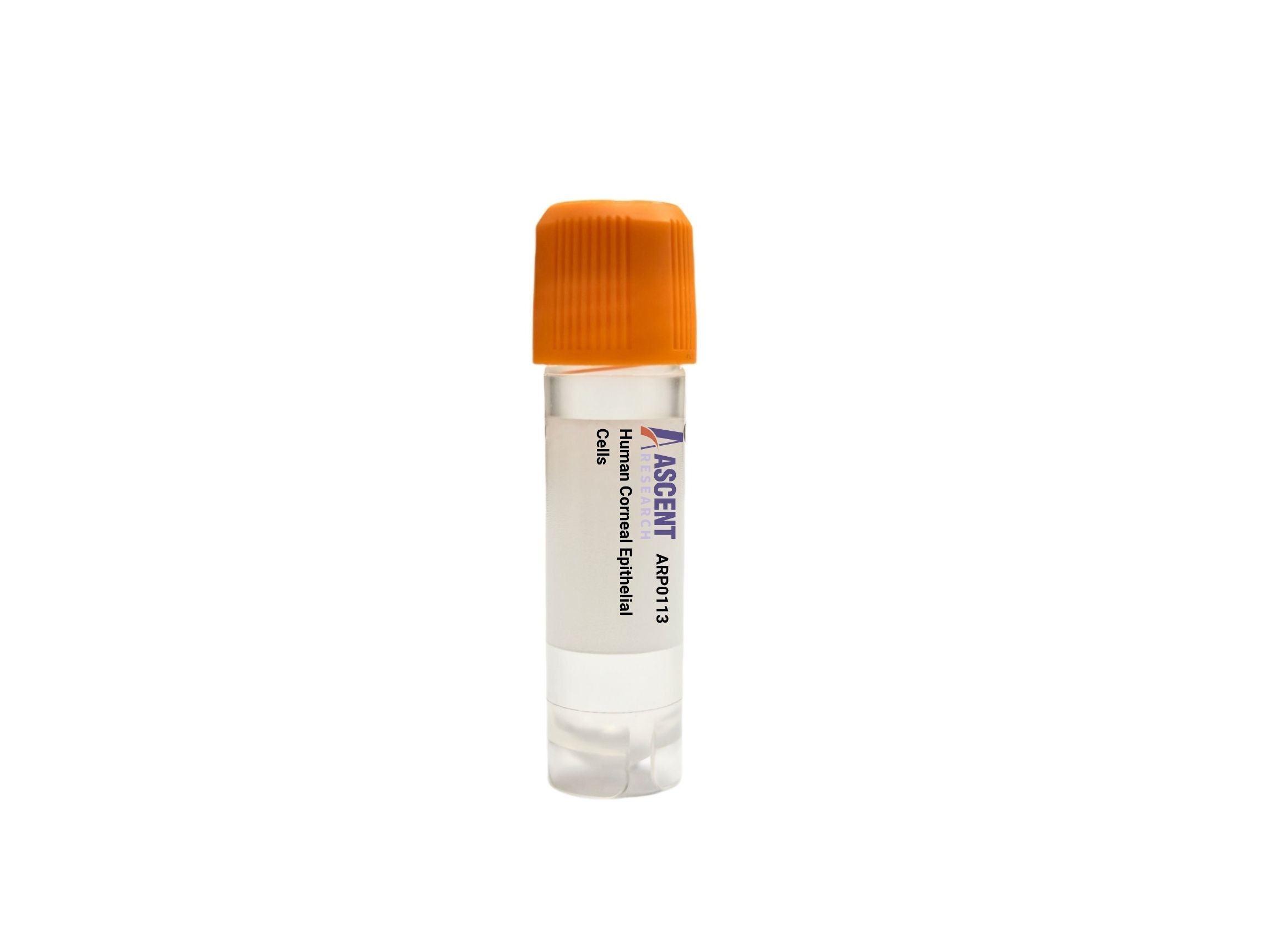
Primary Cells
Homo sapiens (Human)
Eye (cornea)
Research on the Human Corneal Epithelial Cells is essential to the study of dry eye disease, corneal abrasions/ulcers, infectious keratitis (bacterial/viral/fungal), limbal stem cell deficiency, and neurotrophic keratopathy. The eye is a complex sensory organ that allows an organism to perceive visual information. It is composed of the eyeball and its accessory structures. The eyeball is the main visual organ, responsible for image formation and phototransduction. The accessory parts include the eyelids, conjunctiva, lacrimal apparatus, extraocular muscles, and the connective tissue within the orbit, which together protect and enable movement of the eyeball. The Human Corneal Epithelial Cells are to be used with Human Corneal Epithelial Cell Medium (Cat. No. ACM0113). This product is intended for laboratory in vitro use only. It is not intended for diagnostic, therapeutic, or clinical applications.
 Human Intestinal Myofibroblast (Ascending Colon)
Cat. No. ARP1129
Human Intestinal Myofibroblast (Ascending Colon)
Cat. No. ARP1129
 MTFR2 Knockout jurkat Polyclonal Cells
Cat. No. ARG13199
ABCB10 Knockout HGC-27 Polyclonal Cells
Cat. No. ARG29357
JMJD4 Knockout NCI-H1975 Polyclonal Cells
Cat. No. ARG31797
NUDT9 Knockout 786-O Polyclonal Cells
Cat. No. ARG4860
Caprin1 Knockout HEK293T Polyclonal Cells
Cat. No. ARG4154
MTFR2 Knockout jurkat Polyclonal Cells
Cat. No. ARG13199
ABCB10 Knockout HGC-27 Polyclonal Cells
Cat. No. ARG29357
JMJD4 Knockout NCI-H1975 Polyclonal Cells
Cat. No. ARG31797
NUDT9 Knockout 786-O Polyclonal Cells
Cat. No. ARG4860
Caprin1 Knockout HEK293T Polyclonal Cells
Cat. No. ARG4154
Complete description is available upon request.