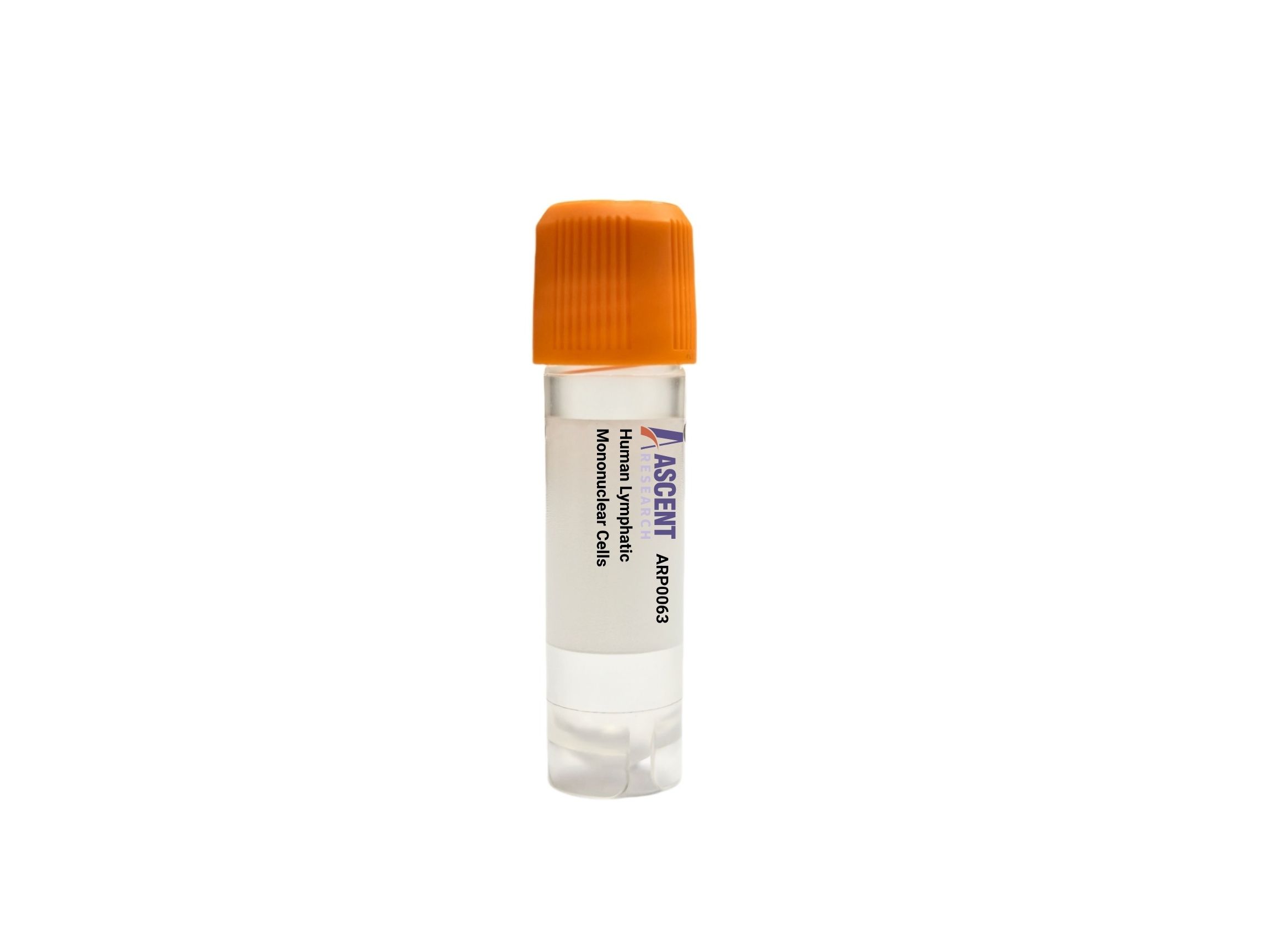
Primary Cells
Homo sapiens (Human)
Lymph node
Research on the Human Lymphatic Mononuclear Cells is essential to the study of the innate and adaptive immune system, lymphedema, lymphoma, autoimmune diseases (e.g., rheumatoid arthritis), metastatic cancer spread via lymphatics, and chronic inflammatory conditions. Lymph nodes are bean-shaped organs of the lymphatic system, distributed throughout the body but clustered in the neck, armpits, and groin. They consist of a capsule, cortex, and medulla, and contain a large number of lymphocytes. Lymph nodes are important parts of the human immune system, with their primary functions being to filter lymphatic fluid, remove pathogens, and activate immune cells to fight infections. This product is intended for laboratory in vitro use only. It is not intended for diagnostic, therapeutic, or clinical applications.
 Nr2f2 Knockout HEK293T Polyclonal Cells
Cat. No. ARG3431
NFIX Knockout HT29 Polyclonal Cells
Cat. No. ARG15063
BRMS1L Knockout jurkat Polyclonal Cells
Cat. No. ARG34028
BTN1A1 Knockout PATU8988T Polyclonal Cells
Cat. No. ARG36603
LRRCC1 Knockout MES-OV Polyclonal Cells
Cat. No. ARG6382
OTUD7B Knockout MES-OV Polyclonal Cells
Cat. No. ARG5773
Nr2f2 Knockout HEK293T Polyclonal Cells
Cat. No. ARG3431
NFIX Knockout HT29 Polyclonal Cells
Cat. No. ARG15063
BRMS1L Knockout jurkat Polyclonal Cells
Cat. No. ARG34028
BTN1A1 Knockout PATU8988T Polyclonal Cells
Cat. No. ARG36603
LRRCC1 Knockout MES-OV Polyclonal Cells
Cat. No. ARG6382
OTUD7B Knockout MES-OV Polyclonal Cells
Cat. No. ARG5773
Complete description is available upon request.