Genome-edited Cells
Liver
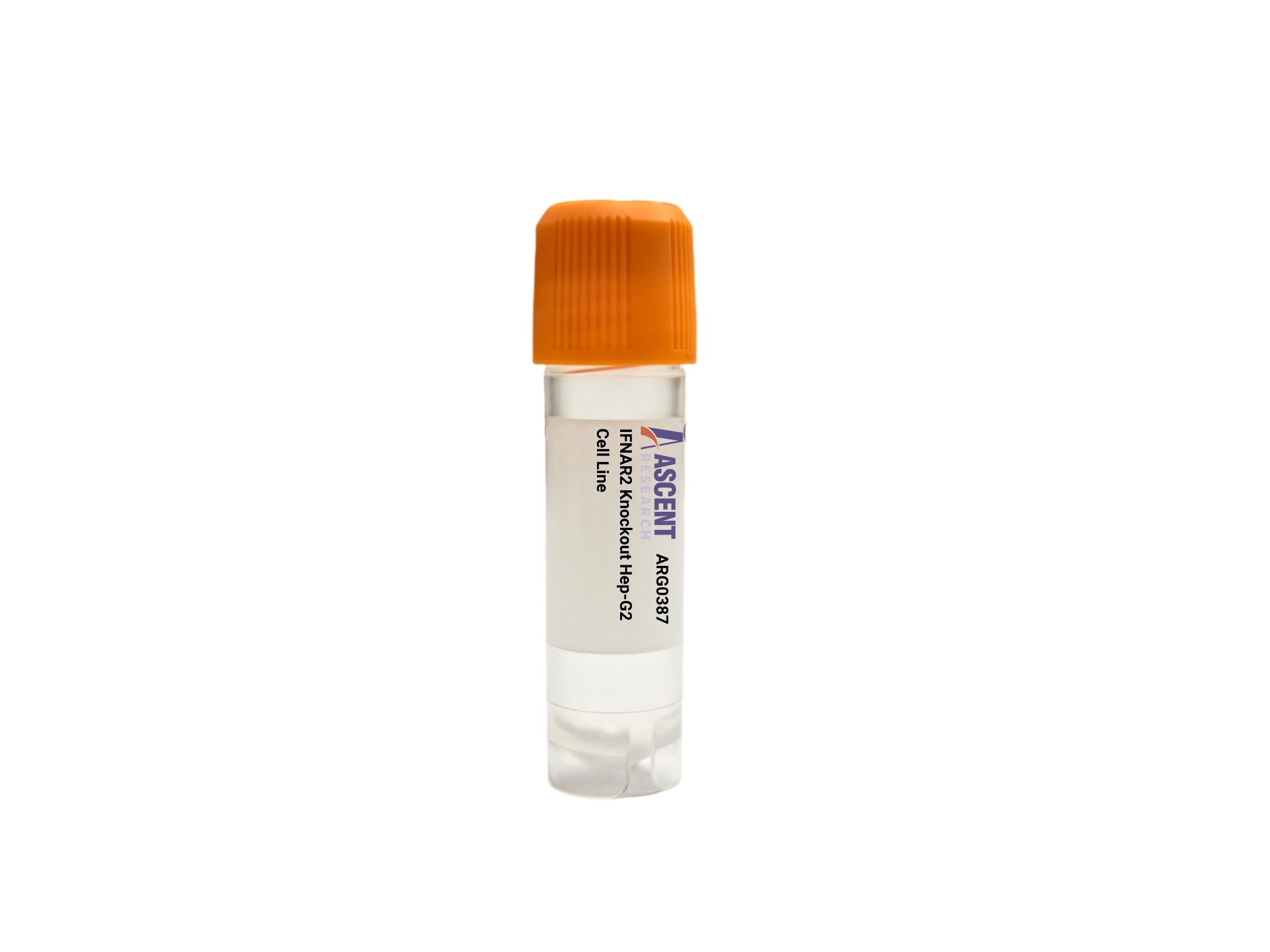
The IFNAR2 Knockout Hep-G2 Cell Line is a CRISPR/Cas9-edited knockout model derived from Hep-G2 hepatocellular carcinoma cells. Disrupting the type I interferon receptor subunit IFNAR2 ablates responsiveness to IFNA and IFNB, allowing dissection of interferon-dependent signaling in a well-characterized hepatic background. Downstream effectors include JAK1, TYK2, STAT1, STAT2, and the ISGF3 complex that drives expression of ISGs such as MX1 and OAS1. This tool is applicable to antiviral immunity studies, autoimmune disease research (e.g., SLE), hepatocellular carcinoma investigation, and pharmacological screening for modulators of the JAK-STAT pathway. Standard assays like phospho-STAT immunoblotting, ISG RT-qPCR, and interferon stimulation experiments are readily performed.
 LGALS3 Knockout NCI-H1975 Polyclonal Cells
Cat. No. ARG16897
AKT1S1 Knockout HEK293T Polyclonal Cells
Cat. No. ARG25647
IDH2 Knockout NCI-H1299 Polyclonal Cells
Cat. No. ARG30789
CHEK2 Knockout Hela Polyclonal Cells
Cat. No. ARG7685
FNBP1L Knockout 786-O Polyclonal Cells
Cat. No. ARG5209
LGALS3 Knockout NCI-H1975 Polyclonal Cells
Cat. No. ARG16897
AKT1S1 Knockout HEK293T Polyclonal Cells
Cat. No. ARG25647
IDH2 Knockout NCI-H1299 Polyclonal Cells
Cat. No. ARG30789
CHEK2 Knockout Hela Polyclonal Cells
Cat. No. ARG7685
FNBP1L Knockout 786-O Polyclonal Cells
Cat. No. ARG5209
 Rat Aortic Smooth Muscle Cells
Cat. No. ARP0193
Rat Aortic Smooth Muscle Cells
Cat. No. ARP0193
The IFNAR2 Knockout Hep-G2 Cell Line is a CRISPR/Cas9-edited knockout cell line derived from the Hep-G2 human hepatocellular carcinoma parent line. This product provides targeted disruption of the IFNAR2 gene, encoding the interferon alpha/beta receptor 2 subunit essential for type I interferon signaling. The knockout cell line offers a stable loss-of-function model for investigating interferon-dependent pathways without residual receptor activity, suitable for biochemical and genomic analyses in immunology and oncology.
The Hep-G2 cell line, established from a 15-year-old male hepatocellular carcinoma patient, is a widely used model for hepatic metabolism and liver cancer research. These cells retain hepatocyte-like features, including expression of liver-specific enzymes and cytokine responsiveness, providing a relevant background for gene editing. Their endogenous interferon signaling machinery makes them especially suitable for dissecting IFNAR2 function in hepatic antiviral and inflammatory responses.
IFNAR2 heterodimerizes with IFNAR1 to form the type I interferon receptor, binding ligands IFNA and IFNB. Ligand binding activates receptor-associated kinases JAK1 and TYK2, which phosphorylate STAT1 and STAT2. Phosphorylated STATs recruit IRF9 to form the ISGF3 transcription complex, inducing expression of interferon-stimulated genes such as MX1, OAS1, and IFIT1. This pathway drives antiviral, antiproliferative, and immunomodulatory programs. Disruption of IFNAR2 blocks receptor assembly and downstream JAK-STAT signaling, creating a clean background to dissect type I interferon responses.
In Hep-G2 cells, IFNAR2-mediated signaling regulates hepatic acute-phase responses and antiviral immunity. The liver??s exposure to blood-borne pathogens and systemic cytokines makes this model highly relevant for studying viral hepatitis, systemic lupus erythematosus, and hepatic inflammation. Additionally, because Hep-G2 cells are used in drug metabolism screens, the knockout line enables exploration of how type I interferon signaling influences drug-induced liver injury or the tumor microenvironment in hepatocellular carcinoma. This model is valuable for examining crosstalk between interferon pathways and liver cancer progression.
This cell line supports interferon stimulation assays paired with phospho-STAT1 immunoblotting, ISG RT-qPCR (e.g., MX1, OAS1), and RNA-seq to map transcriptomic changes. Flow cytometry for surface IFNAR2 and co-immunoprecipitation of IFNAR1 confirm receptor loss. Applications include antiviral activity testing, JAK-STAT pathway drug screening, and cancer immunotherapy studies where type I interferon shapes tumor immunogenicity. For further technical details or validation support, please contact Ascent Research.