Genome-edited Cells
Ascites
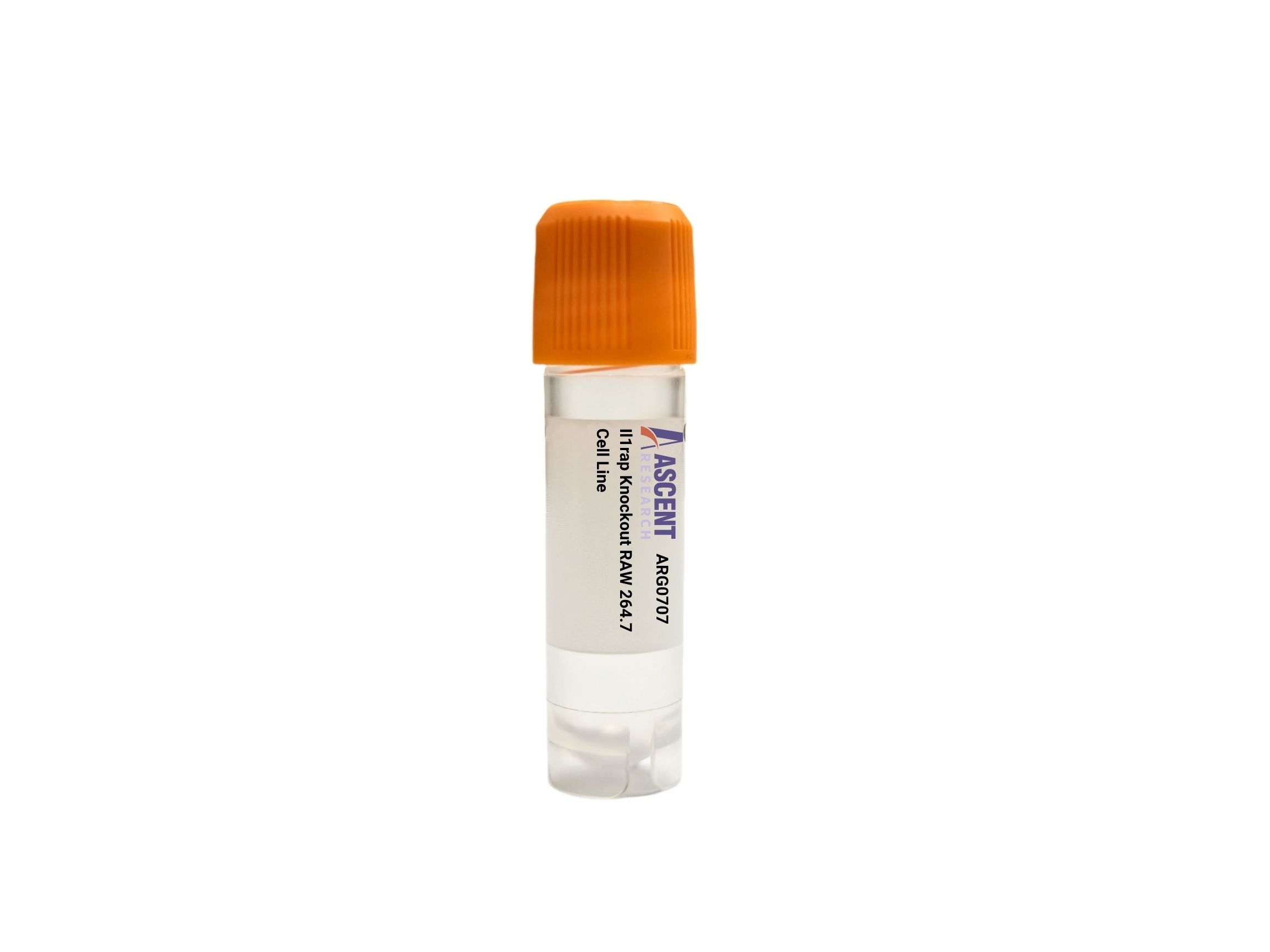
The Il1rap Knockout RAW 264.7 Cell Line is a CRISPR/Cas9-edited knockout cell line derived from the mouse RAW 264.7 macrophage line, in which the Il1rap gene has been disrupted. IL1RAP is an essential co-receptor for IL-1R1 and ST2, mediating pro-inflammatory signaling through MYD88, IRAK kinases, and downstream NF-??B and MAPK pathways. This knockout model is ideal for dissecting IL-1 and IL-33 signaling in macrophages, studying inflammatory cytokine regulation, and screening for pathway antagonists. Key applications include western blotting for phosphorylated signaling intermediates, RT-qPCR, ELISA, and functional innate immune assays, making it a valuable tool for autoimmune and inflammatory disease research.
 EPHA2 Knockout HT29 Polyclonal Cells
Cat. No. ARG14390
LAMA4 Knockout A549 Polyclonal Cells
Cat. No. ARG10814
AGL Knockout HAP1 Polyclonal Cells
Cat. No. ARG36990
GTPBP10 Knockout HEK293T Polyclonal Cells
Cat. No. ARG38086
EPB41L2 Knockout MES-OV Polyclonal Cells
Cat. No. ARG6774
NCEH1 Knockout AGS Polyclonal Cells
Cat. No. ARG2569
EPHA2 Knockout HT29 Polyclonal Cells
Cat. No. ARG14390
LAMA4 Knockout A549 Polyclonal Cells
Cat. No. ARG10814
AGL Knockout HAP1 Polyclonal Cells
Cat. No. ARG36990
GTPBP10 Knockout HEK293T Polyclonal Cells
Cat. No. ARG38086
EPB41L2 Knockout MES-OV Polyclonal Cells
Cat. No. ARG6774
NCEH1 Knockout AGS Polyclonal Cells
Cat. No. ARG2569
The Il1rap Knockout RAW 264.7 Cell Line is a CRISPR/Cas9-edited knockout cell line derived from the mouse RAW 264.7 macrophage line, in which the Il1rap gene has been disrupted to create a stable loss-of-function model. This genetic modification eliminates expression of the essential co-receptor required for IL-1 receptor 1 (IL-1R1) and ST2 signaling, enabling precise interrogation of IL-1??, IL-1??, and IL-33 pathways in innate immunity.
The parental RAW 264.7 line, originally established from an Abelson leukemia virus-induced tumor in a BALB/c mouse, is a widely used macrophage model characterized by phagocytic activity, robust production of inflammatory cytokines such as TNF-?? and IL-6, and antigen presentation capabilities. These cells are highly responsive to toll-like receptor ligands and serve as a well-established system for studying macrophage biology and inflammatory signaling.
IL1RAP functions as an obligate co-receptor that forms heterodimers with IL-1R1 to mediate responses to IL-1?? and IL-1??, and with ST2 for IL-33 signaling. Upon ligand engagement, IL1RAP facilitates the recruitment of the adaptor MYD88 and the kinases IRAK1 and IRAK4, which in turn activate TRAF6. This triggers downstream IKK complex-mediated NF-??B activation and MAPK cascades involving p38, JNK, and ERK, leading to transcription of pro-inflammatory genes including Il6, Tnf, and Il1b. Regulatory proteins such as Tollip and SIGIRR interact with the receptor complex to fine-tune signaling output.
In the RAW 264.7 background, Il1rap knockout enables researchers to distinguish between IL-1/IL-33-dependent and -independent pathways in macrophage responses. This model is especially relevant for dissecting the molecular mechanisms of inflammatory diseases, including rheumatoid arthritis, psoriasis, and inflammatory bowel disease, where dysregulated IL-1 or IL-33 signaling contributes to pathogenesis.
This knockout cell line supports a range of assays: western blotting for phosphorylated NF-??B p65, p38, JNK, and ERK; RT-qPCR for Il6, Tnf, and Il1b transcripts; ELISA for secreted TNF-?? and IL-6; NF-??B luciferase reporter assays; flow cytometry for intracellular cytokines; and macrophage phagocytosis assays. It is also suited for small-molecule inhibitor screens targeting IL-1 pathway components and for evaluating therapeutic candidates in autoinflammatory disease models. For additional information, please contact Ascent Research.