Genome-edited Cells
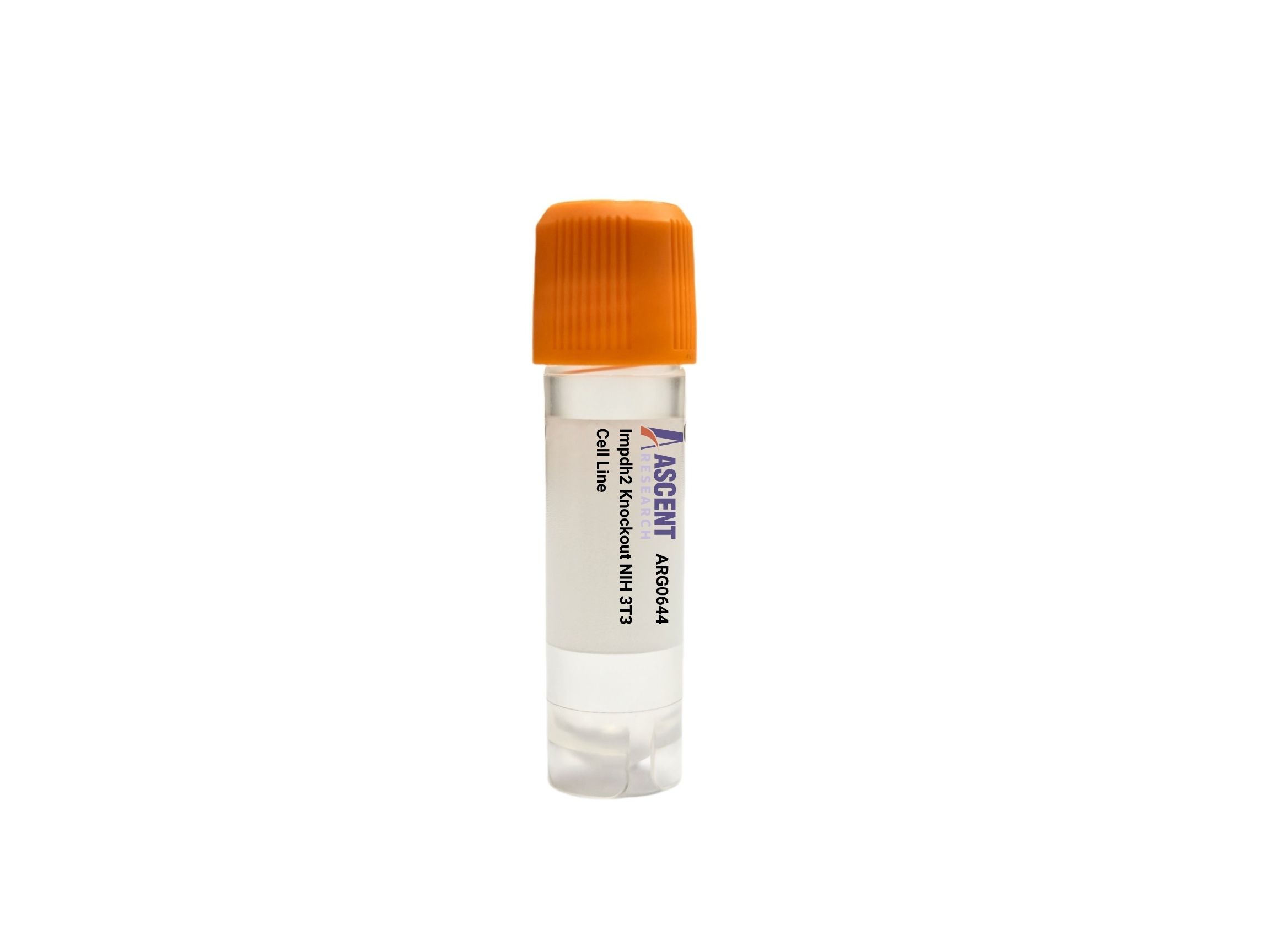
The Impdh2 Knockout NIH 3T3 Cell Line is a CRISPR/Cas9-edited loss-of-function model targeting inosine monophosphate dehydrogenase 2 (Impdh2), the rate-limiting enzyme in de novo guanine nucleotide biosynthesis. In NIH 3T3 mouse embryonic fibroblasts, Impdh2 disruption impairs the conversion of IMP to XMP, depleting GTP and GDP pools essential for cell proliferation. Impdh2 activity is regulated by MYC and mTORC1 and inhibited by mycophenolic acid. This knockout line enables detailed studies of nucleotide metabolism, cancer cell proliferation, and immunosuppression mechanisms, serving as a platform for drug target validation and metabolic research. For inquiries, contact Ascent Research.
 ASF1B Knockout HAP1 Polyclonal Cells
Cat. No. ARG21945
NDUFB6 Knockout Hela Polyclonal Cells
Cat. No. ARG8043
KDM1A Knockout A2780 Polyclonal Cells
Cat. No. ARG29291
C9orf85 Knockout Hela Polyclonal Cells
Cat. No. ARG41618
ELANE Knockout CAL27 Polyclonal Cells
Cat. No. ARG41104
ASF1B Knockout HAP1 Polyclonal Cells
Cat. No. ARG21945
NDUFB6 Knockout Hela Polyclonal Cells
Cat. No. ARG8043
KDM1A Knockout A2780 Polyclonal Cells
Cat. No. ARG29291
C9orf85 Knockout Hela Polyclonal Cells
Cat. No. ARG41618
ELANE Knockout CAL27 Polyclonal Cells
Cat. No. ARG41104
 LNCaP C4-2B
Cat. No. ARC0452
LNCaP C4-2B
Cat. No. ARC0452
The Impdh2 Knockout NIH 3T3 Cell Line is a CRISPR/Cas9-edited knockout cell line derived from the NIH 3T3 mouse embryonic fibroblast line, engineered for loss-of-function studies of inosine monophosphate dehydrogenase 2 (Impdh2). This gene-edited model provides a defined genetic background for investigating Impdh2-dependent processes.
NIH 3T3 cells are contact-inhibited immortalized mouse embryonic fibroblasts commonly used in cancer and signal transduction research. Due to their well-characterized growth properties and responsiveness to oncogenic transformation, they serve as a robust platform for dissecting proliferation and metabolic pathways.
Impdh2 encodes the rate-limiting enzyme in de novo guanine nucleotide biosynthesis, catalyzing the NAD+-dependent oxidation of inosine monophosphate (IMP) to xanthosine monophosphate (XMP). This reaction is essential for maintaining intracellular pools of guanine nucleotides (GMP, GDP, GTP) required for DNA and RNA synthesis. Impdh2 is transcriptionally regulated by MYC, mTORC1, and E2F, and is subject to negative regulation by p53. Its activity directly interacts with GTP and GDP as allosteric regulators and is inhibited by mycophenolic acid, a clinically used immunosuppressant. Downstream, Impdh2 function governs cell cycle progression by controlling the supply of nucleotides for replication. Disruption of Impdh2 therefore depletes guanine nucleotide pools, impairing nucleic acid synthesis and leading to proliferation arrest.
In NIH 3T3 fibroblasts, Impdh2 knockout creates a unique model to interrogate the intersection of nucleotide metabolism with contact inhibition and oncogenic signaling. Given the reliance of rapidly dividing cancer cells on de novo nucleotide synthesis, this knockout line is particularly valuable for studying the metabolic vulnerabilities of transformed cells. It enables precise assessment of how guanine nucleotide depletion influences fibroblast proliferation, survival, and response to oncogenic stimuli.
This engineered cell line is ideal for applications including validation of nucleotide biosynthesis targets, investigation of immunosuppression mechanisms mediated by IMPDH inhibition, and screening of compounds that modulate purine metabolism. Representative assays include cell proliferation and colony formation assays, HPLC-based nucleotide pool quantification, flow cytometric cell cycle analysis, and western blot detection of IMPDH2 protein levels. It supports translational research in cancer and viral infections where host nucleotide synthesis is co-opted. For additional details or inquiries, please contact Ascent Research.