Genome-edited Cells
Ascites
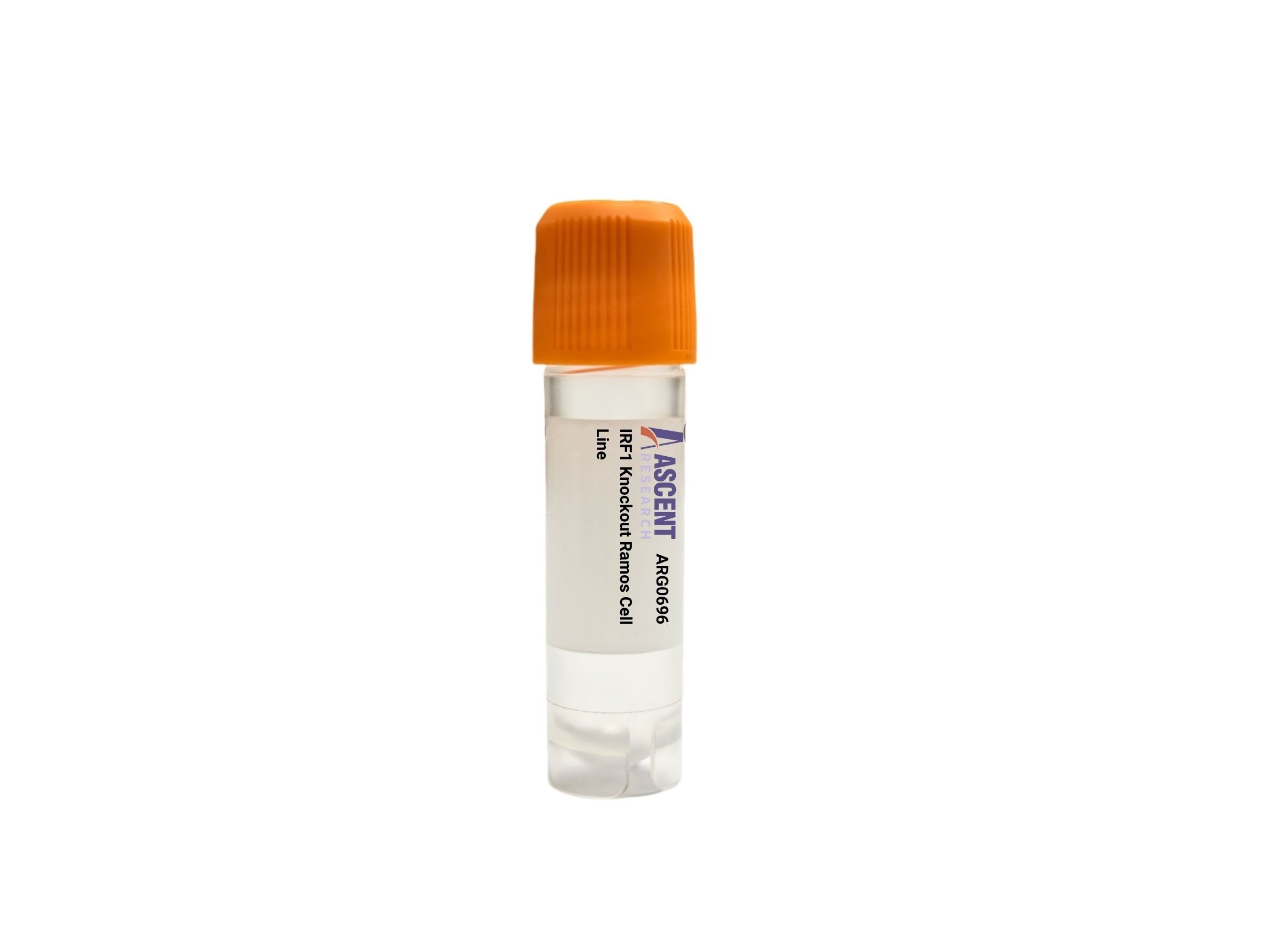
The IRF1 Knockout Ramos Cell Line is a CRISPR/Cas9-edited knockout cell line generated from human Burkitt's lymphoma-derived Ramos B lymphocytes. By disrupting the IRF1 gene, this model enables loss-of-function analysis of a key transcription factor that mediates interferon signaling and immune activation. IRF1 responds to upstream signals including IFNG, IFNA, TNF, and IL-1 via STAT1 and NF-kappaB, and regulates downstream effectors such as HLA class I molecules, CIITA, and OAS1. This knockout cell line is therefore suited for studies of interferon responses, antigen presentation, tumor suppression, and apoptosis in B-cell contexts, with applications in lymphoma research and immunology.
 DPP4 Knockout IPEC-J2 Cell Line
Cat. No. ARG43826
DPP4 Knockout IPEC-J2 Cell Line
Cat. No. ARG43826
 GNPDA1 Knockout 786-O Polyclonal Cells
Cat. No. ARG25170
ARL1 Knockout Hela Polyclonal Cells
Cat. No. ARG37564
KHSRP Knockout Hela Polyclonal Cells
Cat. No. ARG37516
MYH14 Knockout MES-OV Polyclonal Cells
Cat. No. ARG6642
PDHA1 Knockout HEK293T Polyclonal Cells
Cat. No. ARG4203
GNPDA1 Knockout 786-O Polyclonal Cells
Cat. No. ARG25170
ARL1 Knockout Hela Polyclonal Cells
Cat. No. ARG37564
KHSRP Knockout Hela Polyclonal Cells
Cat. No. ARG37516
MYH14 Knockout MES-OV Polyclonal Cells
Cat. No. ARG6642
PDHA1 Knockout HEK293T Polyclonal Cells
Cat. No. ARG4203
The IRF1 Knockout Ramos Cell Line is a CRISPR/Cas9-edited knockout cell line that provides a loss-of-function model for the IRF1 gene in human B lymphocytes. This gene-disrupted cell line enables targeted investigation of IRF1-dependent processes without the need for sustained drug selection or transient silencing.
The Ramos cell line, derived from a human Burkitt’s lymphoma, is a widely used model for B-cell receptor signaling, apoptosis, and interferon responses. Its B lymphocyte identity supports studies of humoral immunity, including antibody production and antigen presentation, making it relevant for both basic immunology and lymphoma research.
IRF1 encodes a transcription factor activated by interferons (IFNG, IFNA, IFNB), TNF, IL-1, and TLR ligands through upstream mediators STAT1 and NF-kappaB. Upon activation, IRF1 binds ISRE elements to regulate genes involved in antiviral defense (OAS1, PKR), antigen presentation (HLA-A, HLA-B, HLA-C, CIITA, TAP1, PSMB9), chemokine signaling (CXCL10), and apoptosis/cell cycle arrest (CASP1, CDKN1A). IRF1 interacts with cofactors such as STAT1, NF-kappaB p65, IRF8, and histone acetyltransferases (CBP, EP300, PCAF) to orchestrate transcription. Its activity is integrated within JAK-STAT and NF-kappaB pathways, where JAK1/JAK2 phosphorylate STAT1/STAT2, leading to IRF9 complex formation, and IKK/RelA and TBK1/IRF3/IRF7 modules converge. Negative regulation by PIAS1 and SOCS1 ensures tight control.
Disrupting IRF1 in Ramos cells abolishes a central node of interferon signaling, impairing ISRE-driven gene expression and downstream immune functions. This knockout line allows dissection of how IRF1 loss affects B-cell receptor signaling, apoptosis, and antigen presentation, and provides a system to study IRF1’s tumor-suppressive roles in lymphomagenesis, particularly its promotion of cell cycle arrest and apoptosis.
Applications include investigating interferon signaling pathways, tumor suppressor mechanisms, immune modulation, and antigen presentation in B cells. Typical validation techniques include Western blotting, RT-qPCR, RNA-seq, flow cytometry, interferon stimulation assays, ChIP-qPCR, co-immunoprecipitation, and drug sensitivity studies. For further information or to discuss specific experimental applications, please contact Ascent Research.