Genome-edited Cells
Kidney
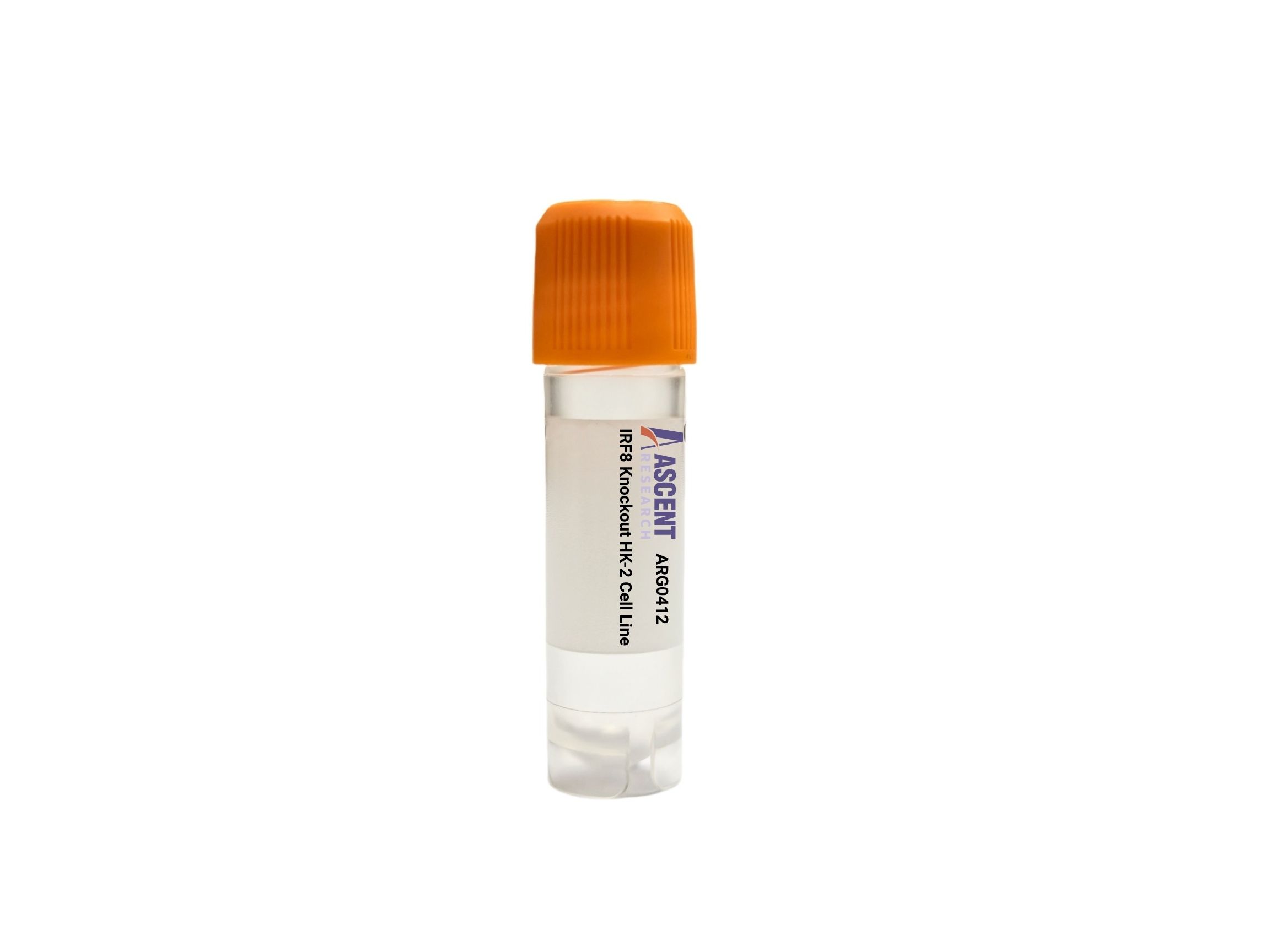
The IRF8 Knockout HK-2 Cell Line is a CRISPR/Cas9-edited human renal proximal tubule epithelial cell line with targeted disruption of the IRF8 gene. IRF8 encodes a transcription factor central to interferon and Toll-like receptor signaling, interacting with STAT1, IRF1, and NFKB1 to regulate mediators such as IL12B, NOS2, BCL2, and TGFB1. This loss-of-function model is designed for investigating IRF8-dependent inflammatory and fibrotic pathways in kidney epithelium. Suitable for renal fibrosis, nephrotoxicity, and immune-epithelial crosstalk studies, it supports assays including RT-qPCR, ELISA, apoptosis detection, and immunofluorescence.
 C1orf21 Knockout HEK293T Polyclonal Cells
Cat. No. ARG25880
CUTC Knockout jurkat Polyclonal Cells
Cat. No. ARG13447
BICD2 Knockout A549 Polyclonal Cells
Cat. No. ARG31939
BAG1 Knockout HAP1 Polyclonal Cells
Cat. No. ARG34645
CCDC71 Knockout HEK293T Polyclonal Cells
Cat. No. ARG43047
C1orf21 Knockout HEK293T Polyclonal Cells
Cat. No. ARG25880
CUTC Knockout jurkat Polyclonal Cells
Cat. No. ARG13447
BICD2 Knockout A549 Polyclonal Cells
Cat. No. ARG31939
BAG1 Knockout HAP1 Polyclonal Cells
Cat. No. ARG34645
CCDC71 Knockout HEK293T Polyclonal Cells
Cat. No. ARG43047
 PC-3M-IE8
Cat. No. ARC0728
PC-3M-IE8
Cat. No. ARC0728
The IRF8 Knockout HK-2 Cell Line is a CRISPR/Cas9-edited knockout cell line based on the human HK-2 renal proximal tubular epithelial cell line. This loss-of-function model targets the IRF8 gene to enable detailed studies of IRF8-dependent transcriptional regulation in kidney epithelium. CRISPR/Cas9-mediated gene disruption stably eliminates IRF8 expression, providing a reliable in vitro system for investigating interferon and Toll-like receptor signaling, apoptosis, and inflammatory gene expression in proximal tubule cells, which are central to nephrotoxicity and fibrotic kidney disease.
HK-2 cells were derived from normal adult human kidney proximal tubule and immortalized with HPV-16 E6/E7. They retain key proximal tubular functions, including solute reabsorption and secretion, metabolic detoxification, and acid-base balance regulation. Widely used in renal biology, HK-2 cells express relevant transporters and enzymes, making them a standard model for studying human nephrotoxicity, fibrosis, and epithelial injury.
IRF8 is a transcription factor activated by interferon-gamma (IFNG), lipopolysaccharide (LPS), and interleukin-12 (IL12) through JAK-STAT and TLR pathways. Upstream kinases JAK1 and TYK2 phosphorylate STAT1 and STAT2, which together with IRF9 induce IRF8 expression; PU.1 also promotes its transcription. IRF8 physically interacts with IRF1, IRF2, NFKB1, and C/EBPA, and directly regulates targets such as IL12B, NOS2, BCL2, CXCL10, CIITA, and TGFB1. These effectors mediate cytokine production, nitric oxide synthesis, apoptosis, and fibrogenic signaling, linking IRF8 to innate immunity and tissue remodeling.
In HK-2 cells, IRF8 knockout disrupts pro-inflammatory and pro-fibrotic gene induction, attenuating TGFB1 signaling and altering expression of apoptotic regulators like BCL2. This model allows dissociation of epithelial-autonomous inflammatory responses from systemic influences in renal fibrosis and acute kidney injury. It is particularly suited for examining how interferon-driven IRF8 activity converges with TGF-beta pathways to promote extracellular matrix accumulation and tubular dysfunction.
Research applications include renal fibrosis analysis via RT-qPCR and RNA-seq for TGFB1 and matrix genes, kidney inflammation profiling by ELISA, and immunofluorescence for cytokine markers. Drug-induced nephrotoxicity screening can utilize Annexin V/PI apoptosis assays with Western blotting for BCL2. Cell proliferation assays and flow cytometry further enable functional assessment of IRF8 loss. For specific culture and validation details, contact Ascent Research.