Genome-edited Cells
Lung
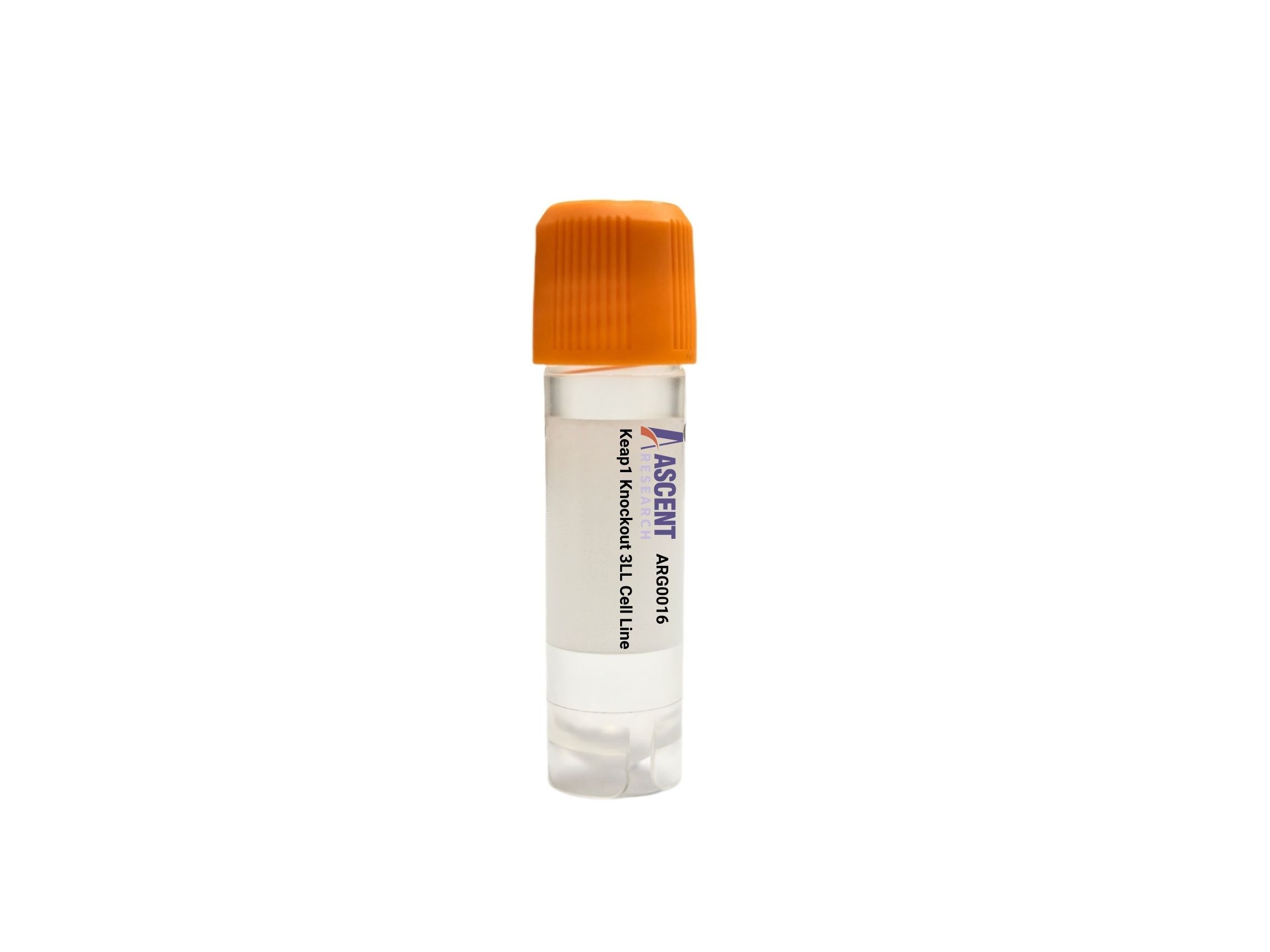
Keap1 Knockout 3LL is a CRISPR/Cas9-edited mouse Lewis lung carcinoma cell line with disruption of Keap1 in the 3LL/LLC1 background. KEAP1 normally acts as a CUL3-RBX1 substrate adaptor that promotes NRF2 degradation; its loss stabilizes NRF2 and enhances ARE-driven targets such as HMOX1, NQO1, GCLC, GCLM, SLC7A11, and TXNRD1. This model is useful for studying oxidative stress signaling, glutathione metabolism, xenobiotic detoxification, chemoresistance, radioresponse, ferroptosis sensitivity, and metabolic adaptation in murine lung cancer using assays including western blotting, RT-qPCR, RNA-seq, ROS measurements, drug response testing, and ferroptosis assays.
 OSMR Knockout Lovo Polyclonal Cells
Cat. No. ARG11705
CHD6 Knockout Hela Polyclonal Cells
Cat. No. ARG8756
AKAP11 Knockout NCI-H1975 Polyclonal Cells
Cat. No. ARG31076
JAGN1 Knockout A549 Polyclonal Cells
Cat. No. ARG34412
DNAJC5 Knockout HT29 Polyclonal Cells
Cat. No. ARG39309
OSMR Knockout Lovo Polyclonal Cells
Cat. No. ARG11705
CHD6 Knockout Hela Polyclonal Cells
Cat. No. ARG8756
AKAP11 Knockout NCI-H1975 Polyclonal Cells
Cat. No. ARG31076
JAGN1 Knockout A549 Polyclonal Cells
Cat. No. ARG34412
DNAJC5 Knockout HT29 Polyclonal Cells
Cat. No. ARG39309
 NCI-H2286
Cat. No. ARC0621
NCI-H2286
Cat. No. ARC0621
The Keap1 Knockout 3LL Cell Line is a CRISPR/Cas9-engineered mouse cancer cell model in which the Keap1 gene has been disrupted to eliminate functional KEAP1 expression. This edited line was generated in 3LL cells, also known as Lewis lung carcinoma (LLC1), to provide a stable in vitro platform for examining KEAP1-dependent control of redox signaling, stress adaptation, and cancer cell phenotypes. As a murine tumor epithelial-like cell model, 3LL offers a relevant background for studying gene function in lung carcinoma biology and for evaluating molecular responses linked to oxidative stress and treatment exposure.
3LL is a widely used Lewis lung carcinoma cell line derived from a spontaneous C57BL/6 mouse tumor. Because it is syngeneic to immunocompetent C57BL/6 hosts, it has substantial value in studies of tumor progression, metastatic dissemination, and tumor-host interactions. In cell culture, 3LL serves as a robust experimental model for lung carcinoma-associated growth control, stress responses, and therapeutic sensitivity. Its broad use in cancer biology makes it suitable for mechanistic interrogation of pathways that influence tumor cell survival, inflammatory signaling context, and adaptation to cytotoxic or metabolic stress.
KEAP1 is a redox-sensitive substrate adaptor that forms a functional ubiquitin ligase complex with CUL3 and RBX1 to promote constitutive ubiquitination and proteasomal degradation of NRF2/NFE2L2 under basal conditions. KEAP1 activity is regulated by reactive oxygen species, electrophiles, NRF2-activating oxidants, p62/SQSTM1, fumarate, and other KEAP1-modifying metabolites, with additional modulation linked to autophagy status. Through direct interaction with NRF2 and association with ubiquitin-proteasome components, KEAP1 acts upstream of antioxidant response element-driven transcription. Loss of KEAP1 stabilizes NRF2, increasing expression of canonical downstream targets including HMOX1, NQO1, GCLC, GCLM, SLC7A11, TXNRD1, SRXN1, and multiple GST and AKR family genes. This signaling axis regulates glutathione metabolism, xenobiotic detoxification, reactive oxygen species homeostasis, ferroptosis regulation, and metabolic reprogramming, all of which are highly relevant to lung cancer, chemoresistance, radioresistance, and metastasis-associated stress adaptation.
In the 3LL background, Keap1 knockout provides a useful system for analyzing how constitutive NRF2 pathway activation reshapes tumor cell state in a murine lung carcinoma model. The combination of a transformed epithelial-like host cell and disruption of a central redox checkpoint enables investigation of pathway dependency, antioxidant capacity, and stress-response rewiring in a context relevant to syngeneic tumor research. This model can support studies of how altered redox buffering influences survival during oxidant challenge, electrophile exposure, nutrient stress, or therapies that engage ROS-dependent cytotoxic mechanisms.
Researchers can use this cell line to quantify pathway activation by western blotting for KEAP1 and NRF2-regulated proteins, RT-qPCR or RNA-seq analysis of ARE target genes, and immunofluorescence to assess NRF2 nuclear localization. It is also suitable for co-immunoprecipitation and ubiquitination assays examining KEAP1-CUL3-RBX1-NRF2 signaling, as well as for reactive oxygen species measurement, glutathione assays, and metabolic profiling to define redox and metabolic consequences of gene loss. In translational workflows, the model can be applied in drug sensitivity studies, colony formation assays, apoptosis assays, flow cytometry-based phenotyping, radiobiology experiments, and ferroptosis assays to evaluate how Keap1 disruption modulates treatment response and antioxidant defense in lung carcinoma cells. Researchers may contact Ascent Research for additional technical information, product details, or related gene-edited cell models.