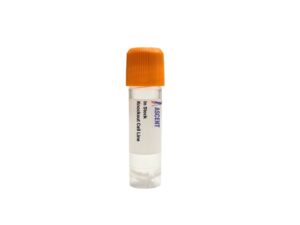
In Stock Cell Lines
Homo sapiens (Human)
Uterus (cervix)
Adherent
The KIAA0930 Knockout SiHa Cell Line is a CRISPR/Cas9-edited human cervical squamous cell carcinoma cell line with targeted disruption of the KIAA0930 gene. KIAA0930 is an uncharacterized protein regulated by the tumor suppressor TP53 and implicated in p53-mediated apoptosis and cell cycle control. In the HPV-16-positive SiHa background, viral E6 oncoprotein mediates TP53 degradation, suppressing KIAA0930 expression, which makes this model useful for studying p53-independent functions. This knockout cell line enables functional analysis of KIAA0930 in HPV-driven cancers, supporting apoptosis assays, cell cycle studies, colony formation, migration/invasion experiments, and xenograft models. Molecular readouts including TP53, p21, BAX, and cleaved caspase-3 can be assessed via western blotting and RT-qPCR, aiding in identifying therapeutic targets in cervical carcinoma.
 CAMK2A Knockout HEK293 Polyclonal Cells
Cat. No. ARG23235
IQSEC1 Knockout AGS Polyclonal Cells
Cat. No. ARG27026
DPP8 Knockout HGC-27 Polyclonal Cells
Cat. No. ARG39690
MANBA Knockout 786-O Polyclonal Cells
Cat. No. ARG5472
NEK3 Knockout Raji Polyclonal Cells
Cat. No. ARG1483
CAMK2A Knockout HEK293 Polyclonal Cells
Cat. No. ARG23235
IQSEC1 Knockout AGS Polyclonal Cells
Cat. No. ARG27026
DPP8 Knockout HGC-27 Polyclonal Cells
Cat. No. ARG39690
MANBA Knockout 786-O Polyclonal Cells
Cat. No. ARG5472
NEK3 Knockout Raji Polyclonal Cells
Cat. No. ARG1483
 SLC22A5 Knockout HK-2 Cell Line
Cat. No. ARG0415
SLC22A5 Knockout HK-2 Cell Line
Cat. No. ARG0415
The KIAA0930 Knockout SiHa Cell Line is a precisely engineered CRISPR/Cas9-edited human cell product that achieves targeted disruption of the KIAA0930 gene in the SiHa cervical carcinoma background. This stable knockout cell line provides a defined loss-of-function model for investigating the functional role of the uncharacterized protein KIAA0930 in HPV-positive cancer biology. It is derived from Homo sapiens and is optimized for a range of in vitro and in vivo applications, including signaling studies, apoptosis research, and proliferation assays. The product is intended for advanced biomedical research, supporting mechanistic exploration and therapeutic target validation.
The SiHa host cell line was established from a primary human cervical squamous cell carcinoma and is characterized by the presence of integrated HPV-16 DNA. These cells maintain adherent epithelial morphology and express the viral E6 and E7 oncoproteins, which disrupt host tumor suppressor pathways. SiHa cells serve as a widely accepted model for studying HPV-driven cervical carcinogenesis, metastatic behavior, and response to anticancer agents. Notably, the HPV-16 E6 protein targets TP53 for ubiquitin-mediated degradation, leading to profound suppression of p53-dependent transcriptional programs, including those potentially regulating KIAA0930.
KIAA0930 is a poorly characterized protein that is transcriptionally regulated by TP53 and has been reported to physically interact with TP53, suggesting a role in p53-mediated cellular processes. The protein is predicted to participate in the intrinsic apoptotic pathway and cell cycle regulation, operating downstream of TP53 activation. Representative molecular components of this signaling network include the TP53 negative regulator MDM2, the cyclin-dependent kinase inhibitor CDKN1A (p21) which mediates p53-dependent cell cycle arrest, and the BCL2 family members BAX and BCL2 that control mitochondrial apoptosis. Caspase-9 and caspase-3 are downstream executioners likely involved in KIAA0930-associated apoptotic signaling.
In the SiHa cellular context, HPV-16 E6-mediated degradation of TP53 leads to decreased KIAA0930 expression, recapitulating the molecular environment of HPV-positive cervical cancers where p53 function is compromised. Consequently, knockout of residual KIAA0930 in this background offers a unique experimental system to dissect p53-independent functions of the protein and to explore compensatory survival mechanisms. This model is particularly valuable for understanding how HPV-driven malignancies maintain proliferative capacity and evade apoptosis, and it may reveal vulnerabilities that can be exploited pharmacologically.
The KIAA0930 Knockout SiHa Cell Line is suited for a diverse set of research applications central to oncology and drug development. It can be used for functional dissection of KIAA0930 in HPV-driven cancers, p53-independent apoptosis studies via Annexin V/PI flow cytometry, cell cycle distribution analysis using propidium iodide staining, and colony formation assays to assess clonogenic survival. Migration and invasion capabilities can be examined using Transwell assays, and in vivo tumorigenicity can be evaluated in xenograft models. Molecular characterization is facilitated by western blotting for KIAA0930, TP53, p21, and cleaved caspase-3, and by RT-qPCR for KIAA0930 and p53 target genes. The cell line is also compatible with high-throughput drug screening pipelines aimed at identifying novel therapeutic targets in cervical carcinoma. For additional information, please contact Ascent Research.