Genome-edited Cells
Stomach
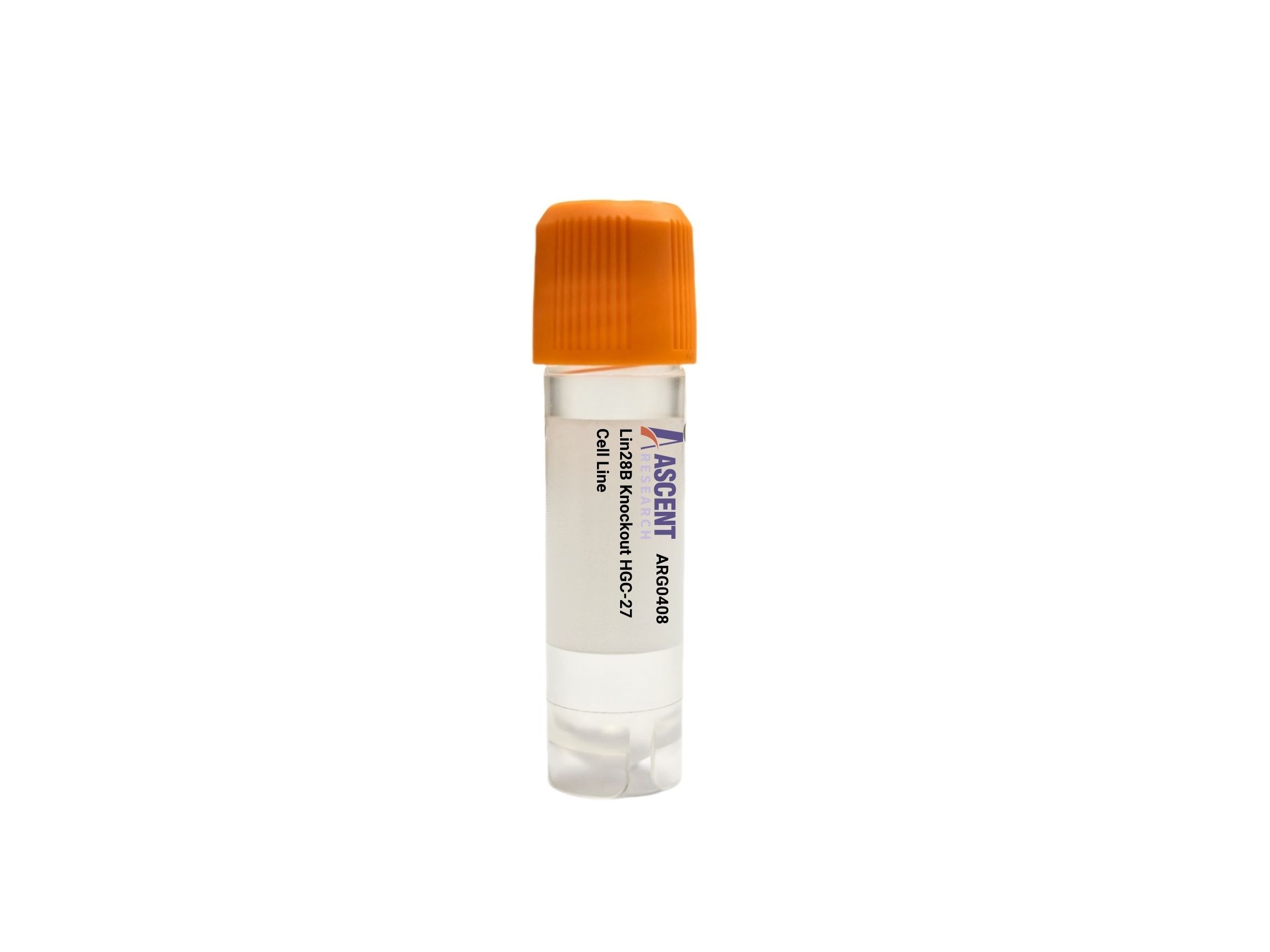
The Lin28B Knockout HGC-27 Cell Line is a CRISPR/Cas9-edited human gastric carcinoma epithelial cell line with targeted disruption of the LIN28B gene. Lin28B is an RNA-binding protein that represses the let-7 microRNA family, promoting stemness and proliferation by derepressing oncogenic targets such as HMGA2 and MYC. Knockout of Lin28B restores let-7 expression, thereby suppressing HMGA2 and MYC and attenuating oncogenic signaling. This cell line is ideal for investigating gastric cancer progression, EMT, and the LIN28B/let-7 regulatory axis using assays such as western blotting, RT-qPCR, proliferation, migration, invasion, and xenograft models.
 NCEH1 Knockout NCI-H1975 Polyclonal Cells
Cat. No. ARG16758
MTMR3 Knockout HT29 Polyclonal Cells
Cat. No. ARG14869
BOD1 Knockout MES-OV Polyclonal Cells
Cat. No. ARG24352
ADD3 Knockout HT29 Polyclonal Cells
Cat. No. ARG32863
JAG2 Knockout Lovo Polyclonal Cells
Cat. No. ARG36394
LCK Knockout HEK293T Polyclonal Cells
Cat. No. ARG3465
NCEH1 Knockout NCI-H1975 Polyclonal Cells
Cat. No. ARG16758
MTMR3 Knockout HT29 Polyclonal Cells
Cat. No. ARG14869
BOD1 Knockout MES-OV Polyclonal Cells
Cat. No. ARG24352
ADD3 Knockout HT29 Polyclonal Cells
Cat. No. ARG32863
JAG2 Knockout Lovo Polyclonal Cells
Cat. No. ARG36394
LCK Knockout HEK293T Polyclonal Cells
Cat. No. ARG3465
The Lin28B Knockout HGC-27 Cell Line is a CRISPR/Cas9-edited human gastric carcinoma epithelial cell line featuring targeted disruption of the LIN28B gene. This cell line provides a stable loss-of-function model for investigating the regulatory roles of the RNA-binding protein Lin28B in gastric cancer biology. The knockout is achieved through CRISPR/Cas9-mediated gene editing in the HGC-27 host cell background, enabling robust and heritable silencing of Lin28B expression. This product is suitable for a wide range of molecular and cellular studies requiring abrogation of Lin28B activity without relying on transient RNA interference methods.
The HGC-27 cell line was originally established from the lymph node metastasis of an undifferentiated human gastric adenocarcinoma. As a gastric carcinoma epithelial cell line, HGC-27 retains key features of metastatic gastric cancer, including rapid proliferation and invasive capacity. Its metastatic origin makes it a clinically relevant model for studying advanced gastric cancer, tumor progression, and metastasis-associated mechanisms. The cell line is widely used in cancer research for investigations into epithelial?Cmesenchymal transition (EMT), chemoresistance, and tumorigenic signaling pathways.
Lin28B functions as a key post-transcriptional repressor of the let-7 family of tumor suppressor microRNAs. It selectively binds the terminal loop of let-7 precursor miRNAs and recruits terminal uridylyl transferase (TUTase) to add uridine residues, which blocks Dicer-mediated processing and mature let-7 biogenesis. This suppression leads to derepression of multiple oncogenic let-7 targets, including HMGA2, MYC, RAS, and IGF2BP1. Lin28B is transcriptionally activated by MYC, SOX2, and OCT4, and its activity is integrated with mTOR signaling, positioning it as a central node in stem cell pluripotency and proliferation pathways. The LIN28B/let-7 axis also interacts with RNA helicase A and modulates downstream effectors such as MYC and RAS to promote a stem-like phenotype.
In the context of gastric carcinoma, Lin28B expression is associated with cancer stem cell properties, tumor aggressiveness, and poor prognosis. The HGC-27 knockout cell line enables dissection of Lin28B-dependent mechanisms that drive gastric cancer cell proliferation, stemness, and metastatic dissemination. By ablating Lin28B, the resultant upregulation of let-7 miRNAs restores suppression of HMGA2, MYC, and RAS, thereby impairing oncogenic signaling. This model is particularly valuable for examining the interplay between the LIN28B/let-7 axis and EMT, and for identifying vulnerabilities in gastric cancer cells that may be exploited for therapeutic intervention.
This knockout cell line is suitable for western blotting, RT-qPCR, RNA-seq, and immunofluorescence to assess Lin28B and let-7 levels, as well as functional assays including cell proliferation, migration, invasion, and apoptosis. In vivo tumor xenograft models support investigations into tumor growth and metastasis. These tools facilitate studies on gastric cancer progression, cancer stem cell biology, microRNA biogenesis, and drug resistance. For further information, please contact Ascent Research.