Genome-edited Cells
Pancreas
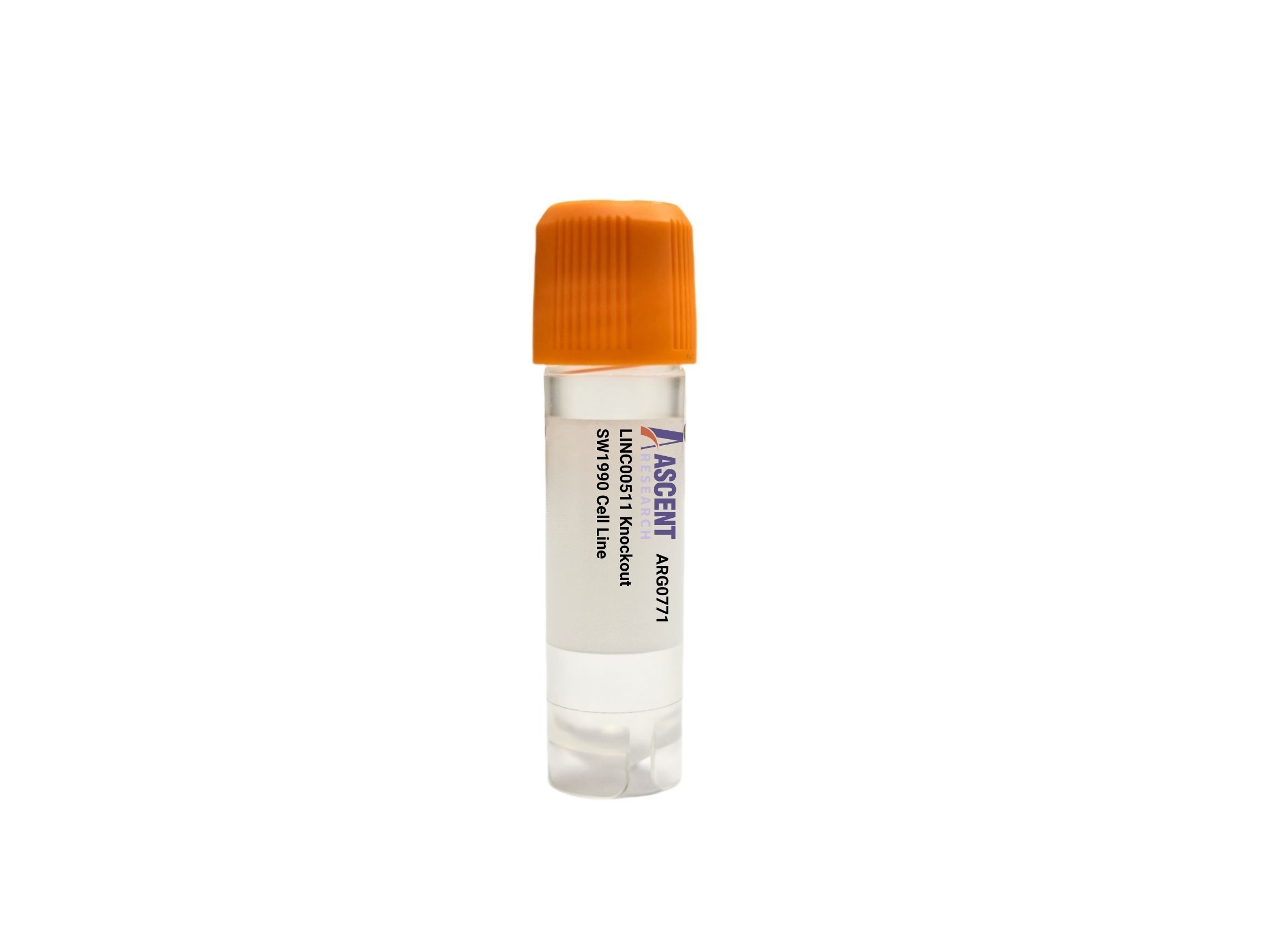
The LINC00511 Knockout SW1990 Cell Line is a CRISPR/Cas9-edited human pancreatic ductal adenocarcinoma cell line with targeted disruption of the oncogenic lncRNA LINC00511. This model abrogates LINC00511-mediated sponging of miR-195 and miR-29b, leading to suppression of EZH2, VEGFA, and CCND1, and impairs Wnt/??-catenin, PI3K/AKT/mTOR, and EMT signaling. It is a valuable tool for investigating ceRNA-mediated regulation, proliferation, metastasis, and drug resistance in pancreatic cancer. Compatible with assays such as RT-qPCR, Western blot, Transwell migration, and xenograft tumor models.
 ATP11C Knockout huh-7 Polyclonal Cells
Cat. No. ARG28031
C11orf54 Knockout Hela Polyclonal Cells
Cat. No. ARG37191
GNRH1 Knockout TE1 Polyclonal Cells
Cat. No. ARG36848
ASRGL1 Knockout A549 Polyclonal Cells
Cat. No. ARG38653
NEXN Knockout MES-OV Polyclonal Cells
Cat. No. ARG6106
GGA1 Knockout 786-O Polyclonal Cells
Cat. No. ARG5582
ATP11C Knockout huh-7 Polyclonal Cells
Cat. No. ARG28031
C11orf54 Knockout Hela Polyclonal Cells
Cat. No. ARG37191
GNRH1 Knockout TE1 Polyclonal Cells
Cat. No. ARG36848
ASRGL1 Knockout A549 Polyclonal Cells
Cat. No. ARG38653
NEXN Knockout MES-OV Polyclonal Cells
Cat. No. ARG6106
GGA1 Knockout 786-O Polyclonal Cells
Cat. No. ARG5582
LINC00511 Knockout SW1990 Cell Line is a gene-edited Homo sapiens cell line in which the oncogenic long non-coding RNA LINC00511 has been disrupted by CRISPR/Cas9-mediated genome editing. Derived from the SW1990 pancreatic ductal adenocarcinoma cell line, this knockout model is supplied as a ready-to-use cell line format, providing a stable loss-of-function tool for investigating the roles of LINC00511 in cancer biology.
The parental SW1990 cell line was established from a spleen metastasis of a primary pancreatic ductal adenocarcinoma and harbors KRAS and TP53 mutations. It serves as a widely used model of human pancreatic adenocarcinoma, exhibiting robust tumorigenicity in immunocompromised mice and recapitulating key features of metastatic disease. This genetic background makes it particularly relevant for studies of invasion, metastasis, and chemoresistance.
LINC00511 operates as a competing endogenous RNA (ceRNA) that sponges tumor-suppressive miRNAs, predominantly miR-195 and miR-29b, leading to derepression of oncogenic targets including EZH2, VEGFA, and CCND1. Transcriptionally regulated by STAT3, E2F1, HIF1A, and TGF-??, LINC00511 feeds into Wnt/??-catenin, PI3K/AKT/mTOR, and epithelial-mesenchymal transition (EMT) pathways. Downstream effects involve modulation of CTNNB1, AKT1, SNAI1, CDH1, and VIM, collectively driving proliferation, invasion, and drug resistance.
Knockout of LINC00511 in SW1990 cells disrupts the ceRNA network, restoring miR-195 and miR-29b activity and suppressing EZH2, VEGFA, and CCND1. This is expected to attenuate cell proliferation, migration, and invasion while enhancing chemosensitivity. The model thus offers a powerful system to dissect lncRNA-dependent oncogenic mechanisms in a genetic context that mirrors advanced pancreatic ductal adenocarcinoma.
This cell line supports diverse experimental workflows, including RT-qPCR, Western blotting, RNA-seq, Transwell assays, colony formation, and CCK-8 proliferation analysis. Luciferase reporter assays enable validation of miRNA?ClncRNA interactions, and flow cytometry permits apoptosis and cell cycle assessment. In vivo xenograft studies can evaluate tumor growth and metastasis. Applications range from ceRNA network investigation and EMT studies to drug resistance screening and CRISPR-based functional genomics. For further information, please contact Ascent Research.