Genome-edited Cells
Large intestine (colon)
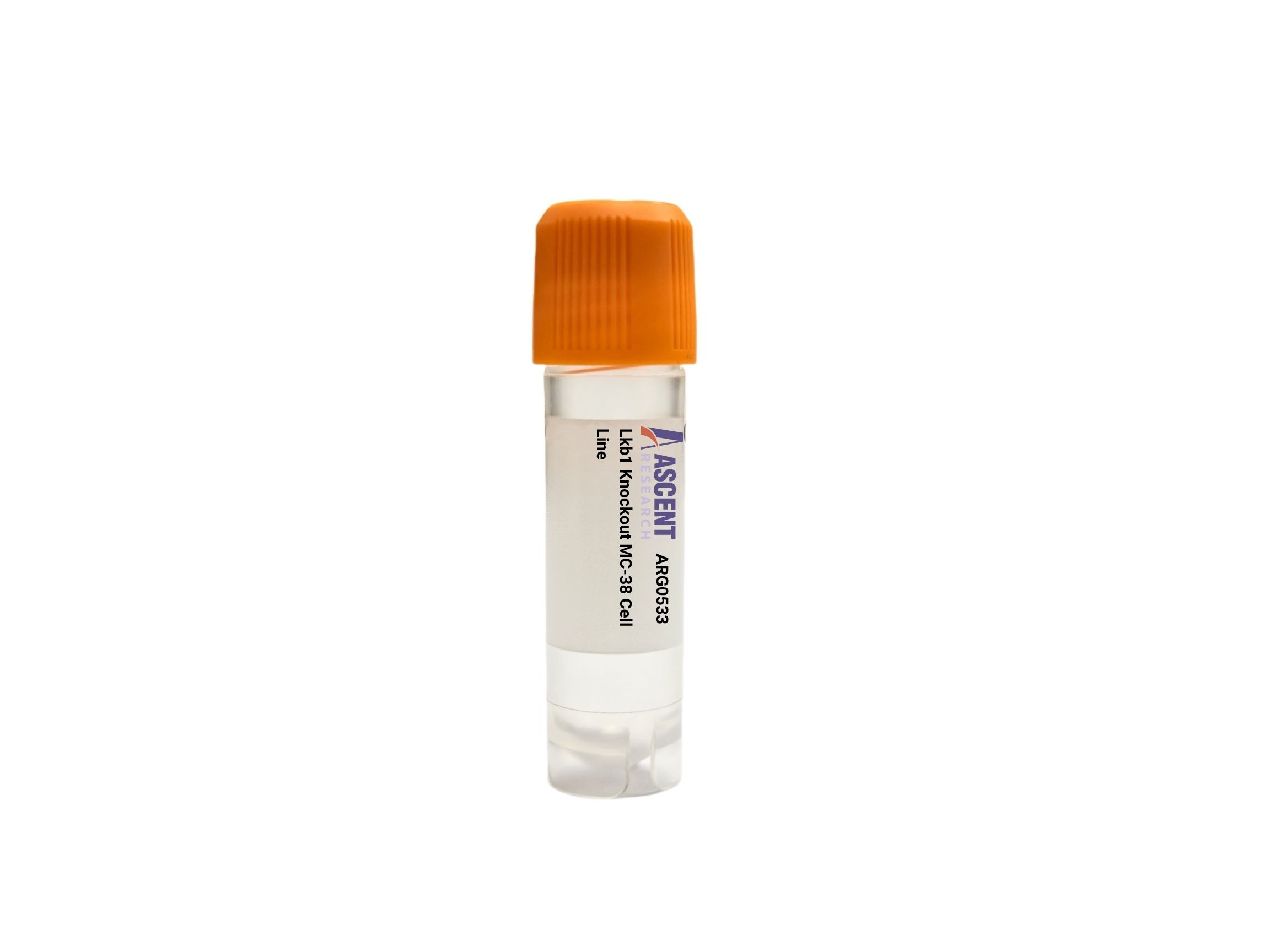
The Lkb1 Knockout MC-38 Cell Line is a CRISPR/Cas9-edited knockout cell line derived from mouse MC-38 colon epithelial cells, providing a stable loss-of-function model of the tumor suppressor serine/threonine kinase Lkb1 (Stk11). Lkb1 acts as a master regulator of energy metabolism and cell polarity, activated by the STRAD/MO25 complex, and it phosphorylates AMPK-family kinases to inhibit mTORC1 and coordinate growth suppression. This knockout model is ideal for studying colorectal cancer tumorigenesis, metabolic reprogramming, immune evasion, and drug resistance. Key applications include western blotting, proliferation and metabolic flux assays, and syngeneic tumor xenograft studies. It enables dissection of Lkb1??s roles in AMPK, Hippo, and Wnt signaling networks.
 C2CD3 Knockout A549 Polyclonal Cells
Cat. No. ARG31980
MTA1 Knockout NCI-H1975 Polyclonal Cells
Cat. No. ARG16429
KIF5B Knockout huh-7 Polyclonal Cells
Cat. No. ARG28490
KIF13A Knockout SK-HEP-1 Polyclonal Cells
Cat. No. ARG32755
DDHD2 Knockout 786-O Polyclonal Cells
Cat. No. ARG5630
C2CD3 Knockout A549 Polyclonal Cells
Cat. No. ARG31980
MTA1 Knockout NCI-H1975 Polyclonal Cells
Cat. No. ARG16429
KIF5B Knockout huh-7 Polyclonal Cells
Cat. No. ARG28490
KIF13A Knockout SK-HEP-1 Polyclonal Cells
Cat. No. ARG32755
DDHD2 Knockout 786-O Polyclonal Cells
Cat. No. ARG5630
 HT-1197
Cat. No. ARC0325
HT-1197
Cat. No. ARC0325
The Lkb1 Knockout MC-38 Cell Line is a CRISPR/Cas9-edited knockout cell line derived from mouse MC-38 colon epithelial cells with targeted disruption of the Stk11 gene. This stable loss-of-function model eliminates Lkb1 protein expression, enabling studies of its tumor-suppressive and metabolic functions in a syngeneic colorectal adenocarcinoma background.
MC-38 cells, originating from C57BL/6 mice, form a widely used murine colon adenocarcinoma model that recapitulates human colorectal cancer histology and immune responsiveness. The immunocompetent background is valuable for assessing tumor?Cimmune interactions and therapeutic effects. Introduction of the Lkb1 knockout creates a tool to dissect how this master kinase impacts tumor progression and host immunity within the native microenvironment.
Lkb1 (Stk11) is a serine/threonine kinase that acts as a master metabolic and polarity regulator. It is activated by the STRAD/MO25 complex in response to energy stress and further regulated by ATM, PKC??, and PI3K/AKT signaling. Active Lkb1 phosphorylates AMPK and related kinases (MARK1-4, SIK, NUAK, SNRK), leading to mTORC1 inhibition via TSC1/2-Raptor and catabolic pathway activation. Additionally, Lkb1 controls cell polarity through MARK/Par-1 and engages tumor suppressor networks by interacting with p53 and SMAD4, while modulating Hippo (YAP/TAZ) and Wnt pathways.
In MC-38 colorectal cancer cells, Lkb1 loss disrupts AMPK-mediated metabolic checkpoints, leading to unchecked mTORC1 activity, enhanced biosynthesis, and resistance to nutrient deprivation. Furthermore, compromised polarity and altered Hippo/Wnt signaling likely promote invasive phenotypes. Lkb1 mutations occur in Peutz-Jeghers syndrome and numerous malignancies, including non-small cell lung cancer, cervical cancer, and colorectal cancer, where they are associated with aggressiveness and therapeutic resistance. Therefore, this model is relevant for probing Lkb1-driven tumor suppression and metabolic?Cimmune vulnerabilities.
Applications include colorectal cancer tumorigenesis, metabolism, immune evasion, and drug resistance studies using assays such as western blotting for phospho-AMPK/ACC, proliferation and colony formation, migration/invasion, Seahorse metabolic flux, and glucose uptake measurements. The line is also suited for syngeneic xenograft models to evaluate in vivo growth, metastasis, and therapy responses, followed by immunohistochemistry. For more information, contact Ascent Research.