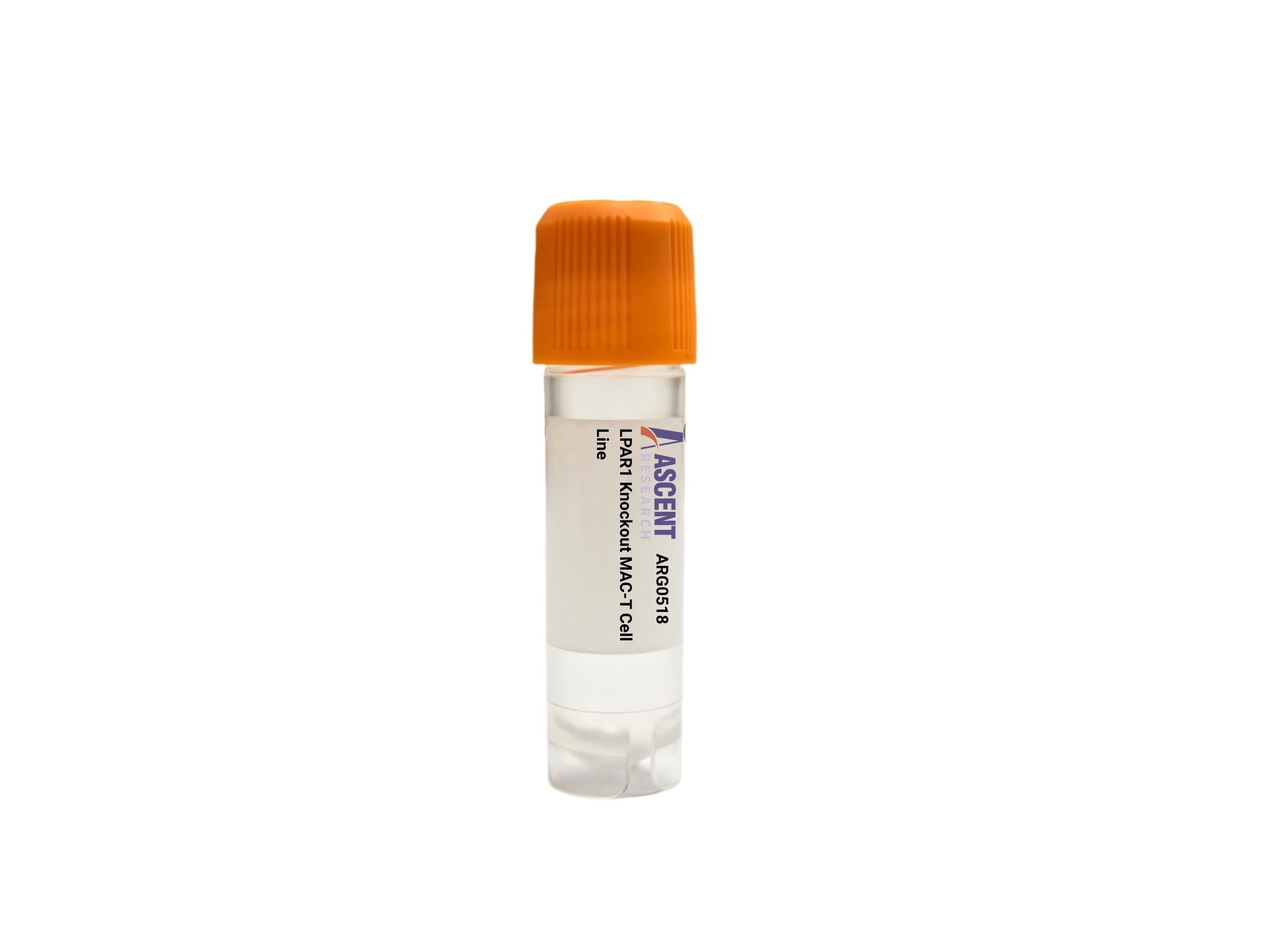
Genome-edited Cells
Breast (mammary gland)
The LPAR1 Knockout MAC-T Cell Line provides a CRISPR/Cas9-engineered loss-of-function model in immortalized bovine mammary epithelial cells. By disrupting the gene encoding the LPA receptor LPAR1, this cell line impairs G??12/13-, G??q/11-, and G??i/o-mediated signaling cascades, including RhoA/ROCK and PI3K/Akt pathways, and downstream targets such as CTGF and IL-6. Ideal for investigating LPA-driven mammary epithelial responses, the knockout line facilitates studies on cell proliferation, migration, and milk synthesis. It serves as a powerful tool for lactation biology, cancer metastasis research, and signal transduction analysis using assays like Western blot, RNA-seq, and LPA-induced migration.
 CHST3 Knockout Hela Polyclonal Cells
Cat. No. ARG8782
CNST Knockout Hela Polyclonal Cells
Cat. No. ARG8112
IL27 Knockout T47D Polyclonal Cells
Cat. No. ARG36809
KLRB1 Knockout NCI-H1299 Polyclonal Cells
Cat. No. ARG36510
C5AR1 Knockout HAP1 Polyclonal Cells
Cat. No. ARG41486
EEF1AKMT1 Knockout HAP1 Polyclonal Cells
Cat. No. ARG40554
CHST3 Knockout Hela Polyclonal Cells
Cat. No. ARG8782
CNST Knockout Hela Polyclonal Cells
Cat. No. ARG8112
IL27 Knockout T47D Polyclonal Cells
Cat. No. ARG36809
KLRB1 Knockout NCI-H1299 Polyclonal Cells
Cat. No. ARG36510
C5AR1 Knockout HAP1 Polyclonal Cells
Cat. No. ARG41486
EEF1AKMT1 Knockout HAP1 Polyclonal Cells
Cat. No. ARG40554
The LPAR1 Knockout MAC-T Cell Line is a CRISPR/Cas9-mediated gene disruption model derived from the immortalized bovine mammary epithelial MAC-T cell line. This loss-of-function cell line enables definitive investigation of the lysophosphatidic acid receptor 1 (LPAR1), a G protein-coupled receptor critical for mediating LPA-dependent cellular responses. By disrupting LPAR1, researchers can dissect the receptor-specific contributions to downstream signaling cascades in a mammary epithelial context.
The MAC-T host cell line is an extensively characterized, immortalized bovine mammary epithelial model widely employed in lactation biology and mammary gland research. Derived from primary bovine mammary alveolar cells, MAC-T cells retain key features of differentiated mammary epithelium, including the capacity to express milk protein genes and respond to lactogenic hormones. This background provides a physiologically relevant platform for examining LPAR1 function in mammary epithelial homeostasis.
LPAR1 encodes a high-affinity receptor for the bioactive lipid mediator lysophosphatidic acid (LPA), which is produced extracellularly by autotaxin (ENPP2). Ligand binding activates heterotrimeric G proteins, primarily G??12/13, G??q/11, and G??i/o, which in turn engage effector pathways including RhoA/ROCK, phospholipase C (PLC)/protein kinase C (PKC), and PI3K/Akt. These cascades drive cytoskeletal reorganization, cell proliferation, and transcriptional responses through mitogen-activated protein kinases ERK1/2 and transcription factors such as serum response factor (SRF), NF-??B, and AP-1. LPAR1 also interacts with ??-arrestin 2 and NHERF1, modulating receptor trafficking and signaling bias. Downstream targets include connective tissue growth factor (CTGF), cysteine-rich angiogenic inducer 61 (Cyr61), interleukin-6 (IL-6), and matrix metalloproteinase 9 (MMP9). Disruption of LPAR1 therefore uncouples LPA stimulation from these multifaceted signaling networks.
In the mammary epithelial environment, LPA is implicated in normal gland development and function, with LPAR1 potentially mediating effects on cell proliferation, differentiation, and secretory activity. The MAC-T knockout model allows precise assessment of how LPAR1 ablation alters mammary epithelial responses to LPA, including changes in milk synthesis and secretion pathways. This tool addresses gaps in understanding the role of LPA signaling in bovine mammary biology, which is valuable for both agricultural sciences and comparative biomedical research.
Researchers can employ this knockout cell line to explore LPAR1-dependent regulation of mammary epithelial cell growth and differentiation using assays such as Western blotting for LPAR1 and signaling intermediates, RT-qPCR for LPAR1 transcript, and MTS/MTT proliferation assays. Functional studies may include LPA-induced migration assays and RhoA activation G-LISA to gauge pathway activity. Transcriptomic analysis via RNA-seq can reveal global gene expression changes resulting from LPAR1 loss. Immunofluorescence staining for actin cytoskeleton reorganization further contextualizes signaling effects. Additionally, given the emerging links between LPAR1 and cancer metastasis and fibrosis, the MAC-T model serves as a platform for cancer biology investigations, particularly in examining how epithelial-derived tumors exploit LPA signals. For inquiries regarding this product, please contact Ascent Research.