Genome-edited Cells
Ascites
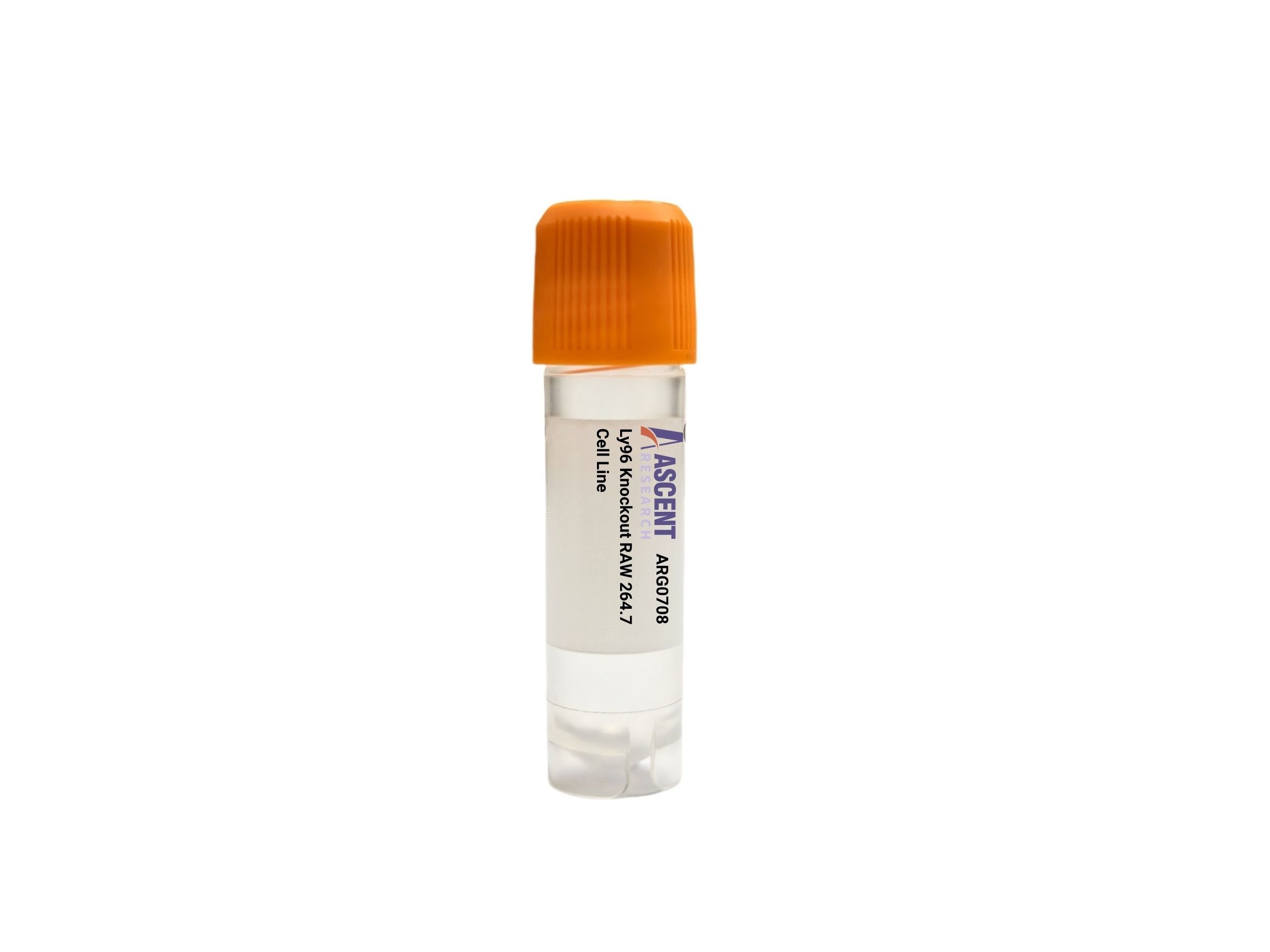
The Ly96 Knockout RAW 264.7 Cell Line is a CRISPR/Cas9-edited knockout cell line derived from mouse RAW 264.7 macrophages. It features targeted disruption of the Ly96 gene, encoding the MD-2 co-receptor essential for TLR4-mediated recognition of lipopolysaccharide (LPS). This loss-of-function model abolishes TLR4 signaling, blocking activation of downstream mediators such as MyD88, TRIF, NF-??B, and IRF3, and preventing production of pro-inflammatory cytokines like TNF-?? and IL-6. The knockout cell line is an ideal tool for studying innate immunity, TLR4 pathways, and inflammatory diseases including sepsis and atherosclerosis. Applications include LPS-induced cytokine assays, signaling pathway analysis, and drug screening for TLR4 antagonists. The RAW 264.7 host background provides a robust macrophage model for reproducible research on host-pathogen interactions and inflammatory signaling networks.
 MRC-5 Cell Culture Medium
Cat. No. ARM1063
MRC-5 Cell Culture Medium
Cat. No. ARM1063
 L3MBTL2 Knockout MES-OV Polyclonal Cells
Cat. No. ARG24749
ANKRD12 Knockout huh-7 Polyclonal Cells
Cat. No. ARG27893
APOC2 Knockout SK-HEP-1 Polyclonal Cells
Cat. No. ARG32217
AP2A2 Knockout A549 Polyclonal Cells
Cat. No. ARG31502
DLX1 Knockout HAP1 Polyclonal Cells
Cat. No. ARG38946
L3MBTL2 Knockout MES-OV Polyclonal Cells
Cat. No. ARG24749
ANKRD12 Knockout huh-7 Polyclonal Cells
Cat. No. ARG27893
APOC2 Knockout SK-HEP-1 Polyclonal Cells
Cat. No. ARG32217
AP2A2 Knockout A549 Polyclonal Cells
Cat. No. ARG31502
DLX1 Knockout HAP1 Polyclonal Cells
Cat. No. ARG38946
The Ly96 Knockout RAW 264.7 Cell Line is a CRISPR/Cas9-edited knockout cell line derived from the mouse RAW 264.7 macrophage cell line. This product features disruption of the Ly96 gene, which encodes the MD-2 protein, an essential co-receptor for Toll-like receptor 4 (TLR4). The knockout cell line provides a defined loss-of-function model for investigating TLR4-mediated innate immune signaling without the confounding effects of residual MD-2 activity. The CRISPR/Cas9-mediated gene disruption generates a stable, heritable knockout suitable for long-term culture and reproducible experimentation. This cell line is supplied as a validated, ready-to-use reagent for advanced biomedical research.
The host cell line, RAW 264.7, is a widely used mouse monocyte/macrophage cell line established from a BALB/c mouse tumor induced by the Abelson murine leukemia virus. These cells exhibit characteristic macrophage properties including adherence, phagocytic activity, and robust cytokine production upon stimulation. RAW 264.7 macrophages are a benchmark model for studying innate immune responses, particularly the transcriptional and translational regulation of pro-inflammatory mediators. Their responsiveness to bacterial lipopolysaccharide (LPS) makes them an ideal background for dissecting TLR4 signaling. The Ly96 knockout in this context allows for precise interrogation of MD-2-dependent pathways without the need for primary macrophage isolation, ensuring consistency and scalability.
Ly96 (MD-2) is indispensable for TLR4 function, acting as the ligand-binding subunit that recognizes bacterial LPS and facilitates receptor homodimerization. Following LPS binding, the TLR4/MD-2 complex triggers two major signaling branches: the MyD88-dependent pathway, which activates NF-??B and AP-1 through IRAK4, TRAF6, TAK1, and the IKK complex leading to pro-inflammatory cytokine production (e.g., TNF-??, IL-6, IL-1??), and the TRIF-dependent pathway, which activates IRF3 via TRAF3 and TBK1 to induce type I interferons (e.g., IFN-??). The Ly96 knockout disrupts these cascades, abolishing LPS-induced activation of downstream targets such as JNK, p38 MAPK, and NF-??B p65, thereby halting the expression of key inflammatory genes.
In the RAW 264.7 macrophage background, Ly96 knockout creates a unique tool for investigating TLR4-specific functions in innate immunity. Since macrophages are central to pathogen recognition and cytokine storms, this model enables researchers to distinguish MD-2-dependent responses from other LPS-binding proteins or alternative TLRs. The knockout cell line is particularly valuable for studying the molecular mechanisms of sepsis, where excessive TLR4 activation drives systemic inflammation. It also facilitates the dissection of crosstalk between TLR4 and other pattern recognition receptors, and the evaluation of MD-2 as a therapeutic target in inflammatory diseases.
The Ly96 Knockout RAW 264.7 Cell Line is suited for a wide range of experimental applications, including TLR4 signaling studies, sepsis pathogenesis, inflammatory bowel disease, atherosclerosis, and cancer-related inflammation. Researchers can employ it in functional assays such as LPS-induced cytokine ELISAs (e.g., TNF-??), western blotting for phosphorylated NF-??B p65 and p38 MAPK, flow cytometry to confirm TLR4 surface expression, RT-qPCR for Il6 and Tnf mRNA, NF-??B luciferase reporter assays, and phagocytosis assays. This knockout cell line provides a robust platform for drug screening of TLR4 inhibitors and for validating pathway-specific interventions. For additional technical details or assistance, please contact Ascent Research.