Genome-edited Cells
Lung
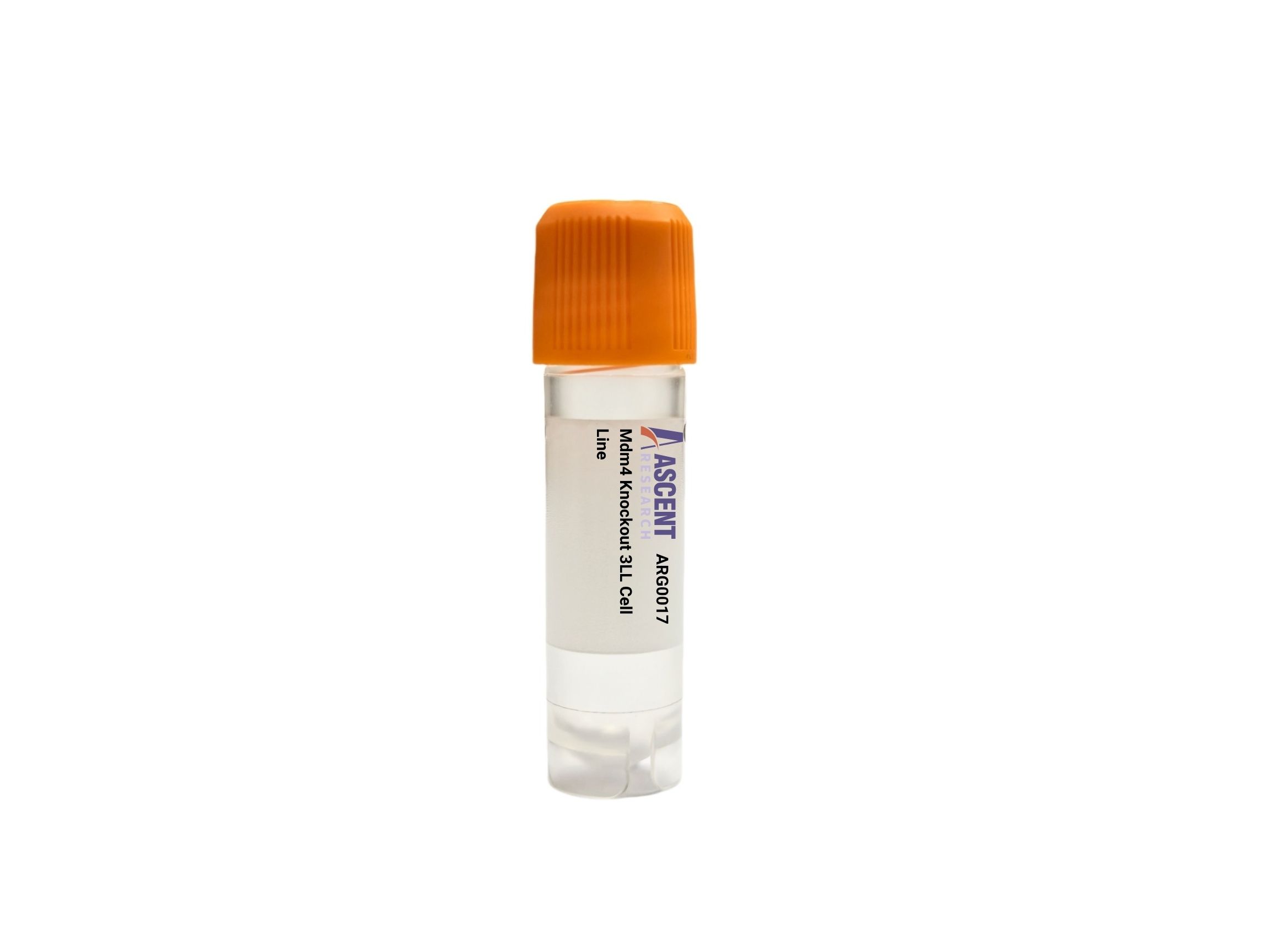
Mdm4 Knockout 3LL is a CRISPR/Cas9-edited mouse Lewis lung carcinoma cell line with disruption of the Mdm4 gene in the 3LL (LLC1) background. In this syngeneic C57BL/6 tumor model, loss of MDM4 enables investigation of p53-pathway regulation, as MDM4 normally binds TP53 and cooperates with MDM2 to suppress p53 transcriptional activity. The model is relevant for studying DNA damage response, apoptosis, cell-cycle arrest, metastasis biology, and cancer therapy response using assays such as western blotting, RT-qPCR, RNA-seq, flow cytometry, clonogenic survival, and drug sensitivity testing.
 CALCOCO2 Knockout jurkat Polyclonal Cells
Cat. No. ARG34070
FAM98A Knockout A2780 Polyclonal Cells
Cat. No. ARG19057
MSL2 Knockout NCI-H1975 Polyclonal Cells
Cat. No. ARG16492
IDH1 Knockout jurkat Polyclonal Cells
Cat. No. ARG34304
MDC1 Knockout MES-OV Polyclonal Cells
Cat. No. ARG6336
CALCOCO2 Knockout jurkat Polyclonal Cells
Cat. No. ARG34070
FAM98A Knockout A2780 Polyclonal Cells
Cat. No. ARG19057
MSL2 Knockout NCI-H1975 Polyclonal Cells
Cat. No. ARG16492
IDH1 Knockout jurkat Polyclonal Cells
Cat. No. ARG34304
MDC1 Knockout MES-OV Polyclonal Cells
Cat. No. ARG6336
 Rat Annulus Fibrosus Cells
Cat. No. ARP0318
Rat Annulus Fibrosus Cells
Cat. No. ARP0318
The Mdm4 Knockout 3LL Cell Line is a CRISPR/Cas9-engineered mouse cancer cell model in which the Mdm4 gene has been disrupted to eliminate functional MDM4 expression. This edited line is generated in 3LL cells, a Lewis lung carcinoma-derived epithelial-like tumor model, and provides a stable in vitro system for interrogating the MDM2-MDM4-p53 regulatory axis. Because MDM4 is a central suppressor of p53 transcriptional activity, this knockout model is suited for studies of p53-dependent stress responses, checkpoint regulation, and apoptosis in a murine lung carcinoma context.
3LL, also known as LLC1, is a widely used murine lung carcinoma cell line syngeneic to C57BL/6 mice. It is extensively applied in tumor biology, metastasis research, and immuno-oncology because it models key features of solid tumor growth and host-tumor interactions in an experimentally tractable system. As a Lewis lung carcinoma-derived model, 3LL is relevant for studies of lung cancer progression, metastatic behavior, and antitumor response mechanisms. Its established use in both in vitro and syngeneic research settings makes it a practical background for evaluating how defined genetic perturbations influence malignant cell behavior and therapy response.
MDM4 (MDMX) functions as a major negative regulator of TP53 by directly binding p53 and repressing its transcriptional activity, while also cooperating with MDM2 to constrain p53 activity and stability. MDM4 is regulated downstream of DNA damage and oncogenic stress pathways involving ATM, ATR, CHEK1, and CHEK2, and it functionally interacts with TP53, MDM2, ARF/CDKN2A, USP7/HAUSP, CK1alpha, and 14-3-3 proteins. Through suppression of the TP53 transcriptional program, MDM4 limits induction of canonical downstream effectors including CDKN1A/p21, BAX, BBC3/PUMA, PMAIP1/NOXA, MDM2, and GADD45A, thereby restraining cell-cycle arrest and apoptosis. This signaling node is highly relevant to p53-pathway dysregulation in lung cancer, solid tumors, metastatic progression, and treatment response.
In the 3LL background, Mdm4 knockout offers a defined system to examine how release of p53 inhibition alters tumor cell signaling under basal conditions or following genotoxic, ribosomal, or oncogenic stress. The model is useful for assessing pathway dependency within the MDM2-MDM4-TP53 network and for characterizing transcriptional and phenotypic consequences of enhanced p53 output in a tumor epithelial-like mouse cell line commonly used in cancer and immunology research.
This cell line can support western blotting, RT-qPCR, and RNA-seq analyses of TP53 target induction; flow cytometry-based cell-cycle profiling and apoptosis assays; clonogenic survival studies after DNA damage or drug treatment; reporter assays for p53-dependent transcription; immunofluorescence and phospho-signaling analysis of ATM/ATR-CHEK1/CHEK2 pathway engagement; and co-immunoprecipitation studies examining interactions among MDM4, MDM2, and TP53. It is also applicable to anticancer drug sensitivity studies, synthetic lethal interaction screens, and mechanistic investigation of the MDM2-MDM4 axis in syngeneic tumor biology and immuno-oncology workflows. Researchers may contact Ascent Research for additional technical information, product details, or related gene-edited cell models.