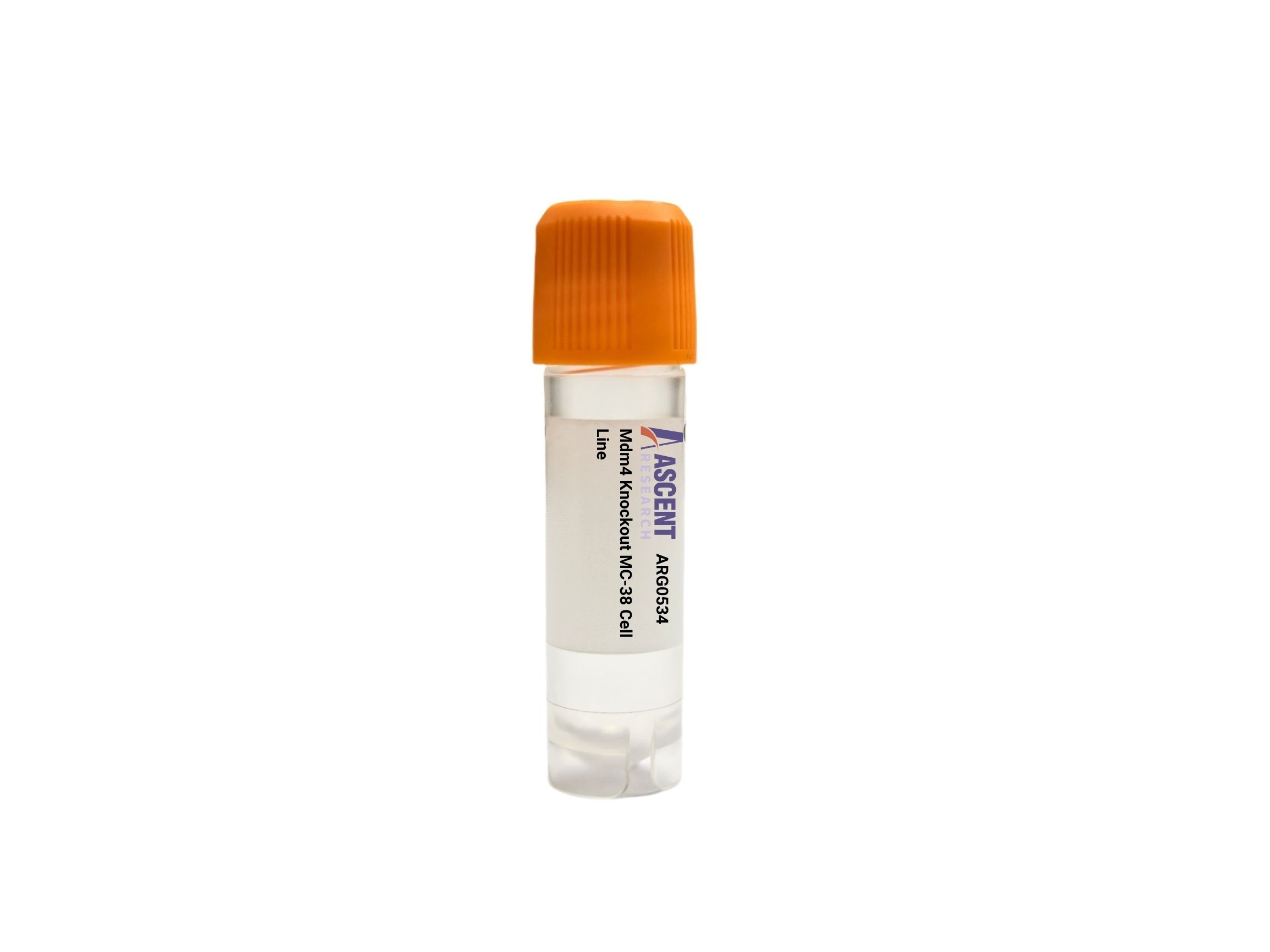
Genome-edited Cells
Large intestine (colon)
The Mdm4 Knockout MC-38 Cell Line is a CRISPR/Cas9-edited knockout cell line derived from the murine colon adenocarcinoma MC-38 model. This loss-of-function system disrupts Mdm4, a key negative regulator of p53 that inhibits its transcriptional activity and promotes proteasomal degradation via heterodimerization with Mdm2. Mdm4 interacts with p53, Mdm2, 14-3-3 proteins, and DAXX, and is regulated by DNA damage kinases including ATM and ATR. This knockout line enables investigation of p53 pathway regulation, tumor suppression, and drug resistance mechanisms in colorectal cancer. Applications include p53 reporter assays, apoptosis analysis, co-immunoprecipitation for p53-Mdm4 interactions, and syngeneic tumor growth studies in C57BL/6 mice, facilitating MDM4-targeted therapy evaluation and tumor immunology research.
 ALKBH5 Knockout A549 Cell Line
Cat. No. ARG43716
ALKBH5 Knockout A549 Cell Line
Cat. No. ARG43716
 HLCS Knockout 786-O Polyclonal Cells
Cat. No. ARG25262
DNMT3A Knockout HT29 Polyclonal Cells
Cat. No. ARG39441
CES1 Knockout MES-OV Polyclonal Cells
Cat. No. ARG5820
LRRC47 Knockout AGS Polyclonal Cells
Cat. No. ARG2733
LDLR Knockout Raji Polyclonal Cells
Cat. No. ARG1549
HLCS Knockout 786-O Polyclonal Cells
Cat. No. ARG25262
DNMT3A Knockout HT29 Polyclonal Cells
Cat. No. ARG39441
CES1 Knockout MES-OV Polyclonal Cells
Cat. No. ARG5820
LRRC47 Knockout AGS Polyclonal Cells
Cat. No. ARG2733
LDLR Knockout Raji Polyclonal Cells
Cat. No. ARG1549
The Mdm4 Knockout MC-38 Cell Line is a CRISPR/Cas9-edited knockout cell line derived from the MC-38 murine colon adenocarcinoma model. This engineered line contains a targeted disruption of the Mdm4 gene, eliminating functional Mdm4 protein expression and providing a defined loss-of-function system for investigating p53 regulatory networks. The knockout is validated for loss of Mdm4, offering a stable platform for downstream functional assays without the need for transient gene silencing approaches.
The parental MC-38 cell line is a C57BL/6-derived colon carcinoma model widely utilized in tumor immunology and immunotherapy studies. Its syngeneic background enables implantation into immunocompetent C57BL/6 mice, preserving an intact tumor microenvironment. MC-38 cells exhibit adenocarcinoma characteristics and are commonly employed to assess immune checkpoint inhibitors, cancer vaccines, and combination therapies, making the Mdm4 knockout derivative particularly relevant for exploring interactions between p53 status and antitumor immunity.
Mdm4 (also known as Mdmx) is a critical negative regulator of the p53 tumor suppressor. It directly binds to the p53 transactivation domain, inhibiting its transcriptional activity. Additionally, Mdm4 heterodimerizes with Mdm2, enhancing Mdm2-mediated ubiquitination and proteasomal degradation of p53. This dual mechanism effectively suppresses p53-dependent transcription of target genes such as CDKN1A (p21), BAX, PUMA (BBC3), and NOXA. Upstream, DNA damage activates kinases including ATM, ATR, CHK1, and CHK2, which phosphorylate Mdm4 and Mdm2 to relieve p53 inhibition. Mdm4 interacts with 14-3-3 proteins and DAXX, and participates in feedback loops where p53 transcriptionally induces Mdm2 and Mdm4 expression.
In colorectal cancer, Mdm4 overexpression is associated with p53 inactivation and tumor progression, making the MC-38 Mdm4 knockout a powerful tool to dissect p53-mediated tumor suppression in a colon carcinoma context. The MC-38 line’s utility in syngeneic mouse models allows researchers to examine how loss of Mdm4 impacts tumor growth, immune cell infiltration, and response to immunotherapies in vivo. This knockout model helps elucidate the interplay between Mdm4-dependent p53 regulation and the tumor immune microenvironment, which is critical for developing combined treatment strategies.
This cell line supports a wide range of research applications, including mechanistic studies of p53 pathway regulation, evaluation of MDM4-targeted therapeutics such as Nutlin-3, and investigation of drug resistance mechanisms. Typical assays include Western blotting and RT-qPCR for confirmation of Mdm4 disruption, p53 reporter assays, cell viability and apoptosis measurements (Annexin V staining), cell cycle analysis by flow cytometry, co-immunoprecipitation to assess p53-Mdm4 interactions, and syngeneic tumor growth assays in C57BL/6 mice. The knockout line also enables studies of DNA damage response and apoptosis signaling downstream of p53. For further information, please contact Ascent Research.