
In Stock Cell Lines
Homo sapiens (Human)
Lung
Adherent
The MEN1 Knockout NCI-H460 Cell Line is a CRISPR/Cas9-edited human knockout cell line that disrupts the MEN1 gene, eliminating the tumor suppressor menin scaffold protein. Derived from the NCI-H460 lung large cell carcinoma line, this model enables study of menin??s roles in transcriptional regulation, chromatin modification, and tumor suppression. Menin interacts with MLL/COMPASS components (MLL2, ASH2L) and transcription factors (JUND, CTNNB1) to modulate TGF-?? and Wnt signaling; its loss alters downstream targets like CDKN1B and CCND1. Key applications include neuroendocrine tumor research, epigenetic mechanism studies, and drug screening in lung cancer, using assays such as western blotting, ChIP-qPCR, and cell proliferation analyses.
 CLIC1 Knockout NCI-H1299 Polyclonal Cells
Cat. No. ARG17421
EPN1 Knockout HT29 Polyclonal Cells
Cat. No. ARG15012
NCLN Knockout Hela Polyclonal Cells
Cat. No. ARG8724
HTR1F Knockout HAP1 Polyclonal Cells
Cat. No. ARG22655
CD44 Knockout A549 Polyclonal Cells
Cat. No. ARG43581
CLIC1 Knockout NCI-H1299 Polyclonal Cells
Cat. No. ARG17421
EPN1 Knockout HT29 Polyclonal Cells
Cat. No. ARG15012
NCLN Knockout Hela Polyclonal Cells
Cat. No. ARG8724
HTR1F Knockout HAP1 Polyclonal Cells
Cat. No. ARG22655
CD44 Knockout A549 Polyclonal Cells
Cat. No. ARG43581
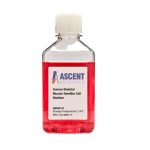 Human Skeletal Muscle Satellite Cell Medium
Cat. No. ARM0161
Human Skeletal Muscle Satellite Cell Medium
Cat. No. ARM0161
The MEN1 Knockout NCI-H460 Cell Line is a CRISPR/Cas9-edited human knockout cell line designed for targeted disruption of the MEN1 gene, which encodes the tumor suppressor and scaffold protein menin. This constitutive loss-of-function model eliminates menin protein expression, providing a robust in vitro system to dissect menin-dependent regulatory mechanisms without altering the genetic background of the parental NCI-H460 line. The knockout enables precise evaluation of menin??s roles in transcriptional control, chromatin modification, and tumor suppression across diverse experimental settings.
The parental NCI-H460 cell line was derived from a human lung large cell carcinoma and exhibits epithelial morphology. As a widely used model in lung cancer research, NCI-H460 cells retain key signaling pathways relevant to non-small cell lung cancer (NSCLC) biology, including aberrant proliferation, altered DNA damage responses, and potential neuroendocrine differentiation features. This background makes the MEN1 knockout derivative particularly suited for examining how menin loss influences lung carcinoma cell behavior and the interplay between tumor suppression and oncogenic signaling in a pulmonary epithelial context.
Menin functions as a scaffold protein that integrates transcriptional regulation and chromatin remodeling through interactions with multiple protein complexes. It directly binds members of the MLL/COMPASS family, such as MLL2, ASH2L, RBBP5, and WDR5, to modulate histone H3K4 methylation at target gene promoters. Additionally, menin interacts with transcription factors including JUND, NFKB1, CTNNB1 (??-catenin), and SMAD3, as well as chromatin modifiers like HDAC1, linking it to TGF-?? and Wnt signaling cascades. The MEN1 knockout disrupts these interactions, leading to altered expression of downstream targets such as the cyclin-dependent kinase inhibitors CDKN1B (p27) and CDKN2B (p15), cell cycle regulators CDK2 and CCND1, and apoptosis-related genes BCL2 and BAX. Consequently, loss of menin perturbs cell cycle progression, DNA damage repair (via factors like RPA2, FANCD2, and 53BP1), and endocrine gene programs, mirroring pathogenic events in MEN1-related disorders.
In the lung carcinoma background, MEN1 ablation provides a platform to investigate the tumor-suppressive functions of menin in epithelial cells. Given menin??s role in regulating cell proliferation and genome stability, the knockout line can be used to study how its absence cooperates with existing oncogenic lesions in NCI-H460 cells to promote aggressive phenotypes, such as enhanced colony formation, resistance to DNA-damaging agents, or neuroendocrine transdifferentiation. Moreover, because menin modulates TGF-?? and Wnt pathways??both frequently dysregulated in lung cancer??this model allows dissection of context-dependent signaling crosstalk and identification of vulnerabilities specific to menin-deficient lung carcinomas.
The MEN1 Knockout NCI-H460 Cell Line supports a range of research applications, including mechanistic studies of multiple endocrine neoplasia type 1, neuroendocrine tumor biology, and epigenetic regulation in cancer. Researchers can employ western blotting to confirm menin loss, RT?qPCR to measure target gene expression changes, cell proliferation and colony formation assays for phenotypic analysis, luciferase reporter assays to assess Wnt/TGF-?? signaling activity, ChIP?qPCR to map histone modifications, co?immunoprecipitation to probe menin interactome alterations, and DNA damage response assays to assess repair defects. In drug discovery, the line serves as a screening tool for compounds that exploit synthetic lethality or restore menin-like functions. For additional details or technical support, please contact Ascent Research.

