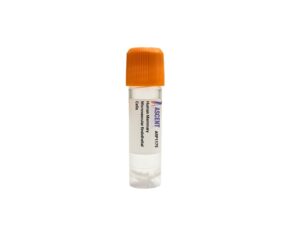
In Stock Cell Lines
Mus musculus (Mouse)
Brain
Adherent
This CRISPR/Cas9-edited Mettl3 knockout Neuro-2a cell line provides a robust loss-of-function model for studying m6A RNA methylation in neuronal differentiation. Mettl3, the catalytic subunit of the m6A writer complex, is disrupted in the widely used mouse neuroblastoma Neuro-2a background, which is well suited for neurite outgrowth and neurodevelopment assays. By eliminating Mettl3-dependent methylation of key transcripts such as Neurog2 and Mapt, the line enables investigation of epitranscriptomic control of mRNA stability and translation. Applications include m6A MeRIP-seq, transcriptomic profiling, and functional neuronal assays, making it ideal for neurobiology and disease modeling research.
 COBL Knockout jurkat Polyclonal Cells
Cat. No. ARG13567
Bckdk Knockout RAW 264.7 Polyclonal Cells
Cat. No. ARG23526
ALDH3A2 Knockout HT29 Polyclonal Cells
Cat. No. ARG32918
NTRK1 Knockout MCF7 Polyclonal Cells
Cat. No. ARG11389
MAP3K20 Knockout HEK293T Polyclonal Cells
Cat. No. ARG4396
COBL Knockout jurkat Polyclonal Cells
Cat. No. ARG13567
Bckdk Knockout RAW 264.7 Polyclonal Cells
Cat. No. ARG23526
ALDH3A2 Knockout HT29 Polyclonal Cells
Cat. No. ARG32918
NTRK1 Knockout MCF7 Polyclonal Cells
Cat. No. ARG11389
MAP3K20 Knockout HEK293T Polyclonal Cells
Cat. No. ARG4396
 Human Pancreatic Stellate Cells
Cat. No. ARP0037
Human Pancreatic Stellate Cells
Cat. No. ARP0037
This product is a CRISPR/Cas9-edited Mettl3 knockout cell line derived from Neuro-2a cells. Through CRISPR/Cas9-mediated gene disruption, the Mettl3 locus has been targeted to eliminate expression of the catalytic subunit of the N6-methyladenosine (m6A) methyltransferase complex, providing a clean loss-of-function model for epitranscriptomic research.
Neuro-2a is a mouse neural crest-derived neuroblastoma line, a subclone of C1300, extensively utilized as a neuronal model for studying differentiation and neurite outgrowth. Serum starvation induces these cells to extend neurites and express neuronal markers, making them ideal for investigating molecular mechanisms of neurogenesis.
Mettl3 associates with METTL14, WTAP, VIRMA, RBM15, and ZC3H13 to form the m6A writer complex, which catalyzes co-transcriptional deposition of m6A on mRNA. This modification influences RNA stability, splicing, and translation. Mettl3 activity is modulated by upstream regulators including WTAP, c-Myc, and KMT2A, and its catalytic output directly methylates transcripts such as Neurog2, Mapt, Bdnf, and Sox2 mRNAs. Recognition of m6A marks by reader proteins (YTHDF1, YTHDF2, YTHDF3) and removal by erasers (FTO, ALKBH5) complete a dynamic regulatory network.
In the Neuro-2a neuronal context, Mettl3-mediated m6A methylation is critical for the post-transcriptional control of genes driving neuronal differentiation. Knockout of Mettl3 destabilizes key mRNAs, including Neurog2 and Mapt, resulting in impaired neurite outgrowth and neuronal maturation. This cell line thus enables dissection of epitranscriptomic layers in neurodevelopment and serves as a model for m6A-related disorders such as neurodevelopmental syndromes and glioblastoma.
Researchers can apply this knockout line in m6A MeRIP-seq to map transcriptome-wide methylation changes, RNA-seq for differential expression analysis, and RT-qPCR for target gene validation. Functional assays include neurite outgrowth measurement, immunofluorescence staining for neuronal markers, and metabolic profiling. Additionally, the line is valuable for mechanistic studies of mRNA decay and translation, rescue experiments with wild-type or mutant Mettl3, and high-throughput screening of molecules targeting the m6A pathway. For further assistance, please contact Ascent Research.