Genome-edited Cells
Liver
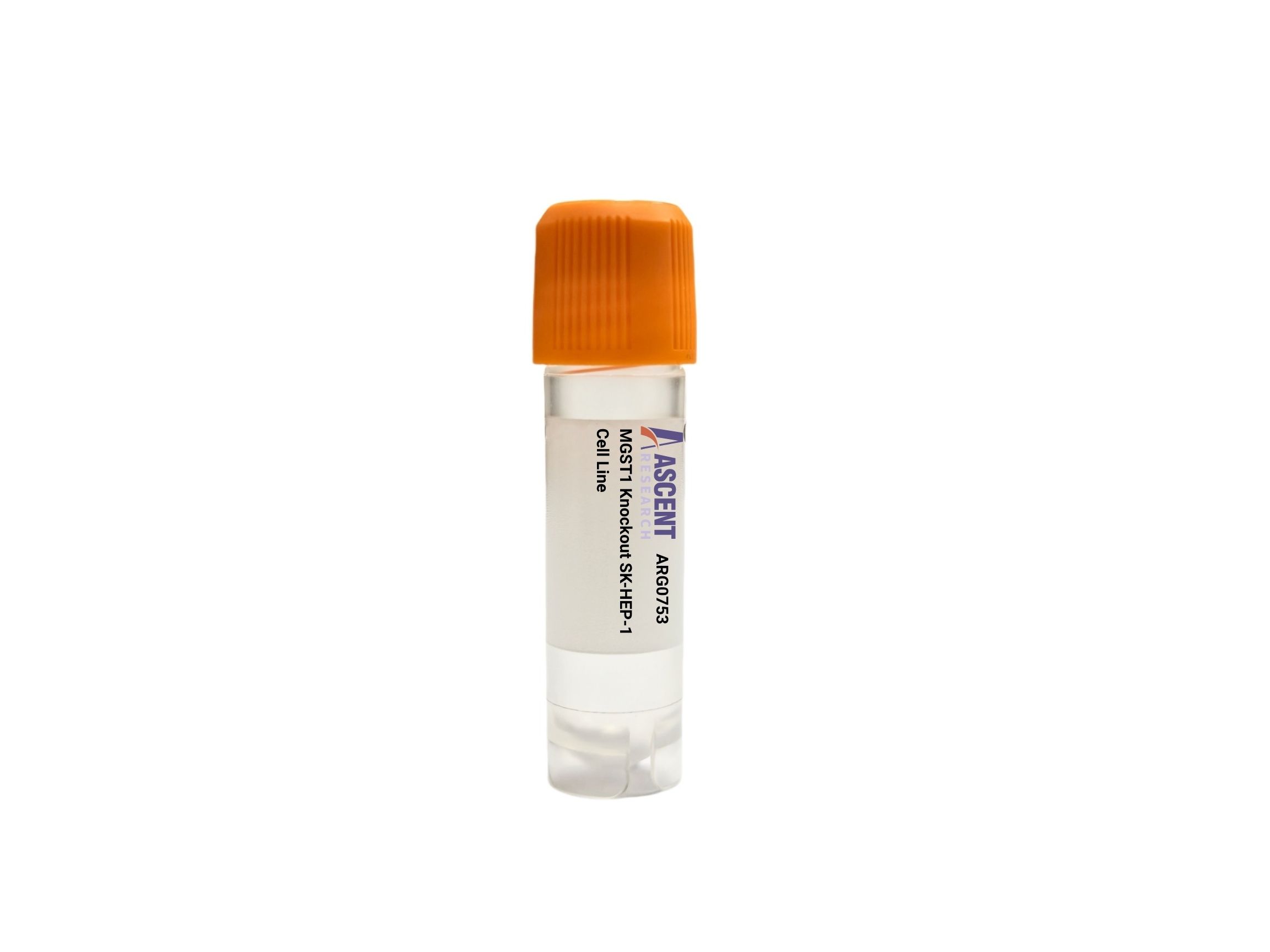
The MGST1 Knockout SK-HEP-1 Cell Line is a CRISPR/Cas9-edited human hepatocellular carcinoma cell line with targeted disruption of the MGST1 gene. This model enables investigation of microsomal glutathione S-transferase 1 function in detoxification and oxidative stress, where MGST1 normally catalyzes glutathione conjugation downstream of NRF2/KEAP1 signaling. Suitable for studying drug resistance mechanisms, screening chemotherapeutics, and profiling oxidative stress responses, the knockout line allows assays such as GST activity measurements, ROS detection, and lipid peroxidation analysis. Researchers can leverage this model to explore how MGST1 deficiency impacts hepatocellular carcinoma cell survival under electrophilic or oxidative conditions.
 NOTCH1 Knockout NCI-H1975 Polyclonal Cells
Cat. No. ARG16731
ALK Knockout Jurkat Polyclonal Cells
Cat. No. ARG23340
AFTPH Knockout HT29 Polyclonal Cells
Cat. No. ARG32878
ARFGAP2 Knockout jurkat Polyclonal Cells
Cat. No. ARG33890
MIF Knockout KYSE30 Polyclonal Cells
Cat. No. ARG9656
NOTCH1 Knockout NCI-H1975 Polyclonal Cells
Cat. No. ARG16731
ALK Knockout Jurkat Polyclonal Cells
Cat. No. ARG23340
AFTPH Knockout HT29 Polyclonal Cells
Cat. No. ARG32878
ARFGAP2 Knockout jurkat Polyclonal Cells
Cat. No. ARG33890
MIF Knockout KYSE30 Polyclonal Cells
Cat. No. ARG9656
 Mouse Gastric Fibroblasts
Cat. No. ARP0465
Mouse Gastric Fibroblasts
Cat. No. ARP0465
The MGST1 Knockout SK-HEP-1 Cell Line is a CRISPR/Cas9-edited knockout cell line derived from the human SK-HEP-1 hepatocellular carcinoma model. This product provides a targeted disruption of the MGST1 gene, generating a loss-of-function system to investigate the roles of microsomal glutathione S-transferase 1 in cellular detoxification and oxidative stress responses. The knockout cell line is prepared as a ready-to-use culture, enabling researchers to bypass initial gene-editing steps and immediately apply it in functional studies related to liver cancer biology and drug metabolism.
SK-HEP-1 is an immortalized cell line originally isolated from the ascitic fluid of a patient with liver adenocarcinoma. It exhibits an epithelial morphology and maintains key characteristics of hepatocellular carcinoma, including anchorage-independent growth and tumorigenic potential in xenograft models. Widely employed in cancer research, SK-HEP-1 serves as a relevant host for studying metabolic pathways and therapeutic vulnerabilities, particularly because it expresses functional drug-metabolizing enzymes and responds to oxidative stress induction, making it an appropriate background for MGST1 knockout studies.
MGST1 encodes a membrane-associated glutathione S-transferase that catalyzes the conjugation of reduced glutathione to a broad range of electrophilic substrates, including lipid peroxides, 4-hydroxynonenal, and xenobiotics, thereby neutralizing reactive compounds. This enzyme is transcriptionally activated by NRF2 under the negative control of KEAP1, functioning downstream of oxidative stress signals. MGST1 interacts with glutathione and phospholipids cooperatively and participates in glutathione metabolism, arachidonic acid metabolism, and cytochrome P450-mediated drug metabolism pathways. Its activity directly yields glutathione conjugates and reduces pro-oxidant lipid species, contributing to cellular redox balance.
Disruption of MGST1 in the SK-HEP-1 background significantly compromises the detoxification capacity of these hepatocellular carcinoma cells, heightening their susceptibility to oxidative stress-induced damage and altering sensitivity to chemotherapeutic agents. This knockout model recapitulates a deficiency in the glutathione conjugation pathway that is often associated with drug resistance phenotypes in liver cancer. It therefore provides a powerful tool to dissect how MGST1-dependent metabolism influences tumor cell survival under electrophilic or inflammatory stress, and to evaluate the role of this transferase in modulating therapy responses.
Typical research applications include studying mechanisms of drug resistance, investigating oxidative stress responses in hepatocellular carcinoma, screening novel chemotherapeutic agents, and evaluating detoxification pathway contributions. Representative assays range from Western blotting for MGST1 and glutathione-S-transferase activity measurements to cell viability assays under peroxide challenge, drug sensitivity profiling, lipid peroxidation quantification, RT-qPCR analysis of NRF2 target genes, and flow cytometric detection of reactive oxygen species. For further information on experimental protocols or technical support, please contact Ascent Research.