In Stock Cell Lines
Mus musculus (Mouse)
Ascites
Adherent
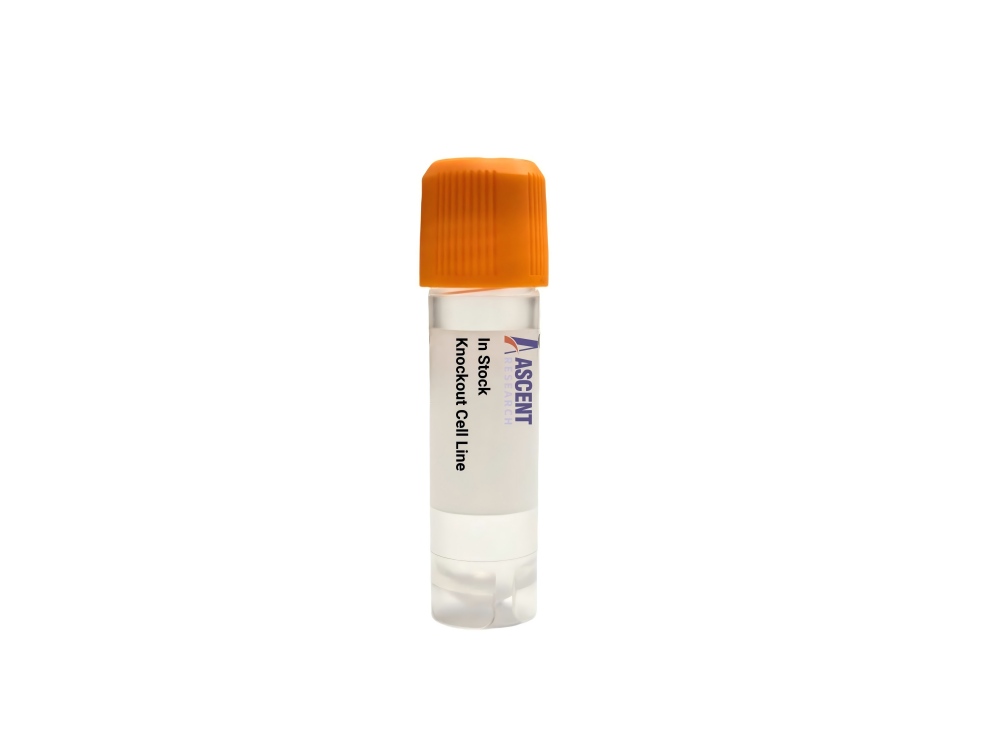
The Mkrn1 Knockout RAW 264.7 Cell Line is a CRISPR/Cas9-edited mouse macrophage model with targeted disruption of the Mkrn1 gene, encoding an E3 ubiquitin ligase. Derived from the BALB/c-derived RAW 264.7 line, these cells retain innate immune functions such as phagocytosis and cytokine secretion. Mkrn1 regulates substrates including TERT, FADD, PTEN, and NIK, impacting telomere biology, apoptosis, and NF-??B signaling. This knockout line supports research on ubiquitin-mediated regulation, macrophage inflammation, and cancer biology through assays like immunoblotting, apoptosis detection, and cytokine profiling.
 MGME1 Knockout NCI-H1975 Polyclonal Cells
Cat. No. ARG16944
CERS5 Knockout A549 Polyclonal Cells
Cat. No. ARG10521
LAT2 Knockout THP-1 Polyclonal Cells
Cat. No. ARG7408
AVL9 Knockout A549 Polyclonal Cells
Cat. No. ARG31902
HS3ST1 Knockout PATU8988T Polyclonal Cells
Cat. No. ARG36620
EFHD1 Knockout HGC-27 Polyclonal Cells
Cat. No. ARG40650
MGME1 Knockout NCI-H1975 Polyclonal Cells
Cat. No. ARG16944
CERS5 Knockout A549 Polyclonal Cells
Cat. No. ARG10521
LAT2 Knockout THP-1 Polyclonal Cells
Cat. No. ARG7408
AVL9 Knockout A549 Polyclonal Cells
Cat. No. ARG31902
HS3ST1 Knockout PATU8988T Polyclonal Cells
Cat. No. ARG36620
EFHD1 Knockout HGC-27 Polyclonal Cells
Cat. No. ARG40650
The Mkrn1 Knockout RAW 264.7 Cell Line is a CRISPR/Cas9-edited knockout cell line featuring targeted disruption of the Mkrn1 gene in the RAW 264.7 murine monocyte/macrophage background. Makorin RING finger protein 1 (Mkrn1) functions as an E3 ubiquitin ligase, and its genetic ablation in this cell line provides a stable loss-of-function model for dissecting Mkrn1-dependent regulatory mechanisms in an immune cell context. The knockout was generated using CRISPR/Cas9 to introduce DNA breaks at the Mkrn1 locus, resulting in gene inactivation without reliance on specific frameshift or deletion strategies. This product is offered as a continuously growing adherent cell line suitable for a wide range of biochemical and functional assays.
RAW 264.7 cells are a well-established macrophage line derived from BALB/c mice and transformed by the Abelson murine leukemia virus. They are widely utilized for studying innate immunity, phagocytosis, and cytokine production due to their robust expression of key inflammatory mediators and surface receptors. The cell line retains responsiveness to microbial products such as lipopolysaccharide, enabling analysis of signal transduction pathways controlling tumor necrosis factor-??, interleukin-6, and other pro-inflammatory molecules. Their uniform genetic background and amenability to gene editing make RAW 264.7 cells an optimized host for creating engineered models of macrophage biology.
Mkrn1 acts as a central node in protein homeostasis by directing ubiquitination and proteasomal degradation of diverse substrates. Canonical targets include telomerase reverse transcriptase (TERT), Fas-associated death domain protein (FADD), phosphatase and tensin homolog (PTEN), and NF-??B-inducing kinase (NIK). Through these interactions, Mkrn1 modulates telomere maintenance, extrinsic apoptosis, and the NF-??B signaling cascade. Downstream of Mkrn1, FADD activation can engage caspase-8 to initiate programmed cell death, while NIK stabilization leads to phosphorylation and degradation of I??B, releasing NF-??B dimers for nuclear translocation. Additionally, Mkrn1 associates with RNA-binding proteins such as PABPC1, broadening its functional repertoire to post-transcriptional control mechanisms.
In the context of RAW 264.7 macrophages, disruption of Mkrn1 is predicted to elevate levels of key substrates, particularly NIK, thereby potentiating NF-??B-dependent transcriptional programs. This may result in altered expression of cytokines, chemokines, and anti-apoptotic factors, reshaping the macrophage inflammatory phenotype. The model also facilitates investigation of PTEN stability and its consequences for PI3K/AKT signaling, as well as FADD-mediated apoptosis sensitivity. Such changes can influence fundamental macrophage processes including phagocytosis, antigen presentation, and metabolic reprogramming, making the knockout a versatile tool for exploring ubiquitin ligase function in innate immunity.
This cell line supports an array of experimental applications relevant to molecular biology, immunology, and cancer research. Typical uses include Western blotting and RT-qPCR to monitor protein and transcript levels, in vitro ubiquitination and degradation assays, apoptosis assays using Annexin V/propidium iodide staining and caspase activity measurements, NF-??B luciferase reporter assays, and multiplex cytokine profiling via ELISA or Luminex. Immunoprecipitation can detect endogenous ubiquitination of Mkrn1 targets, while phagocytosis assays assess functional macrophage responses. The model also aids in identifying additional substrates of Mkrn1 and studying telomerase regulation. For technical inquiries, please contact Ascent Research.