Genome-edited Cells
Lung
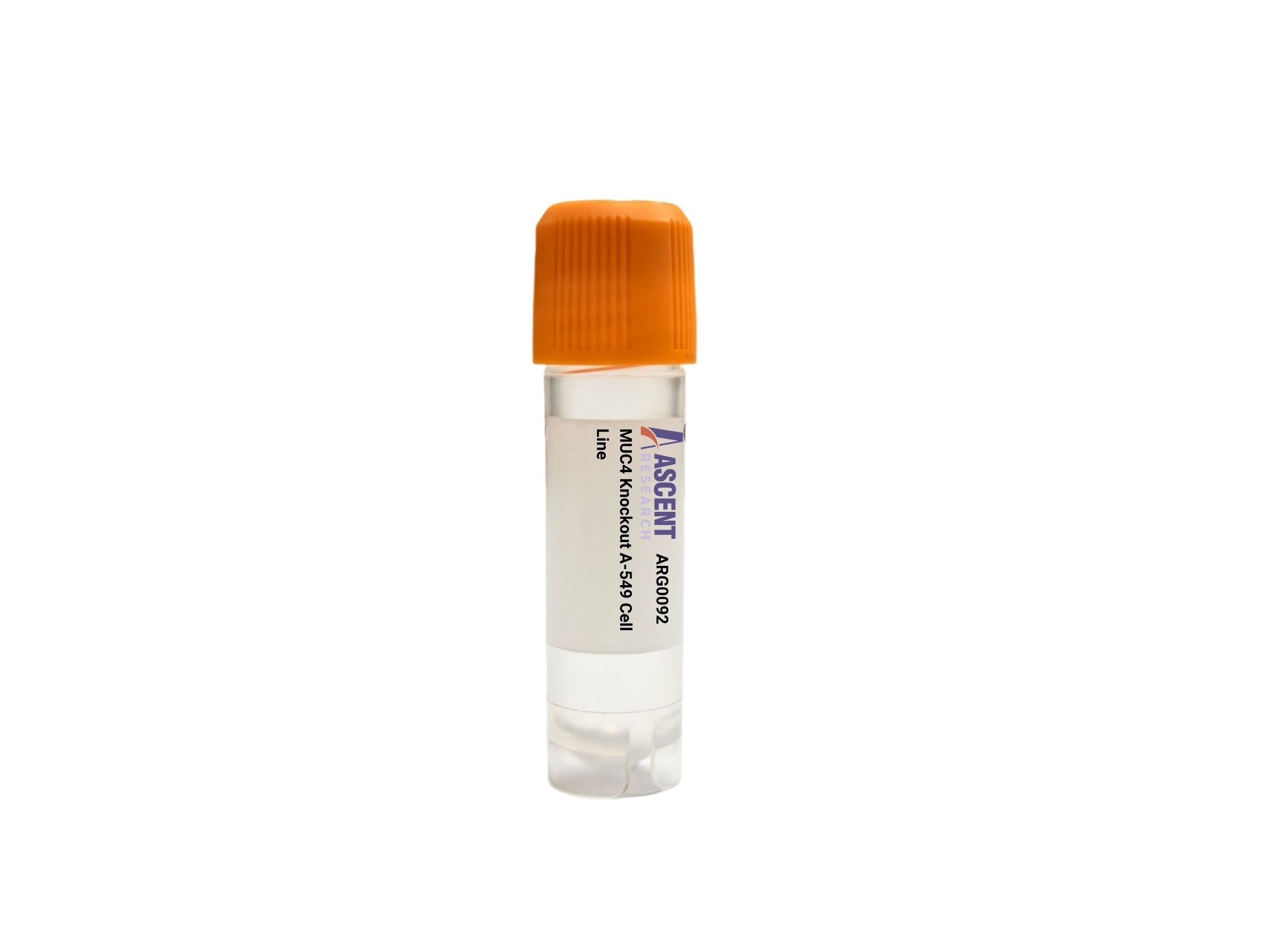
MUC4 Knockout A-549 is a human CRISPR/Cas9-edited alveolar epithelial adenocarcinoma cell line with disruption of the membrane-associated mucin MUC4. In the A-549 lung epithelial cancer background, this model supports analysis of glycocalyx organization, mucosal barrier properties, and MUC4-dependent receptor signaling involving ERBB2 and EGFR, with downstream effects on AKT and ERK1/2 phosphorylation, proliferation, survival, adhesion, and motility. It is well suited for mucin biology, lung cancer signaling, invasion and metastasis studies, and drug response experiments using western blotting, RT-qPCR, immunofluorescence, co-immunoprecipitation, phospho-signaling, migration, invasion, and apoptosis assays.
 DFFA Knockout NCI-H1299 Polyclonal Cells
Cat. No. ARG17767
CMTM6 Knockout HT29 Polyclonal Cells
Cat. No. ARG14900
PDZD8 Knockout HT29 Polyclonal Cells
Cat. No. ARG14162
PCMTD1 Knockout Hela Polyclonal Cells
Cat. No. ARG7965
KLHL9 Knockout Raji Polyclonal Cells
Cat. No. ARG23931
DFFA Knockout NCI-H1299 Polyclonal Cells
Cat. No. ARG17767
CMTM6 Knockout HT29 Polyclonal Cells
Cat. No. ARG14900
PDZD8 Knockout HT29 Polyclonal Cells
Cat. No. ARG14162
PCMTD1 Knockout Hela Polyclonal Cells
Cat. No. ARG7965
KLHL9 Knockout Raji Polyclonal Cells
Cat. No. ARG23931
 GPI Knockout THP-1 Cell Line
Cat. No. ARG0789
GPI Knockout THP-1 Cell Line
Cat. No. ARG0789
The MUC4 Knockout A-549 Cell Line is a human CRISPR/Cas9-engineered alveolar epithelial adenocarcinoma model in which the MUC4 gene has been disrupted to eliminate functional MUC4 expression. This stable in vitro cell line provides a defined system for investigating the consequences of MUC4 loss in a pulmonary epithelial cancer background. Because MUC4 is a membrane-associated mucin that contributes to apical surface architecture and receptor-linked signaling, its knockout in A-549 enables controlled analysis of glycocalyx-dependent and signaling-dependent phenotypes.
A-549 is a widely used human lung adenocarcinoma epithelial cell line that models key aspects of airway and alveolar epithelial biology, including epithelial barrier function, mucosal surface organization, mucin expression, host-pathogen interaction, and carcinoma-associated responses. Its relevance to lung adenocarcinoma and non-small cell lung cancer research has made it a standard platform for studies of epithelial differentiation, cytokine responsiveness, drug sensitivity, and oncogenic signaling. In addition to pulmonary disease applications, A-549 cells are informative for broader investigations of epithelial adhesion, motility, and mucosal barrier regulation.
MUC4 encodes a large membrane-tethered mucin that participates in glycocalyx organization and modulates receptor tyrosine kinase signaling. It has been linked mechanistically to ERBB2 and EGFR signaling complexes and can mediate downstream PI3K-AKT and MAPK-ERK pathway output, including changes in AKT and ERK1/2 phosphorylation, cyclin D1 expression, survival signaling, and apoptosis resistance. MUC4 is regulated by inflammatory and growth-associated inputs including TNF, IFNG, IL6, TGFB1, EGFR signaling, KRAS-MAPK signaling, hypoxia, and the transcription factors SP1, STAT3, and NFKB1. Interactions with ERBB2, EGFR, galectin-3, ezrin, SRC family kinases, MUC1, and receptor tyrosine kinase adaptors position MUC4 at the interface of epithelial surface organization and carcinoma signaling, with relevance to lung adenocarcinoma, metastasis, mucin-driven chemoresistance, and airway epithelial disease.
Within the A-549 background, MUC4 knockout is particularly useful for separating mucin-dependent effects on barrier-associated glycocalyx properties from receptor-proximal signaling effects that influence proliferation, migration, invasion, and treatment response. Loss of MUC4 can be examined in the context of epithelial differentiation programs, cytokine stimulation, EGFR or ERBB2 pathway activation, and responses to TGFB1- or KRAS-MAPK-associated signaling states. This makes the model suitable for studying pathway dependency, compensatory regulation by other mucins, and transcriptional adaptation in a lung epithelial carcinoma setting.
This cell line supports mechanistic studies using western blotting and phospho-signaling analysis for ERBB2, AKT, ERK1/2, and STAT3 pathway readouts; RT-qPCR and RNA-seq for transcriptional responses downstream of SP1, NFKB, or cytokine exposure; and co-immunoprecipitation or immunofluorescence to investigate interactions involving EGFR, ERBB2, galectin-3, ezrin, or MUC1. It is also applicable to flow cytometry and glycoprotein staining for surface phenotype assessment, as well as proliferation, apoptosis, migration, invasion, and drug sensitivity assays to define how MUC4 disruption alters carcinoma-associated survival and motility phenotypes. Researchers may contact Ascent Research for additional technical information, product details, or related gene-edited cell models.