Genome-edited Cells
Large intestine (colon)
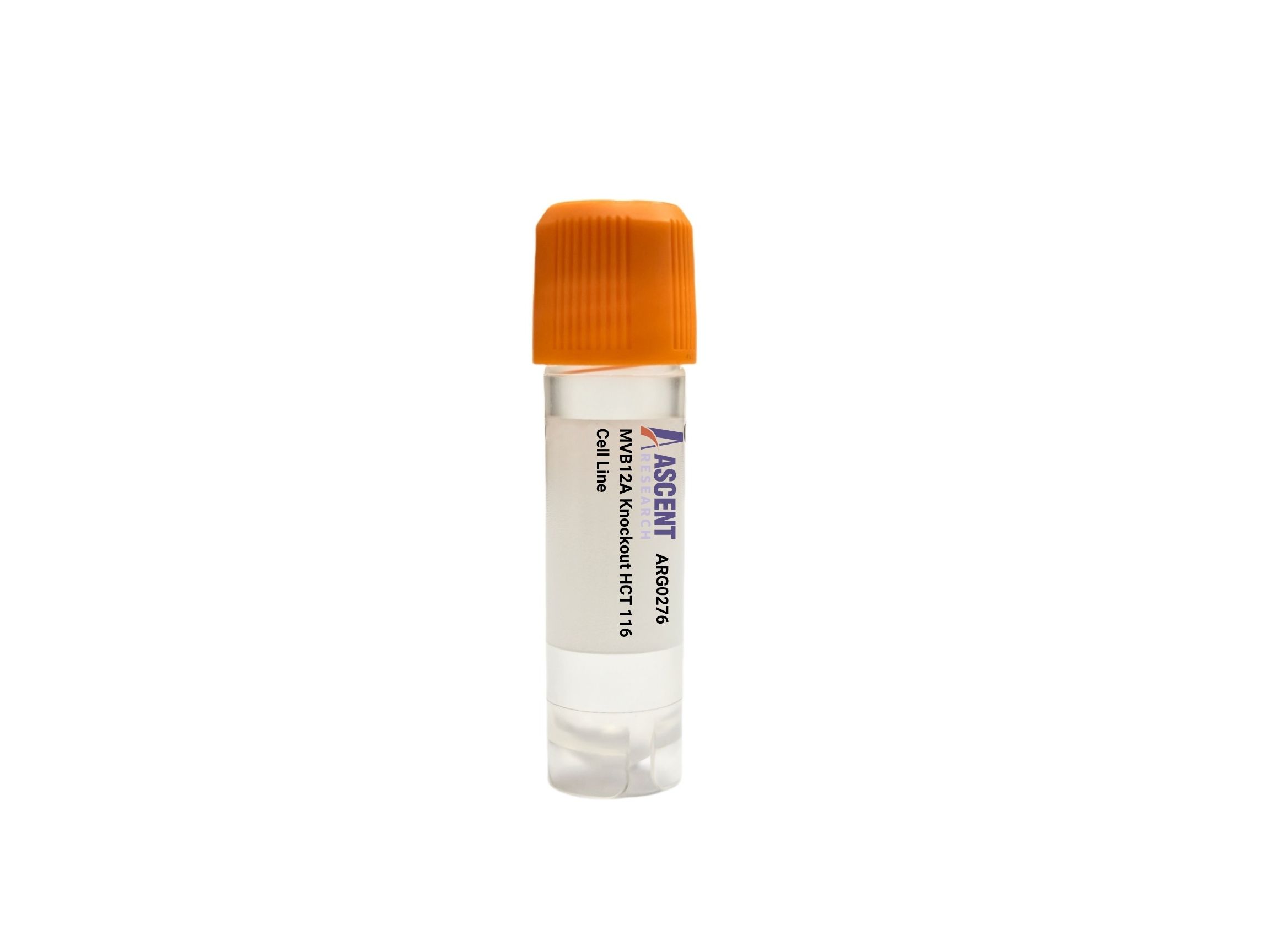
The MVB12A Knockout HCT 116 Cell Line is a CRISPR/Cas9-edited human colorectal carcinoma cell line with targeted disruption of MVB12A, a core subunit of the ESCRT-I complex. MVB12A functions in concert with TSG101, VPS28, and VPS37 to sort ubiquitinated membrane proteins, including activated EGFR, into multivesicular bodies for lysosomal degradation. In HCT 116 cells with KRAS mutation, this knockout model enables investigation of ESCRT-dependent receptor downregulation, exosome secretion, and autophagy. Applications include EGFR degradation assays, exosome characterization, viral budding studies, and migration assays, making it a valuable tool for cancer and cell biology research.
 FAM13A Knockout A2780 Polyclonal Cells
Cat. No. ARG18911
MET Knockout NCI-H1975 Polyclonal Cells
Cat. No. ARG17133
NFAT5 Knockout HT29 Polyclonal Cells
Cat. No. ARG14831
HIPK3 Knockout HAP1 Polyclonal Cells
Cat. No. ARG22526
KIAA1191 Knockout AGS Polyclonal Cells
Cat. No. ARG27114
ARFGEF1 Knockout AGS Polyclonal Cells
Cat. No. ARG26619
FAM13A Knockout A2780 Polyclonal Cells
Cat. No. ARG18911
MET Knockout NCI-H1975 Polyclonal Cells
Cat. No. ARG17133
NFAT5 Knockout HT29 Polyclonal Cells
Cat. No. ARG14831
HIPK3 Knockout HAP1 Polyclonal Cells
Cat. No. ARG22526
KIAA1191 Knockout AGS Polyclonal Cells
Cat. No. ARG27114
ARFGEF1 Knockout AGS Polyclonal Cells
Cat. No. ARG26619
The MVB12A Knockout HCT 116 Cell Line is a CRISPR/Cas9-edited knockout cell line engineered to disrupt expression of the MVB12A gene in the human HCT 116 colorectal carcinoma epithelial cell line. This gene-edited product provides a stable loss-of-function model for investigating the roles of MVB12A in endosomal sorting and membrane trafficking. The knockout cell line is generated using CRISPR/Cas9-mediated gene disruption, leading to abrogation of MVB12A protein function and enabling dissection of its contributions to ESCRT-dependent pathways.
The parental HCT 116 cell line is a widely utilized model of human colorectal carcinoma, characterized by a near-diploid karyotype and harboring an activating KRAS mutation. These epithelial cells are extensively employed in cancer research to study oncogenic signaling, drug resistance, and metastatic mechanisms. The colorectal origin and well-defined genetic background make HCT 116 an ideal host for interrogating membrane trafficking pathways that influence tumor cell behavior, including receptor turnover and exosome-mediated communication.
MVB12A encodes a core subunit of the heterotetrameric ESCRT-I complex, which directly engages ubiquitinated membrane cargo and initiates the ESCRT-driven sorting cascade. Within ESCRT-I, MVB12A partners with TSG101, VPS28, and VPS37 to recognize ubiquitin tags on activated receptors and membrane proteins. This recognition event is triggered by upstream factors such as the ESCRT-0 complex (comprising HRS and STAM) and is potentiated by receptor activation, exemplified by EGFR ligand binding. Following cargo engagement, ESCRT-I recruits ESCRT-II and ESCRT-III components, including CHMP4 family proteins, and the VPS4 ATPase to orchestrate membrane invagination and fission. Consequently, MVB12A is indispensable for the delivery of ubiquitinated receptors, such as activated EGFR, to multivesicular bodies for eventual lysosomal degradation. Disruption of MVB12A impairs this pathway, leading to defective receptor downregulation, altered exosome secretion, and compromised autophagosome closure.
In the context of HCT 116 colorectal carcinoma cells, which harbor oncogenic KRAS and rely on growth factor signaling, MVB12A knockout provides a selective tool to unravel ESCRT-I-dependent regulation of receptor trafficking and signal attenuation. The loss of MVB12A is expected to prolong surface expression of ubiquitinated receptors such as EGFR, sustaining downstream signaling cascades that may contribute to drug resistance and enhanced cell migration. Moreover, because HCT 116 cells secrete exosomes that influence the tumor microenvironment, MVB12A disruption allows dissection of ESCRT-mediated exosome biogenesis in colorectal cancer communication. This model thus enables targeted investigation of how membrane trafficking defects intersect with oncogenic pathways to modulate colorectal carcinoma cell behavior.
Researchers can employ the MVB12A Knockout HCT 116 Cell Line in diverse assays to interrogate ESCRT-dependent processes. Standard validation includes Western blotting and RT-qPCR to confirm loss of MVB12A expression. Functional studies utilizing EGF stimulation and cycloheximide chase permit quantitative analysis of EGFR degradation kinetics. Exosome isolation and nanoparticle tracking analysis enable assessment of exosome biogenesis, while viral budding assays can dissect host ESCRT requirements for viral egress. Autophagy flux can be monitored via LC3-II turnover in the presence of bafilomycin A1. Cell migration assays further elucidate the contribution of ESCRT-I to colorectal cancer invasion. For technical inquiries or to place an order, please contact Ascent Research.