Genome-edited Cells
Blood (peripheral blood)
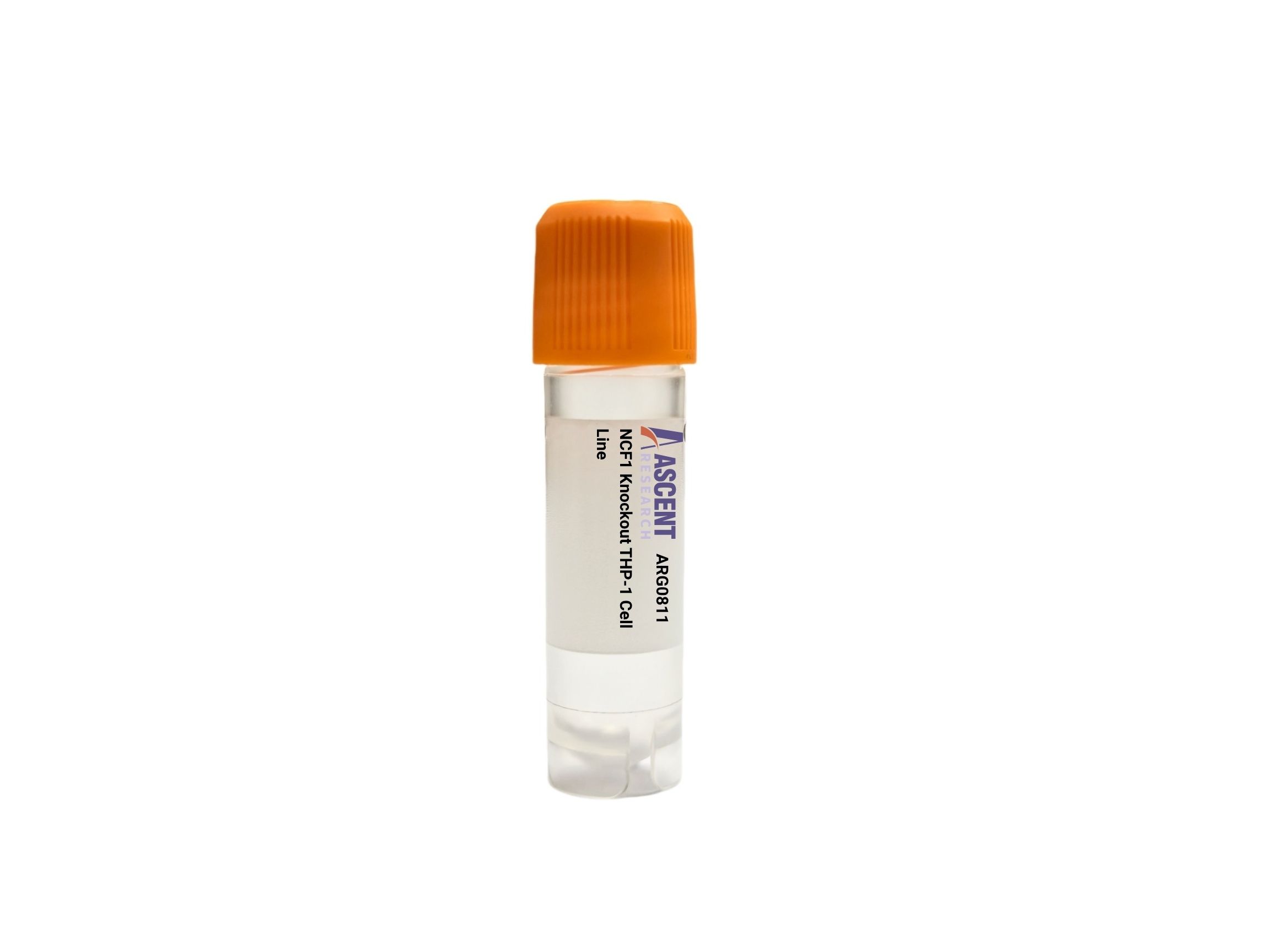
The NCF1 Knockout THP-1 Cell Line is a CRISPR/Cas9-edited human monocytic cell line with targeted disruption of the NCF1 gene, encoding the critical NADPH oxidase subunit p47phox. Engineered from the widely used THP-1 acute monocytic leukemia line, this model eliminates superoxide production in response to stimuli such as PMA, fMLP, and TNF-??, which normally activate p47phox via PKC and Rac GTPases. This loss-of-function cell line is an essential tool for investigating NADPH oxidase complex assembly, ROS-mediated innate immunity, and chronic granulomatous disease. Key applications include respiratory burst assays, inhibitor screening, and functional phagocyte studies in autoimmune and inflammatory research.
 ANO6 Knockout HGC-27 Polyclonal Cells
Cat. No. ARG29537
CCDC138 Knockout HEK293T Polyclonal Cells
Cat. No. ARG42951
DISP3 Knockout HAP1 Polyclonal Cells
Cat. No. ARG38813
EFNB1 Knockout SK-HEP-1 Polyclonal Cells
Cat. No. ARG40700
MAPK1 Knockout HCT116 Polyclonal Cells
Cat. No. ARG7239
DENND4C Knockout Raji Polyclonal Cells
Cat. No. ARG1472
ANO6 Knockout HGC-27 Polyclonal Cells
Cat. No. ARG29537
CCDC138 Knockout HEK293T Polyclonal Cells
Cat. No. ARG42951
DISP3 Knockout HAP1 Polyclonal Cells
Cat. No. ARG38813
EFNB1 Knockout SK-HEP-1 Polyclonal Cells
Cat. No. ARG40700
MAPK1 Knockout HCT116 Polyclonal Cells
Cat. No. ARG7239
DENND4C Knockout Raji Polyclonal Cells
Cat. No. ARG1472
The NCF1 Knockout THP-1 Cell Line is a CRISPR/Cas9-edited knockout cell line engineered for advanced biomedical research into phagocyte NADPH oxidase function. This product features targeted disruption of the NCF1 gene in the human monocytic leukemia THP-1 cell line, providing a robust loss-of-function model to investigate the roles of p47phox in reactive oxygen species (ROS) generation and innate immune signaling. The engineered cell line is supplied as a viable, proliferating culture suitable for downstream functional assays and screening applications.
THP-1 cells are derived from the peripheral blood of a one-year-old male with acute monocytic leukemia and serve as a widely used model for monocyte and macrophage biology. These suspension cells can be differentiated into macrophage-like cells via phorbol esters, exhibiting characteristic phagocytic activity, cytokine production, and responsiveness to innate immune stimuli. This well-characterized cellular background enables robust analysis of NADPH oxidase-dependent processes in a human system, making it an ideal host for interrogating NCF1 function.
NCF1 encodes p47phox, an essential cytosolic organizing subunit of the phagocyte NADPH oxidase complex. Upon activation by upstream signals such as protein kinase C (PKC), Rac1/2 GTPases, or physiological stimuli including phorbol myristate acetate (PMA), formyl-methionyl-leucyl-phenylalanine (fMLP), and tumor necrosis factor alpha (TNF-??), p47phox undergoes phosphorylation and translocates to the membrane. There, it assembles with the membrane-bound p22phox (CYBA) and gp91phox (CYBB) catalytic core, along with other regulatory subunits including p67phox (NCF2), p40phox (NCF4), the small GTPases Rac1/2, and NOXO1. This assembly activates the enzyme to produce superoxide anion, which dismutates to hydrogen peroxide and fuels myeloperoxidase-dependent generation of hypochlorous acid. These reactive species are critical for microbial killing and also modulate downstream signaling pathways such as NF-??B activation.
Disruption of NCF1 in THP-1 cells recapitulates key features of chronic granulomatous disease (CGD), an inherited immunodeficiency characterized by defective respiratory burst. This knockout model enables direct interrogation of the molecular requirements for NADPH oxidase assembly and oxidase-derived ROS in monocytic cells. It is particularly valuable for studying the roles of p47phox in phagosome maturation, cytokine regulation, and the interplay between redox status and inflammatory responses. Because THP-1 cells retain many features of primary monocytes, this cell line offers a physiologically relevant platform to dissect the contributions of NCF1 to innate immunity.
Researchers can employ the NCF1 Knockout THP-1 Cell Line in a variety of experimental paradigms, including cytochrome c reduction assays, luminol-based chemiluminescence, and flow cytometric measurements using DHR123 or DCFDA to quantify ROS production. The line is suitable for bacterial killing and phagocytosis assays to assess functional consequences of p47phox loss. It also facilitates screening of pharmacological modulators of NADPH oxidase activity and investigation of ROS-dependent signaling in autoimmune and inflammatory disorders. For further information or to discuss custom applications, please contact Ascent Research.