Genome-edited Cells
Ascites
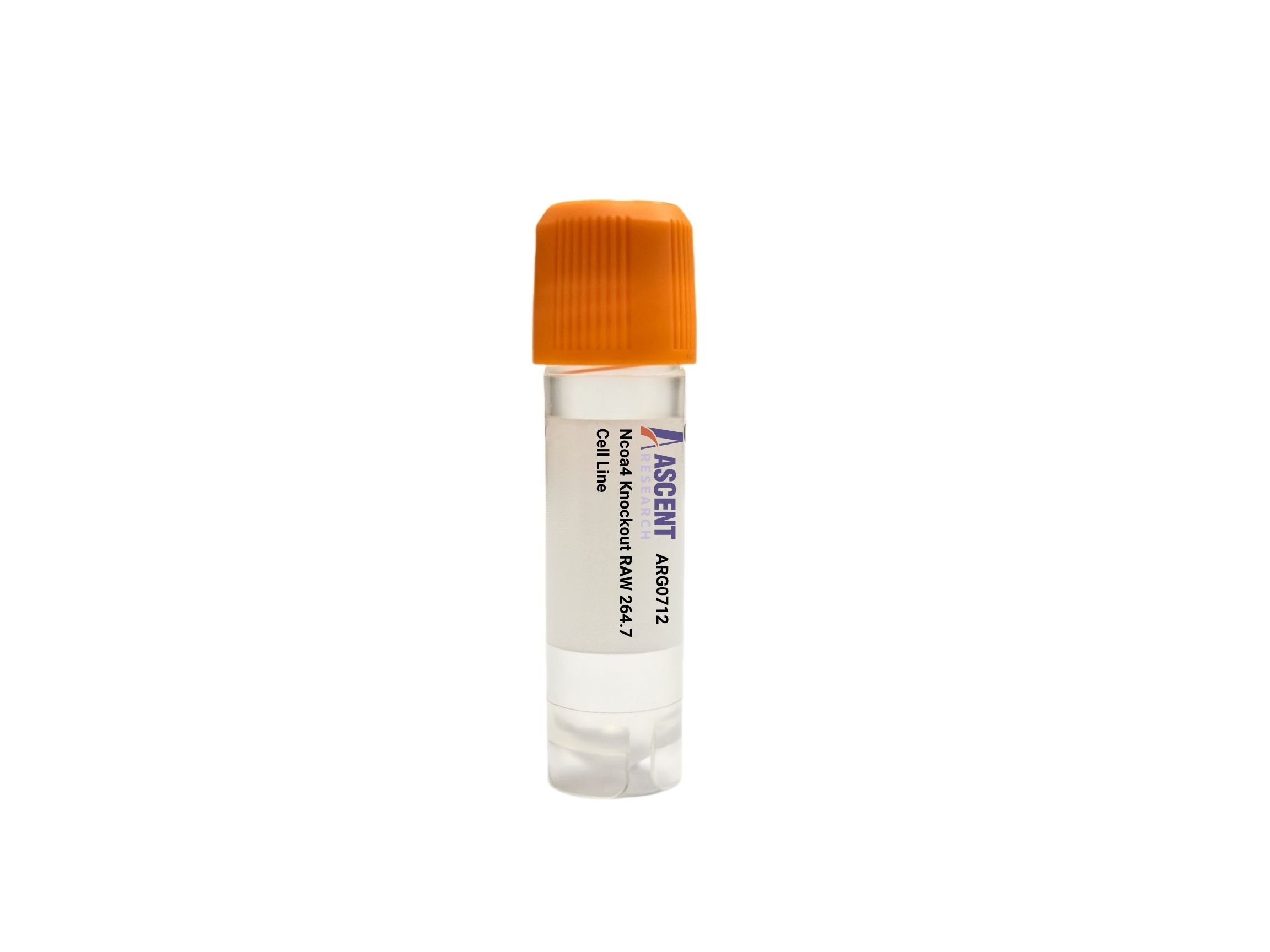
The Ncoa4 Knockout RAW 264.7 Cell Line is a CRISPR/Cas9-edited knockout cell line derived from the BALB/c mouse macrophage line RAW 264.7. This loss-of-function model targets the Ncoa4 gene, which encodes a ferritinophagy receptor and nuclear receptor coactivator, enabling studies of iron homeostasis and transcriptional regulation in myeloid cells. NCOA4 mediates selective autophagy of ferritin via interaction with LC3 and plays roles in nuclear receptor signaling by interacting with the androgen receptor. Applications include investigating ferritinophagy, iron metabolism, and macrophage immune functions using assays such as Western blot, immunofluorescence, and phagocytosis assays.
 CREB1 Knockout HT29 Polyclonal Cells
Cat. No. ARG14658
MYH10 Knockout Hela Polyclonal Cells
Cat. No. ARG8618
KCTD9 Knockout 143B Polyclonal Cells
Cat. No. ARG35069
GPR171 Knockout AGS Polyclonal Cells
Cat. No. ARG35803
DNASE2 Knockout huh-7 Polyclonal Cells
Cat. No. ARG39391
CHMP1B Knockout Raji Polyclonal Cells
Cat. No. ARG885
CREB1 Knockout HT29 Polyclonal Cells
Cat. No. ARG14658
MYH10 Knockout Hela Polyclonal Cells
Cat. No. ARG8618
KCTD9 Knockout 143B Polyclonal Cells
Cat. No. ARG35069
GPR171 Knockout AGS Polyclonal Cells
Cat. No. ARG35803
DNASE2 Knockout huh-7 Polyclonal Cells
Cat. No. ARG39391
CHMP1B Knockout Raji Polyclonal Cells
Cat. No. ARG885
The Ncoa4 Knockout RAW 264.7 Cell Line is a CRISPR/Cas9-edited knockout cell line that provides a loss-of-function model for the Ncoa4 gene in the murine macrophage lineage. This cell line enables targeted disruption of NCOA4 expression, facilitating the study of its dual roles as a selective autophagy receptor and nuclear receptor coactivator. Engineered from the well-characterized RAW 264.7 macrophage line, the knockout model retains the phagocytic and immune functions of the parental cells while allowing dissection of NCOA4-dependent mechanisms. Researchers can employ this cell line to interrogate ferritinophagy, iron homeostasis, and transcriptional regulation in a physiologically relevant myeloid context.
The host cell line, RAW 264.7, is a BALB/c mouse macrophage line transformed with the Abelson murine leukemia virus. These cells exhibit key macrophage characteristics, including robust phagocytic activity, cytokine secretion, and antigen presentation capabilities. Widely used in immunological and inflammatory disease models, RAW 264.7 cells respond to pathogen-associated molecular patterns and produce pro-inflammatory mediators. Their well-documented behavior in vitro makes them an ideal system for investigating macrophage-specific functions of NCOA4, particularly in iron handling and innate immune responses.
NCOA4 functions as a cargo receptor that selectively targets ferritin to autophagosomes for lysosomal degradation, a process known as ferritinophagy. This pathway is critical for maintaining intracellular iron levels and protecting against iron-mediated oxidative stress. NCOA4 directly interacts with ferritin and the ATG8 family member LC3, bridging the substrate to the autophagy machinery that includes ATG5 and ATG7. Upstream regulators such as iron levels, reactive oxygen species, HIF1A, and NRF2 modulate NCOA4 expression and activity. In parallel, NCOA4 serves as a transcriptional coactivator for nuclear receptors, including the androgen receptor, influencing gene expression programs. Downstream effects involve alterations in ferritin abundance, autophagic flux, and iron-responsive gene transcription, integrating cellular iron status with metabolic and proliferative signals.
In the macrophage context, NCOA4-mediated ferritinophagy is particularly significant due to the central role of macrophages in iron recycling and immune function. Macrophages engulf senescent erythrocytes and release iron, a process that must be tightly regulated to prevent toxicity. NCOA4 knockout in RAW 264.7 cells disrupts normal ferritin turnover, leading to altered intracellular iron pools that can affect macrophage polarization, cytokine production, and bactericidal activity. The model thus provides a tool to dissect how iron homeostasis intersects with inflammatory signaling and phagocytic functions in myeloid cells, potentially revealing mechanisms relevant to iron overload disorders and chronic inflammation.
This knockout cell line supports a variety of experimental approaches: Western blotting to assess NCOA4 and ferritin protein levels, immunofluorescence microscopy to visualize LC3 puncta as a readout of autophagic structures, quantitative PCR for iron-responsive genes, and biochemical iron quantification assays. Functional studies can include phagocytosis assays, cytokine profiling, and flow cytometry for surface marker expression, enabling comprehensive characterization of the knockout phenotype. For researchers investigating ferritinophagy in macrophages, iron homeostasis in immune responses, or nuclear receptor coactivation pathways, this cell line offers a defined genetic system without the need for transient silencing. For additional details or customized support, please contact Ascent Research.