Genome-edited Cells
Prostate
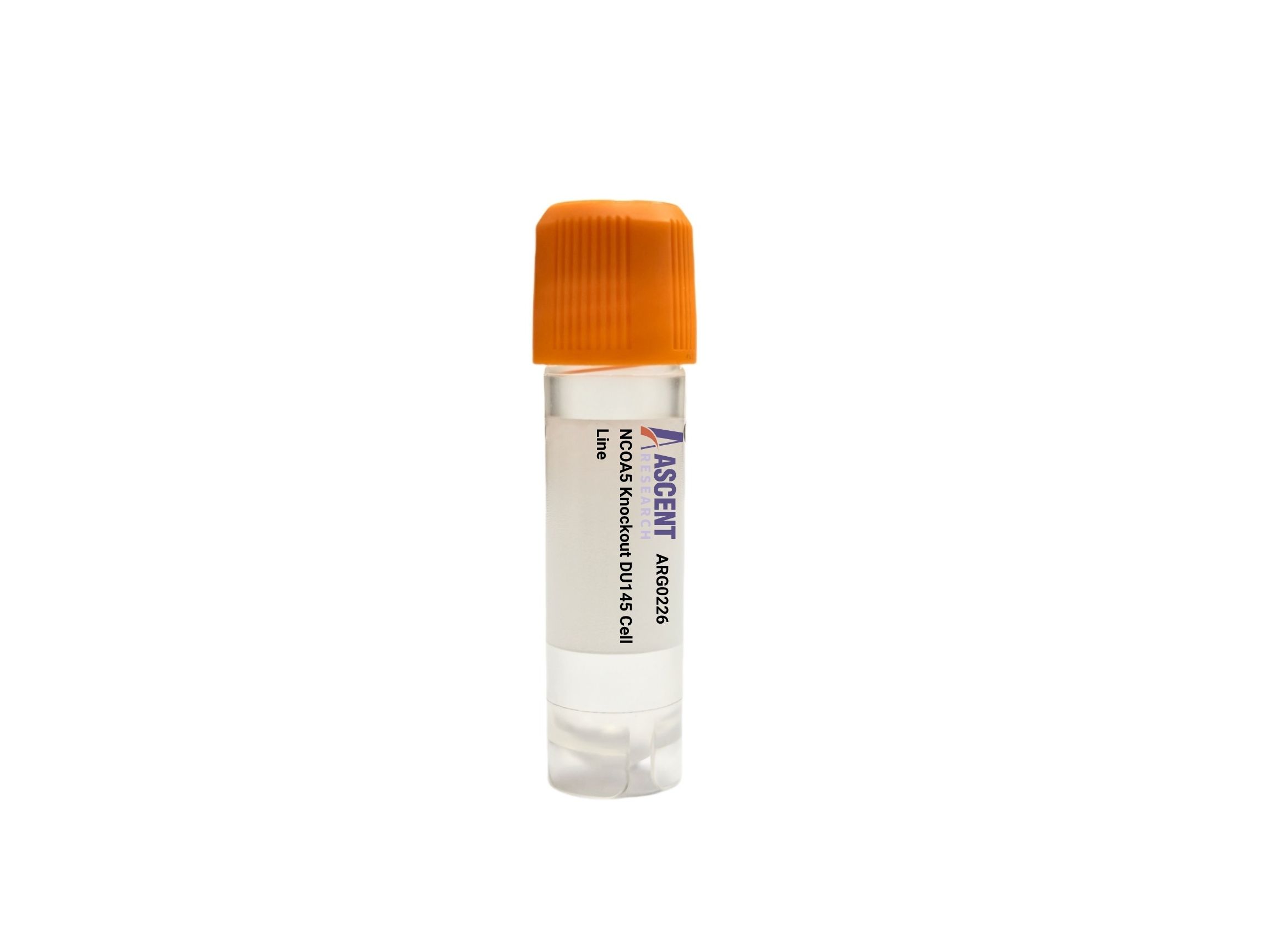
The NCOA5 Knockout DU145 Cell Line is a CRISPR/Cas9-edited knockout cell line that facilitates loss-of-function studies of NCOA5, a nuclear receptor coactivator, in the androgen-insensitive DU145 prostate adenocarcinoma model. NCOA5 mediates transcriptional activation by interacting with cofactors such as CBP/p300 and regulates downstream genes including cyclin D1 (CCND1) and glucose transporter SLC2A1, integrating insulin, Wnt, and PI3K/AKT/mTOR signaling. This engineered cell line is suitable for investigating nuclear receptor signaling, metabolic reprogramming, and drug resistance mechanisms. Applications include western blotting, proliferation assays, ChIP-qPCR, and glucose uptake assays, making it a valuable tool for prostate cancer research.
 CRLF1 Knockout Hela Polyclonal Cells
Cat. No. ARG9130
GPC1 Knockout Raji Polyclonal Cells
Cat. No. ARG23610
NFIC Knockout MES-OV Polyclonal Cells
Cat. No. ARG6277
GMPR2 Knockout HEK293T Polyclonal Cells
Cat. No. ARG4351
CRLF1 Knockout Hela Polyclonal Cells
Cat. No. ARG9130
GPC1 Knockout Raji Polyclonal Cells
Cat. No. ARG23610
NFIC Knockout MES-OV Polyclonal Cells
Cat. No. ARG6277
GMPR2 Knockout HEK293T Polyclonal Cells
Cat. No. ARG4351
 Immortalized Human Cardiac Microvascular Endothelial Cell
Cat. No. ARI0130
Immortalized Human Cardiac Microvascular Endothelial Cell
Cat. No. ARI0130
 GIST-T1
Cat. No. ARC0220
GIST-T1
Cat. No. ARC0220
The NCOA5 Knockout DU145 Cell Line is a CRISPR/Cas9-edited knockout cell line designed for loss-of-function studies of the NCOA5 gene in human prostate cancer. This engineered cell line provides a stable, isogenic model in which NCOA5 gene disruption enables investigation of its role in transcriptional coactivation and metabolic regulation. By eliminating NCOA5 expression, researchers can dissect its contributions to nuclear receptor signaling and downstream cellular processes without off-target effects associated with transient knockdown methods. The cell line is suitable for a range of functional assays aimed at characterizing the molecular consequences of NCOA5 deficiency in an androgen-insensitive epithelial background. As a ready-to-use cell line product, it streamlines experimental workflows for cancer biology and signaling research.
The host cell line, DU145, is a widely utilized prostate adenocarcinoma cell line derived from a brain metastasis of a 69-year-old male patient with prostate carcinoma. DU145 cells are androgen-insensitive and exhibit epithelial morphology, making them a representative model for advanced, hormone-refractory prostate cancer. Lacking functional AR signaling, DU145 relies on alternative growth and survival pathways, including PI3K/AKT/mTOR and Wnt/??-catenin cascades, which are often aberrantly activated in aggressive disease. This cellular context is particularly relevant for studying the interplay between transcriptional coregulators and oncogenic signaling networks driving tumor progression independent of androgen receptor activity.
NCOA5 (nuclear receptor coactivator 5) functions as a transcriptional coactivator for multiple nuclear receptors, including estrogen receptor alpha (ESR1) and peroxisome proliferator-activated receptors (PPARs). It interacts with key cofactors such as CBP/p300 and p300/CBP-associated factor (PCAF), mediating chromatin remodeling and transcriptional activation. NCOA5 is implicated in the regulation of cell proliferation, glucose metabolism, and apoptosis through downstream targets like cyclin D1 (CCND1), glucose transporter SLC2A1, and fatty acid synthase (FASN). Its activity is modulated by upstream signals, including insulin, and it participates in Wnt signaling through interactions with ??-catenin and TCF/LEF transcription factors. Additionally, NCOA5 contributes to PI3K/AKT/mTOR pathway regulation, positioning it at the intersection of metabolic and mitogenic signaling networks.
In the DU145 background, knockout of NCOA5 is expected to disrupt critical coactivator function, potentially impairing the transcriptional activation of genes involved in cell cycle progression and metabolic adaptation. Given the reliance of this androgen-insensitive cancer model on PI3K/AKT/mTOR and Wnt pathways, NCOA5 loss may attenuate tumorigenic properties such as proliferation and migration. This model therefore serves as a powerful tool to dissect how nuclear receptor coactivators sustain oncogenic signaling in hormone-refractory prostate cancer. It enables examination of NCOA5-dependent molecular mechanisms without the confounding effects of AR signaling, providing insights into alternative drivers of disease progression.
Researchers can employ this NCOA5 knockout cell line in a wide array of experimental applications, including western blotting and RT-qPCR to verify gene and protein expression changes, MTS proliferation assays to assess growth kinetics, and transwell migration assays to evaluate invasive potential. Genome-wide approaches such as RNA sequencing and ChIP-qPCR can be used to map transcriptional and chromatin alterations, while co-immunoprecipitation facilitates characterization of NCOA5 protein complexes. Metabolic phenotyping is achievable through glucose uptake assays, linking coactivator function to metabolic reprogramming. This cell line is particularly suited for studies in prostate cancer biology, nuclear receptor signaling, and drug resistance mechanisms. For further technical information, please contact Ascent Research.