Genome-edited Cells
Breast (mammary gland)
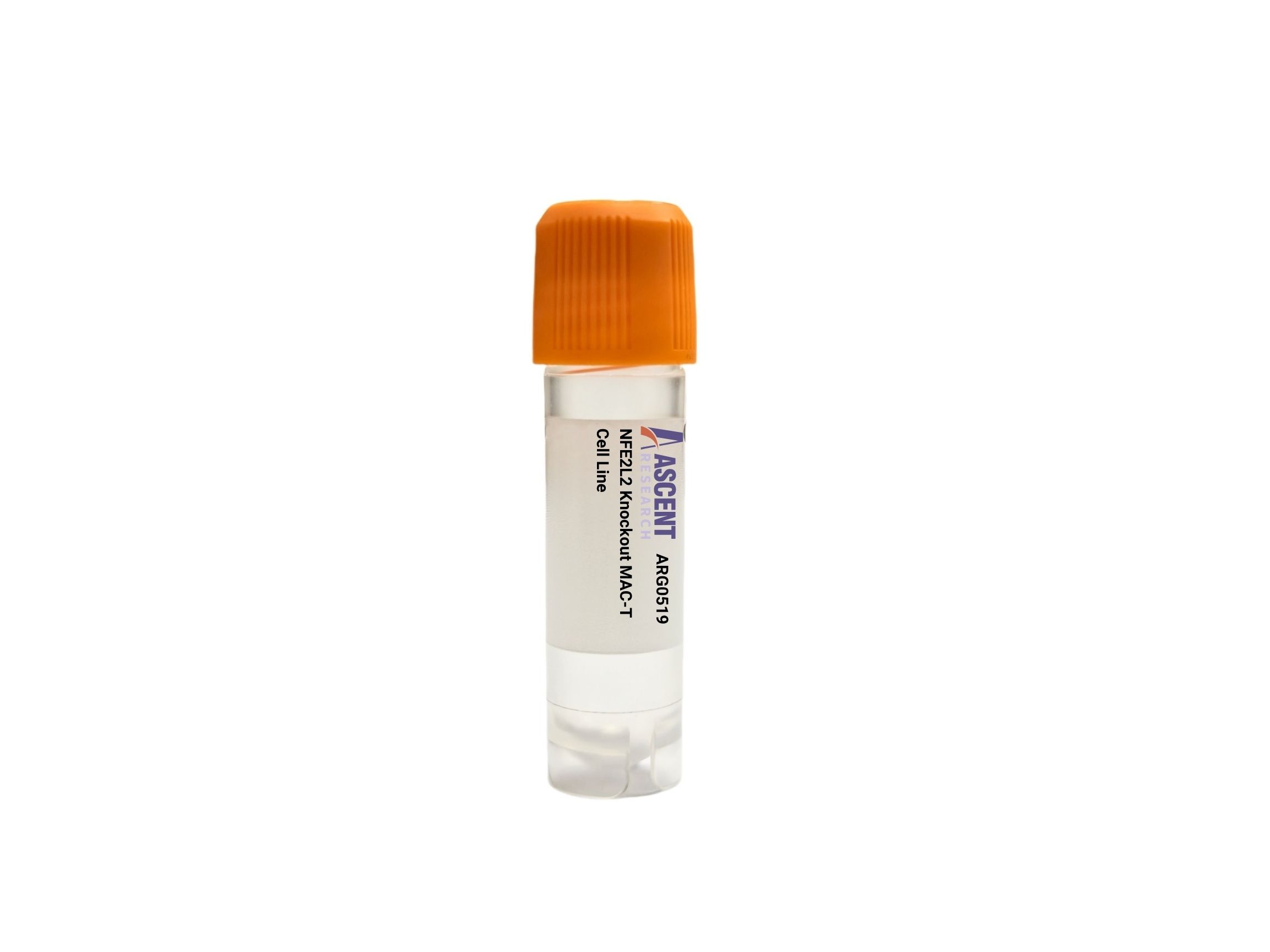
The NFE2L2 Knockout MAC-T Cell Line is a CRISPR/Cas9-edited bovine mammary epithelial cell line with targeted disruption of the NFE2L2 gene, encoding the Nrf2 transcription factor. Nrf2 is a central regulator of antioxidant responses, activated by oxidative stress and inhibited by KEAP1, and controls the expression of cytoprotective genes such as HMOX1 and NQO1. This knockout model facilitates studies of redox homeostasis in milk-synthesizing cells, supporting research into mammary gland biology, mastitis, and toxicology. Suitable assays include gene expression analysis, ROS measurement, and cell viability tests under oxidative stress.
 Mink1 Knockout RAW 264.7 Polyclonal Cells
Cat. No. ARG12508
GNAI2 Knockout A549 Polyclonal Cells
Cat. No. ARG10793
ATP9B Knockout HGC-27 Polyclonal Cells
Cat. No. ARG29670
ISOC1 Knockout A2780 Polyclonal Cells
Cat. No. ARG29244
HERC1 Knockout huh-7 Polyclonal Cells
Cat. No. ARG28285
MFSD8 Knockout MES-OV Polyclonal Cells
Cat. No. ARG6090
Mink1 Knockout RAW 264.7 Polyclonal Cells
Cat. No. ARG12508
GNAI2 Knockout A549 Polyclonal Cells
Cat. No. ARG10793
ATP9B Knockout HGC-27 Polyclonal Cells
Cat. No. ARG29670
ISOC1 Knockout A2780 Polyclonal Cells
Cat. No. ARG29244
HERC1 Knockout huh-7 Polyclonal Cells
Cat. No. ARG28285
MFSD8 Knockout MES-OV Polyclonal Cells
Cat. No. ARG6090
The NFE2L2 Knockout MAC-T Cell Line is a CRISPR/Cas9-edited bovine knockout cell line with targeted disruption of the NFE2L2 gene. This knockout model provides a stable loss-of-function system for investigating NFE2L2-mediated cytoprotective mechanisms. The cell line enables reproducible studies of antioxidant gene regulation without variable endogenous NFE2L2 expression.
The MAC-T host cell line is an immortalized bovine mammary epithelial cell line derived from lactating mammary tissue. These cells maintain critical epithelial characteristics, including the capacity for milk synthesis and secretion, establishing them as a robust in vitro model for mammary gland biology, lactation physiology, and dairy science research.
NFE2L2 encodes the transcription factor Nrf2, a master regulator of the antioxidant response pathway. Under basal conditions, KEAP1 binds Nrf2, promoting its ubiquitination and degradation. Upon oxidative or electrophilic stress, Nrf2 is stabilized, translocates to the nucleus, dimerizes with small MAF proteins, and binds antioxidant response elements (AREs). This activates transcription of cytoprotective genes including HMOX1, NQO1, GCLC, GCLM, and TXNRD1. Coactivators like CBP/p300 facilitate transactivation. Upstream, the pathway is modulated by kinases such as AKT and MAP kinases, integrating signals from environmental stressors to coordinate cellular defense and glutathione metabolism.
In bovine mammary epithelial cells, NFE2L2 is crucial for countering oxidative stress during lactation, a metabolically demanding process that generates reactive oxygen species. Knockout of NFE2L2 in MAC-T cells provides a relevant model to examine how compromised antioxidant responses affect milk synthesis, epithelial integrity, and susceptibility to inflammatory conditions like mastitis. This system allows dissection of Nrf2-dependent protection in the mammary gland.
This knockout cell line is ideal for applications in oxidative stress research, toxicology, cancer biology, and inflammation studies. Researchers can employ techniques such as RT-qPCR and western blotting for Nrf2 target genes, ARE-luciferase reporter assays, immunofluorescence for Nrf2 localization, ROS measurement, glutathione assays, and cell viability tests under oxidative stress. The model supports investigations into mastitis, drug metabolism, and neurodegenerative disease pathways, offering insights into redox regulation in epithelial contexts. For more information, please contact Ascent Research.