Genome-edited Cells
Bone
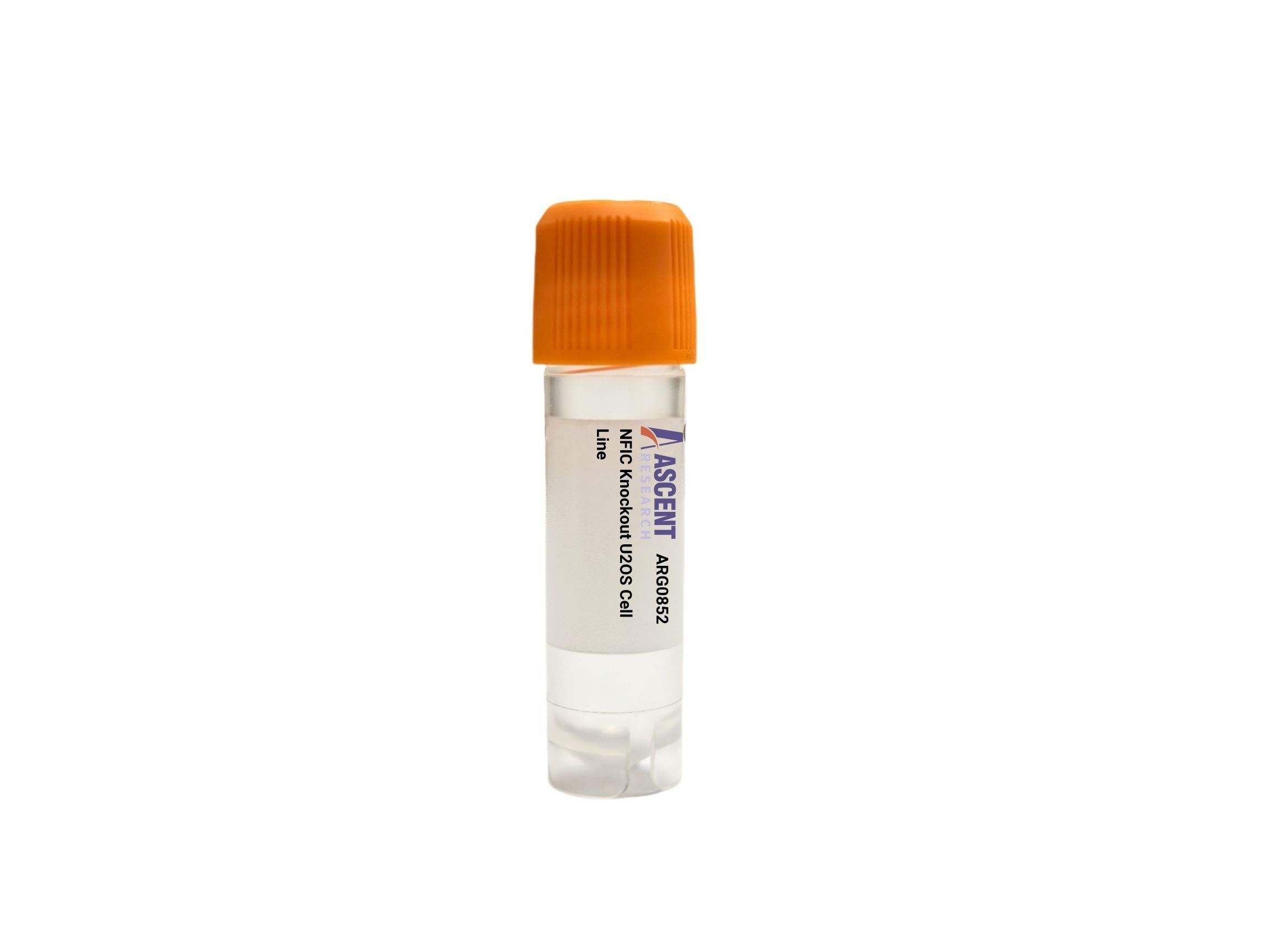
The NFIC Knockout U2OS Cell Line is a CRISPR/Cas9-edited knockout cell line derived from human U2OS osteosarcoma cells, designed for loss-of-function studies of the transcription factor NFIC. NFIC mediates TGF-beta/Smad signaling and regulates genes such as COL1A1, DSPP, and ACTA2, playing critical roles in cell differentiation, extracellular matrix production, and skeletal development. This model enables investigation of NFIC in cancer biology, osteoblast differentiation, and tissue fibrosis. Applications include TGF-beta pathway analysis, promoter-reporter assays, ChIP, and functional studies of migration and proliferation. The knockout cell line facilitates research into bone malignancies, tooth agenesis, and DNA damage responses, supported by assays like western blotting, RT-qPCR, and alkaline phosphatase activity measurement. Contact Ascent Research for additional details.
 KLC1 Knockout SK-HEP-1 Polyclonal Cells
Cat. No. ARG32768
ALB Knockout AGS Polyclonal Cells
Cat. No. ARG35283
ACSL4 Knockout HCT116 Polyclonal Cells
Cat. No. ARG36011
HLA-C Knockout Hela Polyclonal Cells
Cat. No. ARG37576
MTHFD2 Knockout HEK293T Polyclonal Cells
Cat. No. ARG4537
KLC1 Knockout SK-HEP-1 Polyclonal Cells
Cat. No. ARG32768
ALB Knockout AGS Polyclonal Cells
Cat. No. ARG35283
ACSL4 Knockout HCT116 Polyclonal Cells
Cat. No. ARG36011
HLA-C Knockout Hela Polyclonal Cells
Cat. No. ARG37576
MTHFD2 Knockout HEK293T Polyclonal Cells
Cat. No. ARG4537
 ACSL4 Knockout THP-1 Cell Line
Cat. No. ARG0790
ACSL4 Knockout THP-1 Cell Line
Cat. No. ARG0790
The NFIC Knockout U2OS Cell Line is a precisely engineered, CRISPR/Cas9-edited human cell line that enables loss-of-function studies of the NFIC gene in a well-characterized osteosarcoma background. This product is provided as a viable, proliferating cell line in which targeted disruption of the NFIC locus has been achieved through CRISPR/Cas9-mediated genome editing, creating a powerful tool for investigating NFIC-dependent gene regulation and signaling. The knockout model eliminates functional NFIC protein expression, allowing researchers to interrogate its role in transcriptional networks, cellular differentiation, and disease-relevant pathways.
The parental U2OS cell line is a widely utilized model derived from a human osteosarcoma, an aggressive bone malignancy. U2OS cells are of epithelial origin and exhibit adherent growth, making them highly amenable to a broad range of in vitro assays, including transfection, live-cell imaging, and high-throughput screening. They possess a relatively stable karyotype and wild-type p53, and have been extensively characterized in studies of cell cycle control, apoptosis, and therapeutic responses. This established background ensures reproducibility and facilitates integration with existing experimental datasets in cancer and bone biology research.
NFIC encodes a member of the Nuclear Factor I family of transcription factors, which binds to GC-rich promoter sequences to regulate gene expression. NFIC is a critical downstream mediator of the TGF-beta/Smad signaling pathway: upon ligand binding, activated SMAD2/3-SMAD4 complexes promote NFIC expression and nuclear translocation, where it transcriptionally activates key targets including COL1A1, COL1A2, DSPP, and ACTA2. It also interacts with BMP2-induced signaling, the Wnt/beta-catenin pathway, and MAPK/ERK cascades, and forms regulatory complexes with co-factors such as AP-1, SP1, and p53. Through these interactions, NFIC coordinates cell differentiation, extracellular matrix production, and tissue remodeling processes essential for skeletal development and fibroblast function.
In the U2OS osteosarcoma context, NFIC knockout provides a unique platform to dissect the transcription factor??s involvement in tumor biology and bone matrix regulation. U2OS cells retain features of osteoblastic lineage, making them suitable for studying how NFIC modulates osteogenic differentiation and collagen matrix deposition. The knockout line enables researchers to test whether NFIC acts as a tumor suppressor or contributes to oncogenic phenotypes by assessing changes in proliferation, migration, and apoptosis. Additionally, its interaction with p53 offers avenues to explore DNA damage responses and genomic stability in cancer cells.
This knockout cell line supports a wide range of experimental applications, including mechanistic studies of TGF-beta/Smad signal transduction, promoter-reporter analyses, and ChIP-based investigations of NFIC target gene occupancy. It is particularly valuable for assays measuring alkaline phosphatase activity, collagen synthesis, and cell migration in response to TGF-beta stimulation. Researchers can employ western blotting, RT-qPCR, and immunofluorescence to validate knockdown of downstream effectors such as DSPP and fibronectin. Beyond bone cancer, the model facilitates research into tooth development disorders and tissue fibrosis. For additional technical details, pricing, or licensing inquiries, please contact Ascent Research.