Genome-edited Cells
Kidney
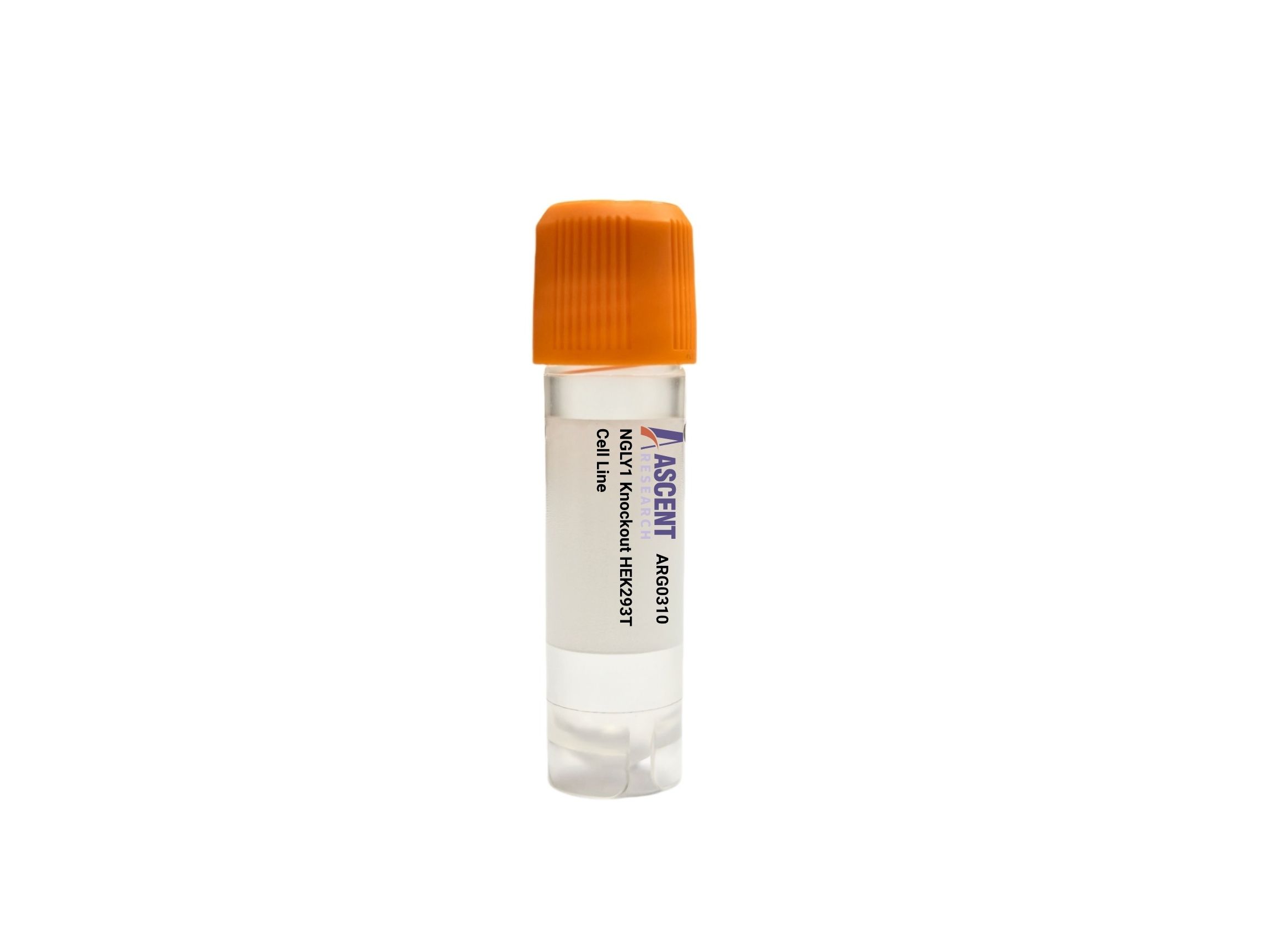
The NGLY1 Knockout HEK293T Cell Line is a CRISPR/Cas9-edited human cell line lacking functional NGLY1, the cytosolic N-glycanase. Derived from HEK293T cells, it provides a robust model for studying deglycosylation-dependent ER-associated degradation (ERAD) and protein quality control. NGLY1 processes misfolded N-linked glycoproteins, interacting with p97/VCP, HRD1, and the ubiquitin-proteasome system. This knockout line is ideal for investigating NGLY1 deficiency, ER stress, and glycobiology. It supports assays such as Western blotting, proteasome activity measurements, and deglycosylation analysis, making it a valuable tool for drug discovery and pathway dissection.
 PHGDH Knockout A2780 Polyclonal Cells
Cat. No. ARG19144
MYL3 Knockout A2780 Polyclonal Cells
Cat. No. ARG18691
ADIRF Knockout NCI-H1299 Polyclonal Cells
Cat. No. ARG30244
ITSN1 Knockout jurkat Polyclonal Cells
Cat. No. ARG34375
APOBEC3A Knockout CaSki Polyclonal Cells
Cat. No. ARG35905
AP4E1 Knockout AGS Polyclonal Cells
Cat. No. ARG26590
PHGDH Knockout A2780 Polyclonal Cells
Cat. No. ARG19144
MYL3 Knockout A2780 Polyclonal Cells
Cat. No. ARG18691
ADIRF Knockout NCI-H1299 Polyclonal Cells
Cat. No. ARG30244
ITSN1 Knockout jurkat Polyclonal Cells
Cat. No. ARG34375
APOBEC3A Knockout CaSki Polyclonal Cells
Cat. No. ARG35905
AP4E1 Knockout AGS Polyclonal Cells
Cat. No. ARG26590
The NGLY1 Knockout HEK293T Cell Line is a human cell line engineered by CRISPR/Cas9-mediated disruption of the NGLY1 gene, providing a stable loss-of-function model for studying N-glycanase 1 in human embryonic kidney cells. The targeted disruption eliminates functional NGLY1 expression, creating a reliable tool for investigating cytosolic deglycosylation and protein quality control. As a cell line format, it supports diverse biochemical and cell-based assays.
The host HEK293T cell line is a widely used derivative of HEK293, constitutively expressing SV40 large T antigen for episomal plasmid replication, leading to high protein yield and viral production. These human embryonic kidney cells grow robustly and are highly transfectable, making them ideal for genetic manipulation. Their well-characterized secretory pathway and active proteostatic machinery are especially relevant for endoplasmic reticulum studies.
Mechanistically, NGLY1 encodes a cytosolic N-glycanase that cleaves N-linked glycans from misfolded glycoproteins retrotranslocated from the endoplasmic reticulum, a critical step in ER-associated degradation (ERAD). This deglycosylation facilitates proteasomal processing and generates free oligosaccharides. NGLY1 functions with p97/VCP, HRD1, and Derlin-1, and also collaborates with ENGase. Its activity is induced by ER stress downstream of the unfolded protein response (UPR). In the knockout line, impaired deglycosylation leads to misfolded glycoprotein accumulation and may activate ER stress sensors such as BiP, calnexin, and calreticulin, disrupting proteostasis.
In HEK293T cells, loss of NGLY1 profoundly alters glycoprotein processing and ERAD due to their high secretory activity. This knockout line provides a powerful system for dissecting how cytosolic glycan catabolism integrates with the ubiquitin-proteasome system and ER quality control machinery. It enables precise modeling of NGLY1 deficiency, a congenital disorder of deglycosylation associated with neurodevelopmental abnormalities, allowing researchers to delineate molecular pathology and compensatory mechanisms.
Applications span ERAD studies, protein quality control, and NGLY1 deficiency disease modeling. Researchers can perform Western blotting for glycoprotein accumulation, immunofluorescence for ER stress markers, and proteasome activity assays. RT-qPCR and RNA-seq enable transcriptomic profiling, while deglycosylation assays directly quantify N-glycan release. The model is excellent for high-throughput screening of proteostasis modulators and flow cytometry-based viability assessments under ER stress. For further technical information, contact Ascent Research.