Genome-edited Cells
Adrenal gland
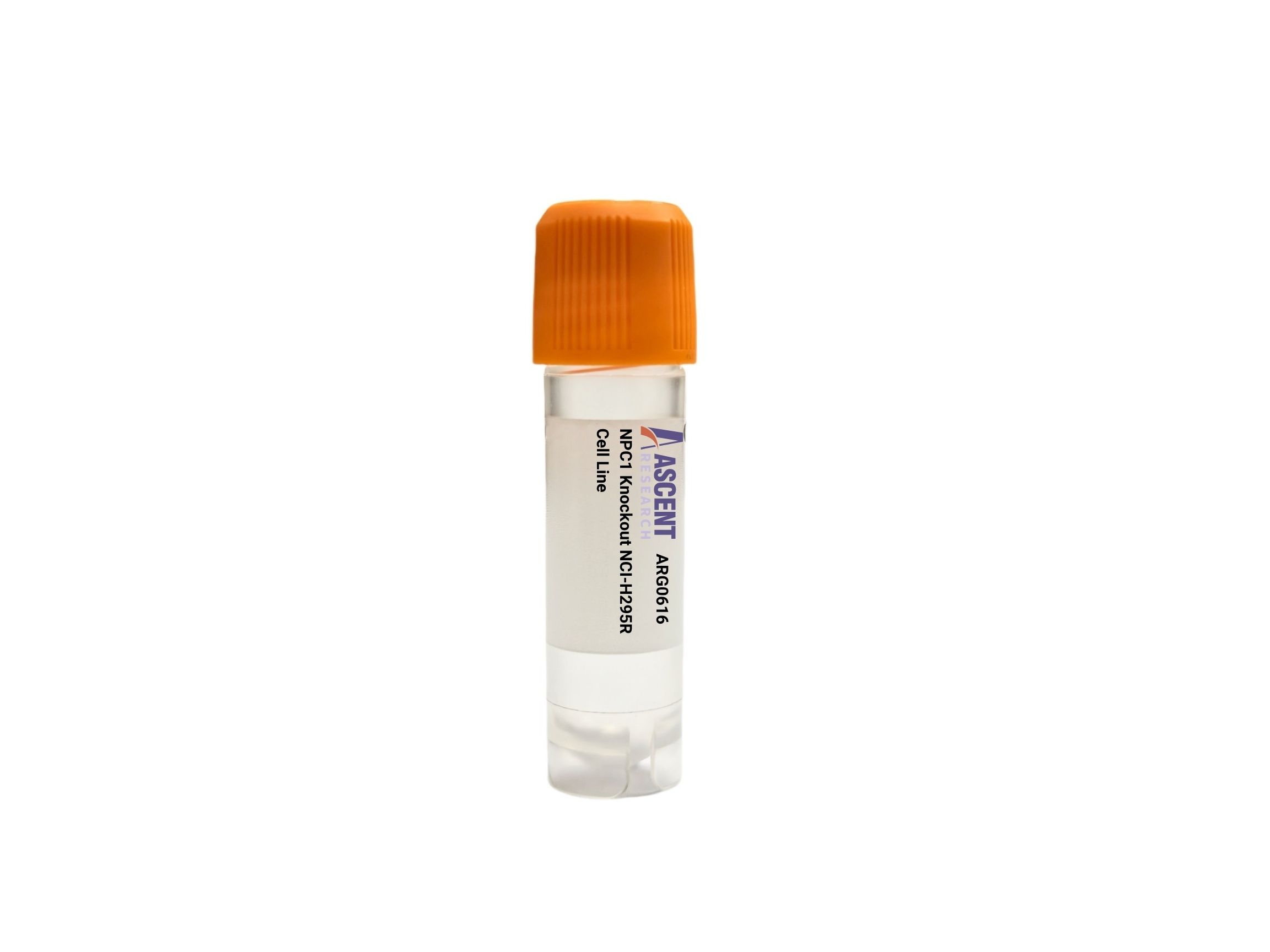
The NPC1 Knockout NCI-H295R Cell Line is a CRISPR/Cas9-edited human knockout line from the steroidogenic adrenocortical carcinoma NCI-H295R. Disrupting NPC1, a lysosomal cholesterol transporter regulated by SREBP2 and LXR, impairs cholesterol egress and mimics Niemann-Pick type C disease. It enables studies of cholesterol trafficking, lysosomal storage, and interactions with NPC2, Rab7, and ORP1L. Applications include filipin staining, LDL uptake assays, autophagy flux analysis, and drug screening for cholesterol modulators. This model also permits investigation of how lysosomal cholesterol accumulation affects steroidogenesis in adrenal cancer cells.
 NUDT9 Knockout HT29 Polyclonal Cells
Cat. No. ARG14085
ERN1 Knockout KYSE150 Polyclonal Cells
Cat. No. ARG12240
C5orf24 Knockout SK-HEP-1 Polyclonal Cells
Cat. No. ARG41514
CDKN1B Knockout Raji Polyclonal Cells
Cat. No. ARG1725
NUDT9 Knockout HT29 Polyclonal Cells
Cat. No. ARG14085
ERN1 Knockout KYSE150 Polyclonal Cells
Cat. No. ARG12240
C5orf24 Knockout SK-HEP-1 Polyclonal Cells
Cat. No. ARG41514
CDKN1B Knockout Raji Polyclonal Cells
Cat. No. ARG1725
 Mouse Nucleus Pulposus Cells
Cat. No. ARP0562
Mouse Nucleus Pulposus Cells
Cat. No. ARP0562
 Human Dermal Microvascular Endothelial Cells - adult
Cat. No. ARP0027
Human Dermal Microvascular Endothelial Cells - adult
Cat. No. ARP0027
The NPC1 Knockout NCI-H295R Cell Line is a CRISPR/Cas9-edited human knockout cell line with targeted disruption of the NPC1 gene. This loss-of-function model enables investigation of NPC1-dependent cholesterol trafficking, lysosomal function, and related pathologies. It provides a reliable platform for studying cellular consequences of NPC1 deficiency.
Derived from an invasive primary adrenocortical carcinoma of a female patient, the NCI-H295R host cell line is steroidogenic, producing cortisol, aldosterone, and androgens. Its adrenal cancer origin and cholesterol-centric metabolism make it highly relevant for exploring interactions between intracellular cholesterol distribution and steroid hormone biosynthesis, as well as cancer metabolic reprogramming.
NPC1 is a late endosomal/lysosomal membrane protein that binds cholesterol transferred from NPC2 and exports it to maintain lipid homeostasis. Its expression is regulated by SREBP2 and LXR under cholesterol feedback. NPC1 interacting factors include NPC2, Rab7, Rab9, and ORP1L, and it functions upstream of mTORC1 signaling and autophagy initiation. NPC1 knockout causes lysosomal cholesterol accumulation, disrupting mTORC1 and autophagy, a hallmark of Niemann-Pick disease type C.
In the NCI-H295R context, NPC1 ablation recapitulates the cellular phenotype of Niemann-Pick type C, offering a model for lysosomal storage disorder research and cholesterol modulator screening. Because these cells are steroidogenic, the knockout line also permits studies on how disrupted cholesterol trafficking affects steroid hormone production, potentially linking lysosomal dysfunction to adrenal tumor biology.
This cell line supports diverse assays including filipin staining, LDL uptake, cholesterol quantification, autophagy flux analysis, and lysosomal pH measurement. It is suitable for drug screening targeting cholesterol egress or mTORC1/autophagy normalization, and for mechanistic studies using immunofluorescence, RT-qPCR, and Western blotting. The NPC1 Knockout NCI-H295R Cell Line thus provides a versatile tool for lipid biology and cancer research. For further information, contact Ascent Research.